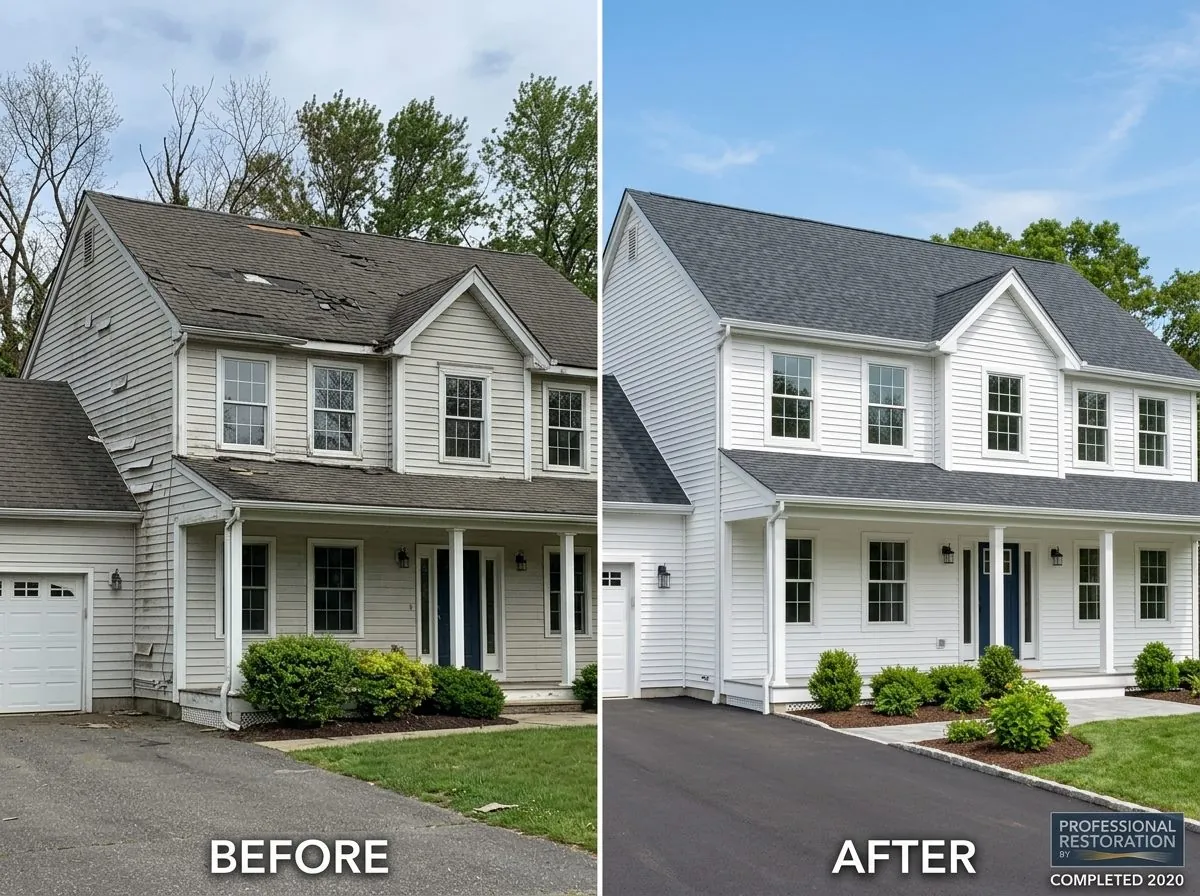
Shirley runs from the Long Island Expressway down to the bay at Smith Point, and the southern end has some of the most direct storm exposure in Brookhaven Town. Smith Point is where the barrier island is at its most vulnerable, and Sandy is still the reference point for what a serious surge event does here.
Flood zones change the entire conversation
A meaningful portion of southern Shirley sits in mapped FEMA flood zones. If you are in one and carry a mortgage, you almost certainly hold a separate flood policy, and that policy is what responds to rising water.
Your homeowners policy responds to wind. In a hurricane or a strong nor'easter both happen at once, and you may end up with two claims, two adjusters and two deductibles on a single event. That is normal here. What is not normal — and what costs people money — is assuming one policy covers the whole loss.
Hurricane deductibles
Many New York coastal policies carry a separate hurricane or windstorm deductible, calculated as a percentage of the dwelling coverage rather than a flat dollar amount. On a $600,000 dwelling limit, a 5 percent hurricane deductible is $30,000 before the carrier pays anything.
It is triggered by named-storm criteria defined in your policy. Read that section now, not during a storm. Homeowners who find out about a percentage deductible after a loss are the ones who end up paying for a roof they thought was covered.
Documenting the wind-water line
When both wind and water hit one property, the evidence that separates them is physical and it disappears fast during cleanup.
- Photograph interior water lines on walls before any drying or demolition
- Photograph the roof breach and the interior directly beneath it, connecting them
- Water entering high, at a ceiling below a roof breach, is wind-driven rain — homeowners
- Water entering low, with a horizontal line on the wall and debris at grade, is flood
- Timestamped photos and video, wide and close, before anything gets moved
Adjusters make this determination from evidence. If the evidence is gone, they make it from assumption, and assumption tends not to favor the homeowner.
Elevation, and what it does to a repair
Properties elevated after Sandy have different exposure than their neighbors — the living space is out of the surge, but the structure catches more wind. Repairs on elevated homes also carry code triggers around substantial improvement thresholds that can pull in work well beyond the storm damage itself.
That is worth knowing before scoping a repair, because crossing the substantial improvement threshold changes what the town requires of the whole structure.
Frequently Asked Questions
I have both wind and flood damage. Do I file two claims?
Usually yes — homeowners for wind, and the separate flood policy for rising water. That often means two adjusters and two deductibles on one storm. Photograph interior water lines before any drying or demolition; water entering high beneath a roof breach is wind-driven rain, while a horizontal line low on the wall with debris at grade is flood.
What is a hurricane deductible and do I have one?
Many New York coastal policies carry a separate hurricane or windstorm deductible set as a percentage of dwelling coverage rather than a flat amount — 5 percent on a $600,000 dwelling limit is $30,000 out of pocket. It triggers on named-storm criteria defined in your policy. Read that section before a storm, not after.
Should I file a claim before or after getting an inspection?
Get the inspection first. You want to know whether the damage exceeds your deductible before a claim goes on your record, because a filed claim that pays nothing still counts as a claim at renewal. We inspect and document at no charge and tell you honestly whether it is worth filing.
How long do I have to file after a storm?
New York policies generally require prompt notice, and most carriers expect it within days to weeks — but the specific requirement is in your policy. Practically, file early. Damage that sits gets attributed to wear and neglect rather than to the storm, and that is the most common reason a legitimate claim gets reduced.
Do you tarp before the adjuster comes?
Yes, and you should want us to. Policies obligate you to prevent further damage once you know about it. We photograph everything before tarping, so the adjuster sees the original condition and you have met your duty to mitigate. Save every receipt — emergency mitigation is typically reimbursable.
Related Reading
- Storm Damage Roofs on Long Island — what wind actually does to a roof
- Roof Insurance Claims — how the process really runs
- Emergency Roof Repair — what to do in the first 24 hours
- Documenting Roof Damage for a Claim — what the adjuster needs to see
- North Shore Insurance Restoration — how coverage plays out on the sound
- Storm damage restoration in Center Moriches — east-end wind fetch and claims
Also Serving Shirley
- ADUs in Shirley — accessory apartments and grants
- Attic Insulation in Shirley — air sealing, baffles and R-49 depth
- Basement Finishing in Shirley — egress, ceiling height and moisture
- Bathroom Remodeling in Shirley — full gut renovations
- Chimney Repair in Shirley — repointing, crowns, caps and flashing
- Driveway Paving in Shirley — blacktop, resurfacing and repairs
- Emergency Roof Repair in Shirley — tarping, leaks and storm response
- Fallen Tree Removal & Roof Repair in Shirley — tree off the house, roof supported and repaired
- Flood & Water Damage Cleanup in Shirley — wet material out, drying metered
- Garage Conversion in Shirley — turning the garage into living space
- Gutter Installation in Shirley — seamless gutters, fascia and drainage
- House Painters in Shirley — exteriors while the fall window holds
- Hurricane & Storm Damage Repair in Shirley — trees, flooding, cleanup and repairs
- Interior Painting in Shirley — the right work for the cold months
- Kitchen Remodeling in Shirley — cabinets, counters and layout
- Masonry & Pavers in Shirley — patios, walkways and retaining walls
- Roofing in Shirley — tear-offs, repairs and storm damage
- Siding in Shirley — James Hardie, vinyl and cedar
- Storm Debris Removal & Cleanup in Shirley — trees, building debris and hauling
- Storm Roof & Siding Repair in Shirley — wind damage, tarped and rebuilt
- Windows & Doors in Shirley — insert and full-frame replacement
Work With Alec's Construction
This guide is written by the crew that does the work. See Alec's Storm Damage & Insurance Restoration service — emergency tarping, documentation and the claim itself. Licensed and insured on Long Island, one crew start to finish, free walkthrough and a written estimate inside 48 hours.
Booking the cold months now: we also handle Roofing and Siding.
Every town here has villages inside it running their own building department. Our directory sorts out which counter your address actually files at.
Ready to Get Started?
Storm damage moves fast and so do we. Free damage inspection, documentation for your carrier, and emergency tarping across Suffolk County.