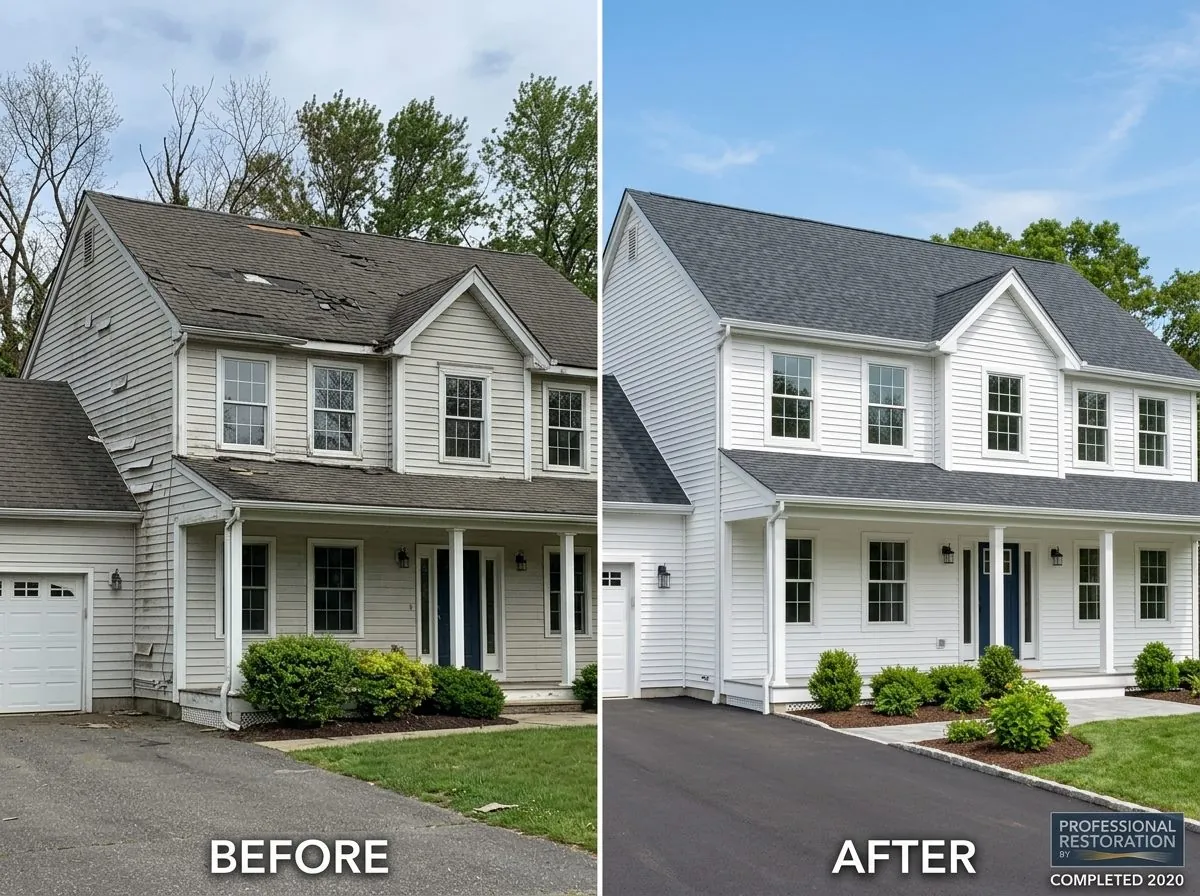
South Wantagh has almost nothing between it and open water — the barrier island, the bay, then the house. When a serious storm comes through, most properties down there take both wind and water in the same hours, and the entire financial outcome of the claim turns on separating the two.
The attribution question is worth more than the damage question
Wind damage and wind-driven rain belong to the homeowners policy. Rising water belongs to flood — NFIP or private — and only if you carry it. Same storm, same night, same house: two policies, two adjusters, and each with an incentive to read ambiguous damage as the other one's problem.
The evidence that settles it is physical, and it is destroyed by cleanup:
- Water entering high — a ceiling stain directly below a roof breach — is wind-driven rain: homeowners
- A horizontal line low on the walls, consistent room to room, is rising water: flood
- Debris and silt at grade outside marks how high the water stood
- Watermarks inside cabinets and on appliance plinths survive after walls are wiped
- Timestamped video walking the whole house beats any number of still photos
Shoot all of it before drying, before demolition, before the helpful crew arrives with the dumpster. An hour of documentation protects both files; its absence turns attribution into the adjusters' assumption, and assumption does not favor you.
Wind evidence has its own shelf life
On the roof, the wind story is written in broken seal bonds, creased shingles and lifted flashing — and it stays readable for weeks. What does not wait is the interior: every rain after the storm adds water that muddies which event did what. Tarp fast, after photographing, and date-stamp the tarping receipts into the file.
Direct exposure, direct consequences
The open fetch that makes Wantagh's exposure unusual also makes its damage patterns legible: failures concentrate on the windward edges — south-facing rakes, first courses above the eave, ridge caps — and on anything the wind could get a finger under. We inspect edge-first, and we find lifted-and-reseated shingles on roofs that look perfect from the lawn after nearly every serious blow.
Jurisdiction is the easy part
Wantagh is unincorporated Town of Hempstead — no village layer, one desk. After the village-by-village complexity elsewhere on the south shore, that is one genuine simplification in the Wantagh claim.
Frequently Asked Questions
Why does it matter whether the water was wind-driven or rising?
Because different policies pay for each. Wind-driven rain through a roof breach is homeowners; rising water is flood coverage only. Both often hit the same Wantagh house in the same hours, and each adjuster has an incentive to read ambiguous damage as the other policy's problem. The physical evidence — stain height, water lines, silt at grade — is what settles it, and cleanup destroys it.
What should I document before the cleanup crew arrives?
Timestamped video walking the entire house, water lines on walls and inside cabinets, debris and silt lines outside at grade, and every ceiling stain relative to the breach above it. Then tarp, and keep the dated receipts. An hour of documentation protects both the wind file and the flood file; nothing recovers the evidence once the walls are wiped and the dumpster is loaded.
Should I file a claim before or after getting an inspection?
Inspection first. You want to know whether the damage exceeds your deductible before a claim goes on your record, because a filed claim that pays nothing still counts as a claim at renewal. We inspect and document at no charge and tell you honestly whether filing is worth it.
Related Reading
- Documenting Roof Damage — what the adjuster needs to see
- Storm Damage Roofs on Long Island — what wind actually does to a roof
- Roof Insurance Claims — how the process really runs
- Emergency Roof Repair — the first 24 hours
- Roofing in Wantagh — the exposure, and the spec that answers it
Also Serving Wantagh
- Masonry & Pavers in Wantagh — patios, walkways and retaining walls
- Roofing in Wantagh — tear-offs, repairs and storm damage
Work With Alec's Construction
This guide is written by the crew that does the work. See Alec's Storm Damage & Insurance Restoration service — emergency tarping, documentation and the claim itself. Licensed and insured on Long Island, one crew start to finish, free walkthrough and a written estimate inside 48 hours.
Booking the cold months now: we also handle Roofing and Siding.
Every town here has villages inside it running their own building department. Our directory sorts out which counter your address actually files at.
Ready to Get Started?
Storm damage moves fast and so do we. Free inspection with full photo documentation for your carrier, and emergency tarping across Nassau and Suffolk County.