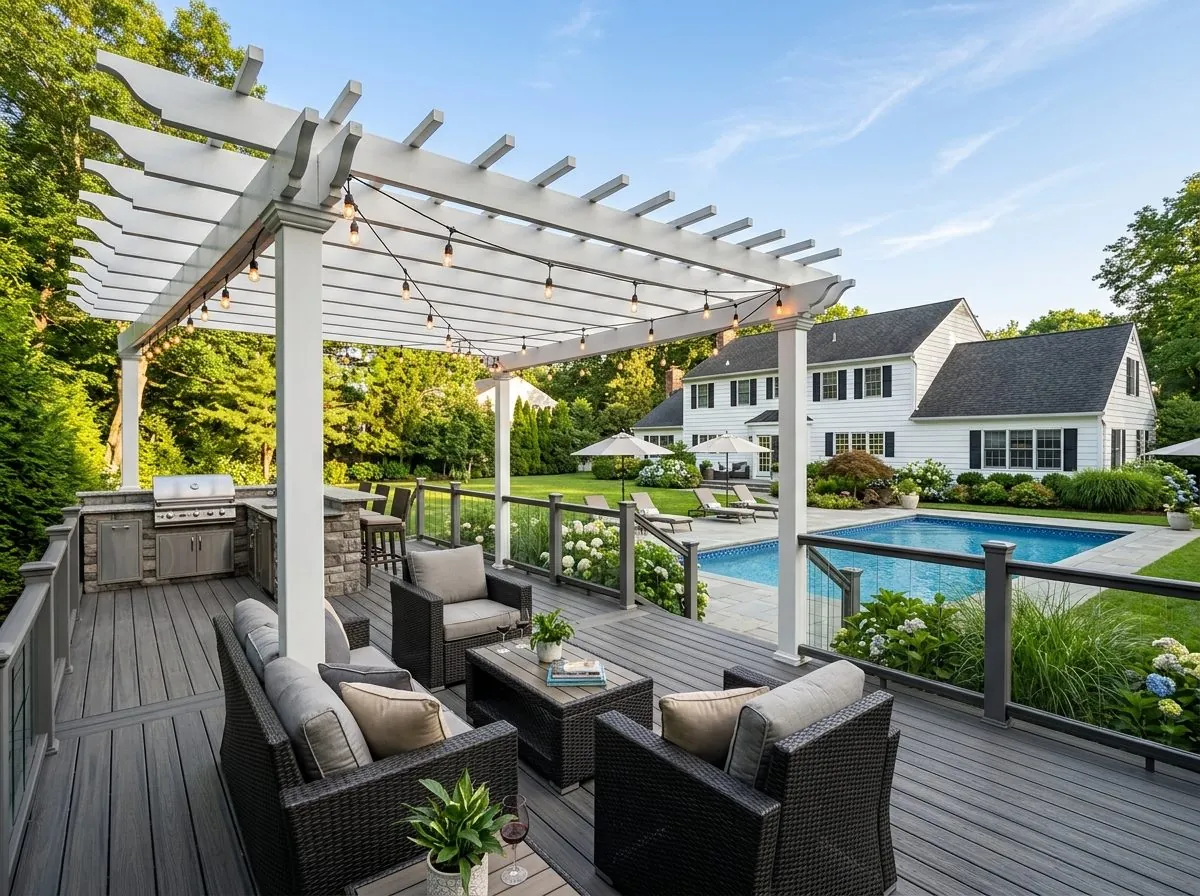
Bay Shore sits on the South Shore, and proximity to the water changes what masonry materials you should be using. Salt is the factor homeowners inland never have to think about, and here it drives real specification decisions.
What Building in Bay Shore Is Actually Like
Airborne salt from the Great South Bay attacks mortar joints and works into porous masonry, where crystallization causes expansion damage similar to what ice does. On top of that, wind-driven rain hits harder here than inland. The practical consequences: favor dense, low-absorption materials; use severe weathering rated brick; specify appropriate mortar; and use a breathable penetrating water repellent rather than a film-forming sealer, which traps moisture and makes spalling worse. Coastal masonry also needs more frequent inspection of joints, chimney crowns and any steel that could corrode. Housing stock here is mixed, with older homes near the village core and newer construction further out.
The Projects We Do Most Here
- Paver patios and pool decks built for salt exposure
- Repointing on homes where salt has accelerated joint deterioration
- Chimney crown and cap work, which fails early in coastal exposure
- Front steps and stoops where de-icing salt has scaled the concrete
- Drainage work on flatter lots with limited discharge options
Permits and Jurisdiction
Bay Shore is an unincorporated hamlet in the Town of Islip, so town requirements govern. Confirm with Islip before designing, particularly for retaining walls, roofed structures, and gas or electrical for outdoor features. Properties near the water may face additional review related to wetlands or flood zones, which is worth checking early since it can affect timeline substantially.
What It Costs
- Paver patio: roughly $28–55 per square foot installed
- Paver walkway: roughly $30–60 per square foot
- Paver driveway: roughly $22–45 per square foot
- Retaining wall: roughly $45–90 per face foot
- Front steps rebuild: roughly $6,000–15,000
- Repointing: roughly $12–25 per square foot of wall face
Access is the biggest single variable on most properties. If a machine can reach the work area, excavation and material handling go quickly. If everything moves by wheelbarrow through a side gate, expect labor to run 20 to 35 percent higher. Any contractor quoting without walking the access route is guessing.
Getting on the Schedule
Masonry season on Long Island runs roughly April through November, and the calendar for spring fills during March. If you want work done next season, the time to design, quote and permit is December through February. Contracts signed in the off-season generally price better and get the dates people actually want.
Frequently Asked Questions
Does salt air really damage masonry?
Yes. Salt works into porous masonry and crystallizes, causing expansion damage similar to freeze-thaw, and it attacks mortar joints. Coastal masonry ages measurably faster than inland masonry.
Should I seal masonry near the water?
Use a breathable penetrating water repellent, not a film-forming sealer. A film traps moisture inside the masonry, which makes spalling worse rather than better.
What pavers hold up best near the bay?
Dense, low-absorption units. Highly porous materials absorb more salt water and suffer more crystallization damage over time.
Related Reading
- Hiring a Masonry Contractor — the questions that separate real masons from the rest
- Paver Patio Cost — a full line-item breakdown
- Best Time to Install Pavers — why winter is when to book
- Pool Deck Pavers — salt, chlorine and material choice
- Repointing — maintaining joints in coastal exposure
- Chimney Repair — the first thing to fail near the water
Also Serving Bay Shore
- ADUs in Bay Shore — accessory apartments and grants
- Attic Insulation in Bay Shore — air sealing, baffles and R-49 depth
- Basement Finishing in Bay Shore — egress, ceiling height and moisture
- Bathroom Remodeling in Bay Shore — full gut renovations
- Chimney Repair in Bay Shore — repointing, crowns, caps and flashing
- Driveway Paving in Bay Shore — blacktop, resurfacing and repairs
- Emergency Roof Repair in Bay Shore — tarping, leaks and storm response
- Fallen Tree Removal & Roof Repair in Bay Shore — tree off the house, roof supported and repaired
- Flood & Water Damage Cleanup in Bay Shore — wet material out, drying metered
- Front Steps & Stoops in Bay Shore — rebuilds, treads and railings
- Garage Conversion in Bay Shore — turning the garage into living space
- Gutter Installation in Bay Shore — seamless gutters, fascia and drainage
- House Painters in Bay Shore — exteriors while the fall window holds
- Hurricane & Storm Damage Repair in Bay Shore — trees, flooding, cleanup and repairs
- Storm Damage & Insurance Restoration in Bay Shore — emergency tarping and the claim
- Interior Painting in Bay Shore — the right work for the cold months
- Kitchen Remodeling in Bay Shore — cabinets, counters and layout
- Roofing in Bay Shore — tear-offs, repairs and storm damage
- Siding in Bay Shore — James Hardie, vinyl and cedar
- Storm Debris Removal & Cleanup in Bay Shore — trees, building debris and hauling
- Storm Roof & Siding Repair in Bay Shore — wind damage, tarped and rebuilt
- Windows & Doors in Bay Shore — insert and full-frame replacement
Work With Alec's Construction
This guide is written by the crew that does the work. See Alec's Masonry & Pavers service — patios, walkways, steps, stoops and retaining walls. Licensed and insured on Long Island, one crew start to finish, free walkthrough and a written estimate inside 48 hours.
Booking the cold months now: we also handle Chimney Repair and Driveways & Blacktop.
Filing something yourself? Our Long Island building department directory lists the address, phone and counter hours for all 23 permit offices in Nassau and Suffolk.
Ready to Get Started?
Bay Shore homeowner? Call Alec's Construction at (631) 312-7441 for a free walkthrough. We are based in East Patchogue and work across Nassau and Suffolk.