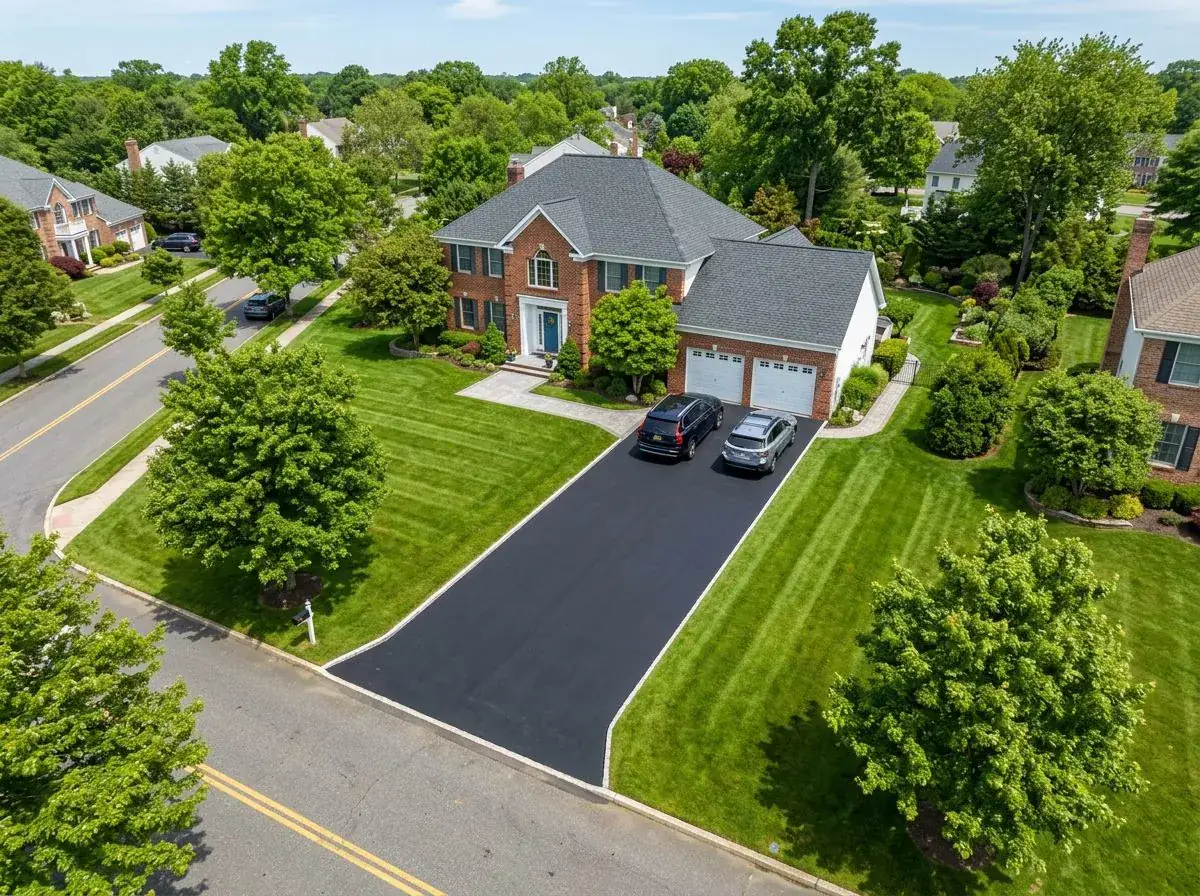
Nesconset sits on classic kettle-and-knoll moraine: the glacier left buried ice blocks that melted into depressions, and the hamlet's yards inherited them. Half the properties here have a low bowl somewhere — back corner, side yard, the neighbor's shared dip — and that bowl runs the drainage design for any hardscape on the lot.
The kettle is the drain — respect it or fight it
- A yard depression that has taken the lot's runoff for seventy years is the de facto drainage system; a patio design that redirects water away from it sends that water somewhere new, usually somewhere worse
- Building IN the low spot is the recurring temptation — it is the flat part — and it puts pavers in the one place on the lot guaranteed to stand in water
- The working pattern: hardscape on the shoulder, graded to feed the depression as it always has, with the bowl kept absorptive — lawn, planted, or a deliberate rain-garden treatment rather than fill
- Filling a kettle to gain yard rarely survives its first wet spring: the water that fed it still arrives, and now ponds on your fill
Perched water, uneven soils
Kettle terrain also means the subsoil changes within single yards — clean sand on the knoll, silty wash in the bowl, and perched water sitting on till lenses in between. We probe where the patio actually goes, not at the driveway, and the base spec follows the probe: standard depth on the sandy shoulder, deeper with geotextile where the ground goes soft. A drywell here gets a percolation sanity-check first — a dry pit dug into a till lens is a decorative bucket.
Walls where the knolls roll
The same terrain gives Nesconset its rolling side yards, and low retaining walls — one or two courses holding a grade change, framing a patio cut into a knoll shoulder — are half the hardscape here. Under four feet they stay out of permit territory; drainage stone and a drain line behind even the low ones is the habit that keeps them plumb, because moraine soil holds water against a wall face like it holds it everywhere else.
Frequently Asked Questions
Can I fill in the low spot in my yard and pave it?
It rarely survives the first wet spring. A kettle depression has been the lot's de facto drain for seventy years — the water that fed it still arrives after you fill it, and now it ponds on top of your fill or finds the neighbor. The working pattern is hardscape on the shoulder, graded to feed the bowl as always, with the depression kept absorptive.
Why does my patio quote depend on where in the yard it goes?
Because kettle terrain changes soil within a single yard — clean sand on the knoll, silty wash in the bowl, perched water on till lenses between. We probe at the actual patio location and spec the base from the probe: standard depth on sand, deeper with geotextile where it goes soft. One uniform assumption across a Nesconset yard is how patios end up wavy.
When can masonry work be done on Long Island?
Roughly April through November. Frozen ground cannot be properly excavated or compacted, and jointing sand needs dry conditions above about 50 degrees to cure. Winter is the right time to design and permit — spring dates fill during March.
Related Reading
- Retaining Walls: Cost and Permits — where engineering becomes mandatory
- Permeable Paving — when coverage rules decide the design
- Why Paver Patios Settle — and how they get lifted and reset
- How a Paver Patio Is Built — excavation through jointing
- Hiring a Masonry Contractor — the questions that separate bids
Work With Alec's Construction
This guide is written by the crew that does the work. See Alec's Masonry & Pavers service — patios, walkways, steps, stoops and retaining walls. Licensed and insured on Long Island, one crew start to finish, free walkthrough and a written estimate inside 48 hours.
Booking the cold months now: we also handle Chimney Repair and Driveways & Blacktop.
We keep a permit office directory for Nassau and Suffolk, checked against each jurisdiction's own site, because we file in these counters constantly.
Also Serving Nesconset
- Attic Insulation in Nesconset — air sealing, baffles and R-49 depth
- Basement Finishing in Nesconset — egress, ceiling height and moisture
- Bathroom Remodeling in Nesconset — full gut renovations
- Fallen Tree Removal & Roof Repair in Nesconset — tree off the house, roof supported and repaired
- Flood & Water Damage Cleanup in Nesconset — wet material out, drying metered
- Gutter Installation in Nesconset — seamless gutters, fascia and drainage
- Hurricane & Storm Damage Repair in Nesconset — trees, flooding, cleanup and repairs
- Interior Painting in Nesconset — the right work for the cold months
- Kitchen Remodeling in Nesconset — cabinets, counters and layout
- Roofing in Nesconset — tear-offs, repairs and storm damage
- Storm Debris Removal & Cleanup in Nesconset — trees, building debris and hauling
- Storm Roof & Siding Repair in Nesconset — wind damage, tarped and rebuilt
Ready to Get Started?
Free design consultation and a written proposal that states excavation depth, base depth and number of compaction lifts — not just the paver line.