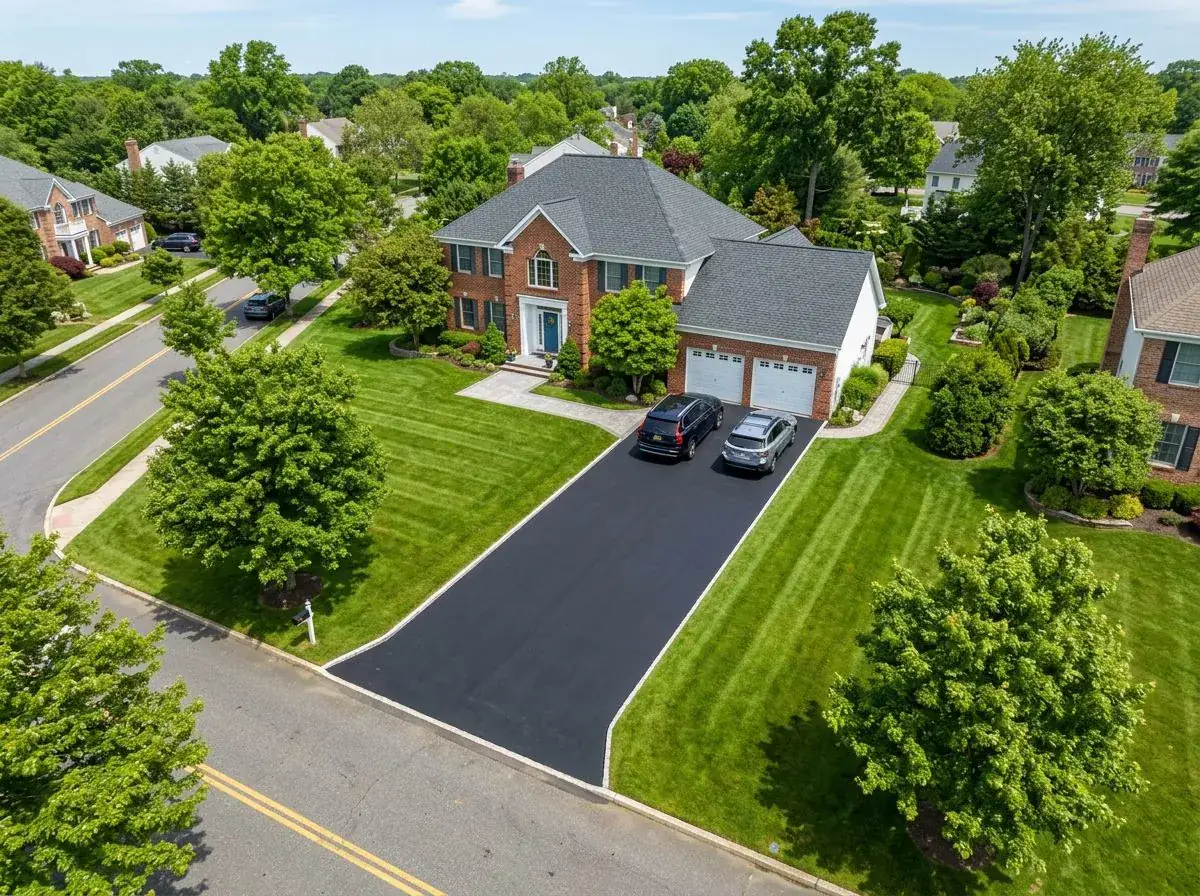
Rocky Point's north end is a 1920s artifact: bungalow-colony streets platted when RCA's giant transmitting station made the hamlet briefly famous and the beach community boomed. The cottages were summer places on lots forty and fifty feet wide; the ones that survived became year-round houses on parcels that would not be approved today — and their yards are the smallest canvases we design on.
Small-lot hardscape is subtraction, not addition
- On a fifty-foot lot the patio, the walk, the parking and the shed compete for the same square feet — the design that works picks fewer, better zones instead of paving the margins of everything
- Coverage math binds hard on parcels this small, and reclaiming coverage — pulling out a cracked old pad or a redundant walk — is often what makes the new patio approvable at all
- One generous sitting zone beats three cramped ones: a 14x16 patio a family uses daily is better design than perimeter pavement that serves nothing
- Vertical elements earn double on small lots — a seat wall is seating, edge and boundary in one course of block
Cottage-era ground rules
Summer-colony construction means these lots hide their history: old cesspools in unexpected places (locate before excavating anywhere), buried walkways from earlier layouts, and mature trees planted a century ago that now own the root zone. The soil is honest north-shore sand and gravel — good draining, straightforward base work — which keeps compact projects affordable.
The slope streets toward the sound
North of 25A the colony streets tilt toward the water, and hardscape picks up the standard slope kit: cheek-walled steps in the front walks, low retaining courses holding parking pads level, and drainage routed deliberately so the downhill neighbor on a forty-foot lot is not the design's drain. Everything stays small — which is the point. Compact scope, tight design, two-to-four day builds, priced for what they are rather than padded toward full-yard numbers.
Frequently Asked Questions
What fits in a bungalow-lot back yard?
One generous zone, not three cramped ones. On a forty- or fifty-foot Rocky Point lot the working design is a single 14x16-ish patio a family actually uses daily, a clean walk, and a seat wall that does triple duty as seating, edge and boundary — with coverage often reclaimed by removing a cracked old pad to make the new plan approvable at all.
What is buried in these old cottage lots?
History. Summer-colony parcels hide old cesspools in unexpected places, walkways from earlier layouts, and century-old root zones — so we locate before excavating anywhere. The soil itself is honest north-shore sand and gravel, which keeps base work simple and compact projects affordable.
When can masonry work be done on Long Island?
Roughly April through November. Frozen ground cannot be properly excavated or compacted, and jointing sand needs dry conditions above about 50 degrees to cure. Winter is the right time to design and permit — spring dates fill during March.
Related Reading
- Paver Patio Cost on Long Island — the full price breakdown
- Permeable Paving — when coverage rules decide the design
- How a Paver Patio Is Built — excavation through jointing
- Why Paver Patios Settle — and how they get lifted and reset
- Hiring a Masonry Contractor — the questions that separate bids
Work With Alec's Construction
This guide is written by the crew that does the work. See Alec's Masonry & Pavers service — patios, walkways, steps, stoops and retaining walls. Licensed and insured on Long Island, one crew start to finish, free walkthrough and a written estimate inside 48 hours.
Booking the cold months now: we also handle Chimney Repair and Driveways & Blacktop.
Not sure whether the town or village files your permit? That question trips up more Long Island projects than any other — the directory sorts it out.
Also Serving Rocky Point
- Attic Insulation in Rocky Point — air sealing, baffles and R-49 depth
- Basement Finishing in Rocky Point — egress, ceiling height and moisture
- Bathroom Remodeling in Rocky Point — full gut renovations
- Fallen Tree Removal & Roof Repair in Rocky Point — tree off the house, roof supported and repaired
- Flood & Water Damage Cleanup in Rocky Point — wet material out, drying metered
- Gutter Installation in Rocky Point — seamless gutters, fascia and drainage
- Hurricane & Storm Damage Repair in Rocky Point — trees, flooding, cleanup and repairs
- Interior Painting in Rocky Point — the right work for the cold months
- Kitchen Remodeling in Rocky Point — cabinets, counters and layout
- Roofing in Rocky Point — tear-offs, repairs and storm damage
- Storm Debris Removal & Cleanup in Rocky Point — trees, building debris and hauling
- Storm Roof & Siding Repair in Rocky Point — wind damage, tarped and rebuilt
Ready to Get Started?
Free design consultation and a written proposal that states excavation depth, base depth and number of compaction lifts — not just the paver line.