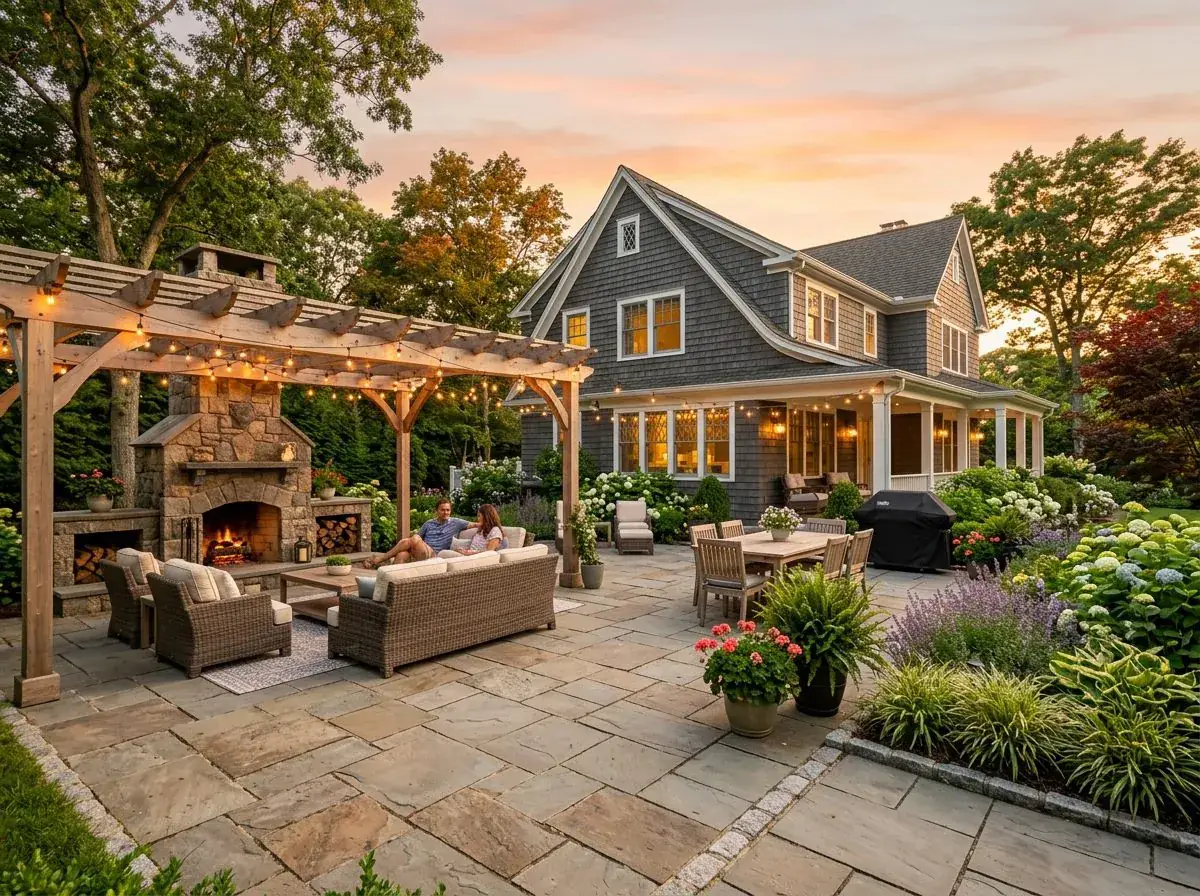
An outdoor kitchen is a masonry structure with plumbing and electrical in it, sitting outdoors, in a climate that freezes. That framing is worth holding onto, because most of the ways these projects disappoint have nothing to do with the grill and everything to do with water that was not drained before December.
What They Cost on Long Island
- Basic grill surround: roughly $6,000–12,000 — masonry island, countertop, built-in grill, no utilities beyond a gas line
- Mid-range kitchen: roughly $15,000–30,000 — L-shaped island, grill, side burner, refrigerator, sink, counter seating
- Full outdoor kitchen: roughly $35,000–80,000+ — extended runs, pizza oven, bar seating, dedicated utilities, pergola or roof structure
Roughly speaking the split is a third masonry structure, a third appliances and countertop, and a third utilities, patio work and finishes. Appliances are where budgets run away — the difference between a solid built-in grill and a top-tier one can be ten thousand dollars on its own.
Freeze Protection Is the Whole Game
Water lines must be drainable. Any outdoor kitchen with a sink needs a supply line that can be shut off from inside and drained completely before the first freeze. That means a shutoff valve indoors and a drain point at the low end of the run. If the line cannot be fully drained, it will split — not necessarily the first winter, but eventually, and the leak will be inside a masonry structure.
Drain lines need pitch and a plan. A sink draining into a dry well needs consistent fall and a trap that will not hold standing water through a freeze.
The structure needs footings below frost depth — generally about 36 inches on Long Island — or it will heave. A heaved island cracks its countertop and racks its appliance openings so doors no longer close.
The interior of the island has to drain. Water gets in, through the countertop seams, around the grill, through the door openings. If the base of the island is a sealed concrete box, water collects, freezes and splits the structure from inside. Correct builds include weep openings at the base.
Appliances need to be rated for outdoor use and winterized. Refrigerators in particular usually need to be pulled or shut down and dried out for the season.
Countertops That Handle Our Climate
- Granite: the workhorse. Handles freeze-thaw well, needs periodic sealing. Roughly $70–120 per square foot installed.
- Porcelain slab: excellent freeze and UV performance, nearly zero porosity. Roughly $85–150 per square foot.
- Concrete: attractive and customizable but porous and prone to hairline cracking outdoors unless well made and sealed. Roughly $75–140.
- Bluestone: traditional Long Island look, works well, more porous than granite and wants sealing.
- Avoid marble and most quartz. Marble etches and stains badly outdoors. Engineered quartz uses resin binders that discolor under UV and are generally not warranted for outdoor use.
Layout Decisions That Matter
Put the grill downwind of the seating. On Long Island the prevailing summer breeze is generally from the southwest. Orienting so smoke does not blow across the dining area is free at the design stage and impossible to fix later.
Leave real landing space. At least 18 to 24 inches of counter on both sides of the grill. Kitchens that fail in use usually fail because there is nowhere to put a tray down.
Keep it near the house. Every foot of distance adds utility trench cost and reduces how often the kitchen actually gets used. A beautiful outdoor kitchen 60 feet from the back door gets used less than a modest one 15 feet away.
Plan for shade. A pergola or roof extends the usable season on both ends and protects the appliances. It also usually requires a permit, so factor it into the timeline.
Permits and Utilities
Gas line work requires a licensed plumber and, in most Long Island jurisdictions, a permit and inspection. Electrical work requires a licensed electrician, permit, and outdoor-rated GFCI protection. Any roofed structure over the kitchen typically requires a building permit. The masonry island itself often does not, but the utilities feeding it generally do. Do not let anyone run a gas line without a permit — that is a serious safety and insurance issue, and it surfaces at resale.
Frequently Asked Questions
Can I use an outdoor kitchen year-round on Long Island?
The grill, yes. Anything with water needs to be winterized and shut down, typically November through March. A roof structure and heaters meaningfully extend the shoulder seasons.
Do I need a permit for an outdoor kitchen?
The masonry island frequently does not require one, but gas and electrical work almost always do, and any roofed structure usually does. Confirm with your town before starting.
What is the best countertop for an outdoor kitchen here?
Granite or porcelain slab. Both handle freeze-thaw and UV well. Avoid marble and engineered quartz outdoors.
How long does an outdoor kitchen take to build?
Typically two to five weeks depending on scope, plus lead time on appliances and any permit review. Utility rough-in and inspections often drive the schedule more than the masonry does.
Related Reading
- Fire Pits and Fire Features — the lower-cost way to extend the season
- Paver Patio Cost — the patio the kitchen sits on
- Hiring a Masonry Contractor — vetting the builder
- Retaining Walls — creating level space in a sloped yard
- Outdoor Lighting — making the space usable after dark
- Patio Covers & Pergolas — covering the kitchen you just built
Work With Alec's Construction
This guide is written by the crew that does the work. See Alec's Kitchen Remodeling service — cabinets, counters and layout, installed by one crew. Licensed and insured on Long Island, one crew start to finish, free walkthrough and a written estimate inside 48 hours.
Booking the cold months now: we also handle Bathroom Remodeling and Painting.
Every town here has villages inside it running their own building department. Our directory sorts out which counter your address actually files at.
Ready to Get Started?
Planning an outdoor kitchen for next season? Call Alec's Construction at (631) 312-7441. Winter is the right time to design and permit — Nassau and Suffolk County.