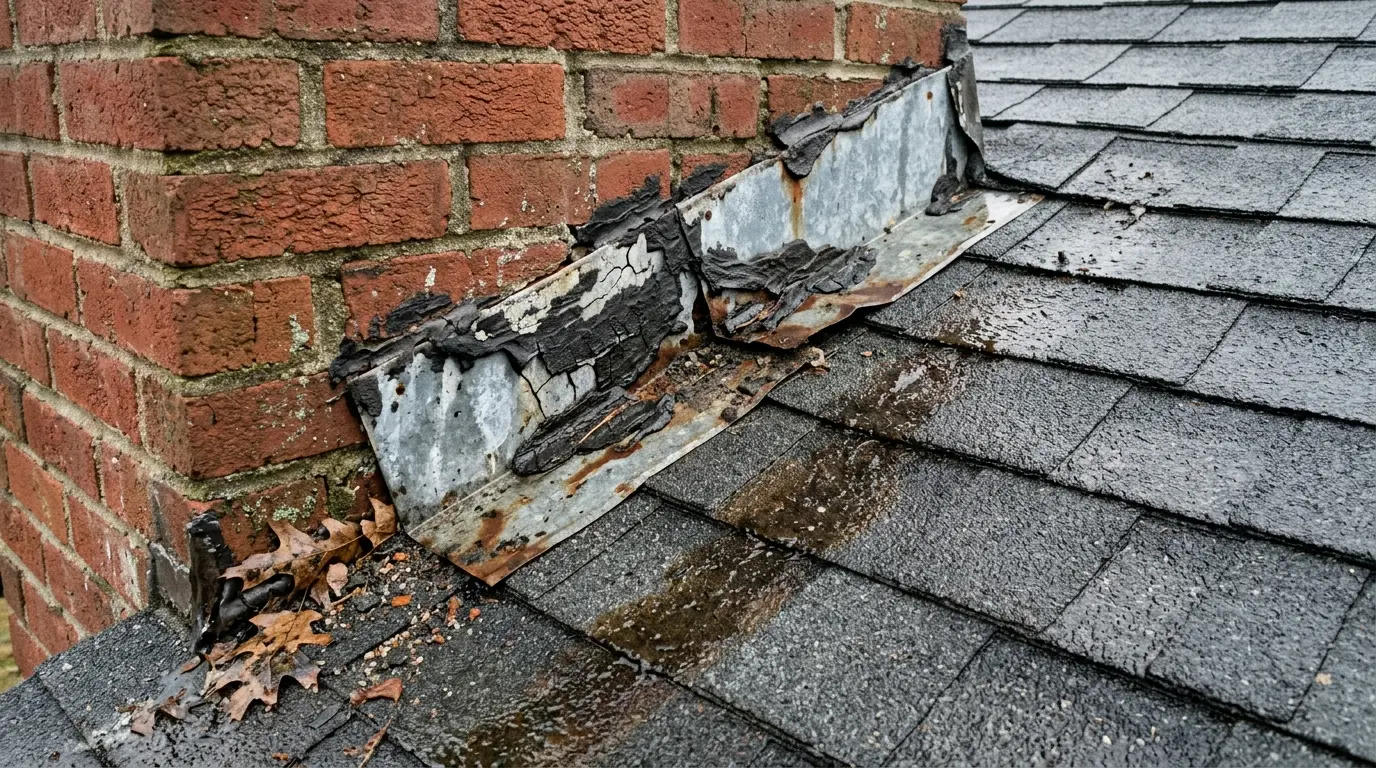
Almost every roof leak we are called to on Long Island starts somewhere other than where the stain is, and almost none of them are a hole in the field of the roof.
Water Travels Before It Drops
This is the single most useful thing to understand about a roof leak. Water gets through the roof plane at one point, then runs along the underside of the deck, down a rafter, along a top plate, and drops wherever the path finally runs out — which can be twenty feet from where it got in, and on the other side of the room.
Which is why patching the ceiling above the stain never works, and why a contractor who quotes a repair without going into the attic is guessing.
The trace goes: attic first, with a light, following the staining and the rust trail on the nails back uphill to the entry point. Then the roof, at that point, to confirm the detail that failed.
The Six Places It Actually Comes From
Flashing — chimney, sidewall, valley, skylight. This is the majority of leaks, by a wide margin. Flashing is the transition between the roof plane and something that is not the roof plane, and transitions are where assemblies fail. Chimney flashing on Long Island is very often the original step flashing with a bead of roof cement smeared over it, which is a two-year fix that was applied ten years ago.
The eave edge. Wind-driven rain and ice backup push water up under the first courses. On any roof older than about twenty years there is often no ice-and-water membrane there, so the deck takes it directly.
Valleys. Two roof planes delivering their water into one channel. If the valley was cut close, or the membrane under it is short, or debris has been sitting in it for years, it leaks.
Nail pops and fastener backout. Shingles fastened too high, or into a soft deck, work loose over seasonal movement until the nail head sits proud of the shingle above it. Each one is a small hole with a metal wick in it.
Plumbing vent boot collars. The rubber collar around the vent pipe is the shortest-lived component on most roofs — it hardens, cracks and splits open at ten to fifteen years, and it fails long before the shingles do. If your leak is near a bathroom, look here first.
Skylights. Not the glass. The head flashing, the curb, and whether it was installed with a proper kit or bedded in sealant.
When It Is Not the Roof
A meaningful share of "roof leaks" on Long Island are not roof leaks at all.
Condensation. A poorly ventilated attic in winter puts warm moist house air against a cold deck, and it condenses, drips and stains exactly like a leak. The tell is that it is worse in a cold snap than in a rainstorm, and that the staining is general rather than tracing to a point.
Ice dams. Standing meltwater backing up under the shingles. The tell is a leak at the exterior wall that appears days into a freeze rather than during rain.
Siding and window flashing. Wind-driven rain entering above and running down inside the wall, appearing at a ceiling corner.
Chimney masonry itself. A cracked crown or open mortar joints let water into the stack, and it comes out at the ceiling next to the chimney. Nothing to do with the roof — everything to do with the chimney.
Repair or Replace
An honest answer depends on three things and not on how badly anyone wants to sell you a roof.
Age and remaining life. Architectural shingles on Long Island realistically run twenty to twenty-five years, less on a poorly ventilated attic that cooks them from below and less again on a salt-exposed south shore or harbour-front house.
Whether the deck is sound. Once water has been getting in long enough to soften the sheathing, a surface repair is putting a patch over rot. That gets opened up and replaced regardless.
How many separate failures there are. One failed vent boot on a fifteen-year-old roof is a repair, and anybody who calls it a re-roof is selling. Lifted shingles across the windward slope, three failed flashings and granule loss in the gutters is a roof at the end of its life, and repairing it one leak at a time is more expensive over five years.
We will tell you which one you have, in writing, and we do repairs — a contractor who only does replacements will always find a replacement.
Winter Leaks Specifically
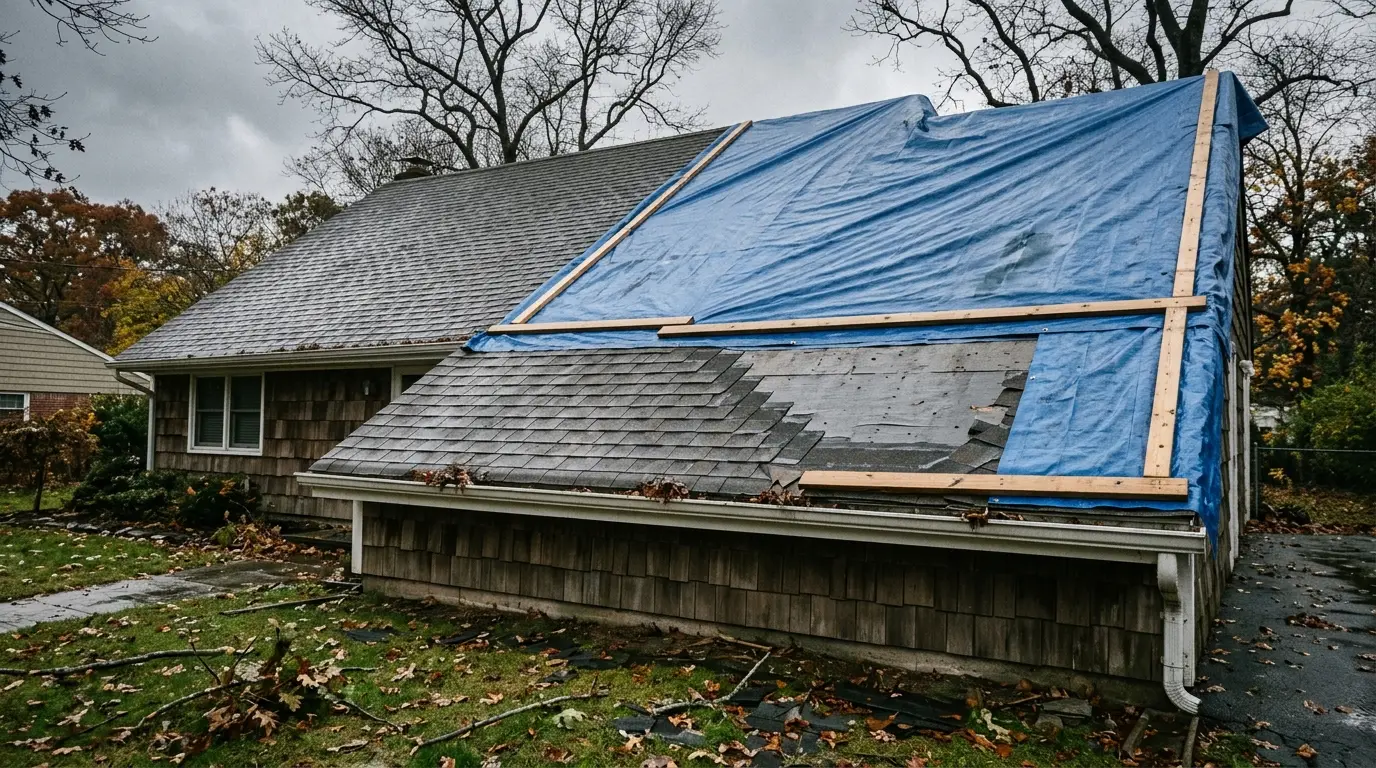
Emergency stabilisation, tarping and flashing repair happen in any weather. A full shingle replacement needs temperatures warm enough for the seal strips to activate and bond, so a genuine winter tear-off is done with hand-sealing and the right materials or it is stabilised now and completed properly in spring.
Either is legitimate. What is not legitimate is a full tear-off in January with no hand-sealing, which produces a roof that blows off in the first March wind.
Roof leak on Long Island: (631) 312-7441. Licensed HI-68303, insured, based in East Patchogue.
Frequently Asked Questions
Why is my roof leaking where there is no damage above it?
Water gets through the roof plane at one point, then runs along the underside of the deck and down a rafter before it drops — often twenty feet from where it entered. That is why the stain is rarely under the failure, and why the trace has to start in the attic with a light, following the staining and rust on the nails back uphill.
What is the most common cause of a roof leak?
Flashing, by a wide margin — chimney, sidewall, valley and skylight. Flashing is the transition between the roof and something that is not the roof, and transitions are where assemblies fail. On Long Island the classic version is original step flashing with roof cement smeared over it years ago.
Can a roof leak be fixed in winter?
Emergency stabilisation, tarping and flashing repairs happen in any weather. A full shingle replacement needs temperatures warm enough for the seal strips to bond, so a winter tear-off is done with hand-sealing and the right materials, or the roof is stabilised now and replaced properly in spring.
How do I know if I need a repair or a whole new roof?
Three things: the age and realistic remaining life of the shingles, whether the deck underneath has softened, and how many separate failures there are. One cracked vent boot collar on a fifteen-year-old roof is a repair. Lifted shingles across the windward slope plus multiple failed flashings plus granules in the gutters is a roof at the end of its life.
Could my roof leak actually be condensation?
It happens more than people expect. A poorly ventilated attic puts warm moist house air against a cold deck in winter, and it condenses and drips exactly like a leak. The tell is that it is worse during a cold snap than during rain, and the staining is general rather than tracing back to one point.
Related Guides
- Emergency Roof Repair on Long Island
- Ice Dam Removal — What Is Safe and What Is Not
- Ice Dams: Cause, Cure and Prevention
- Frozen and Burst Pipes on Long Island
- Storm Damage Roof Claims
- Filing a Roof Insurance Claim
Work With Alec's Construction
This guide is written by the crew that does the work. See Alec's Roofing service — tear-offs, repairs, flashing and storm damage across Suffolk and Nassau. Licensed and insured on Long Island, one crew start to finish, free walkthrough and a written estimate inside 48 hours.
Booking the cold months now: we also handle Seamless Gutters and Storm Damage & Insurance Restoration.
Get a Free Estimate from Alec's Construction
Licensed and insured, working across Nassau and Suffolk County since 2018. We come out, look at the actual job, and put a written number in your hand — no pressure, no obligation.
Book a Free WalkthroughOr call (631) 312-7441