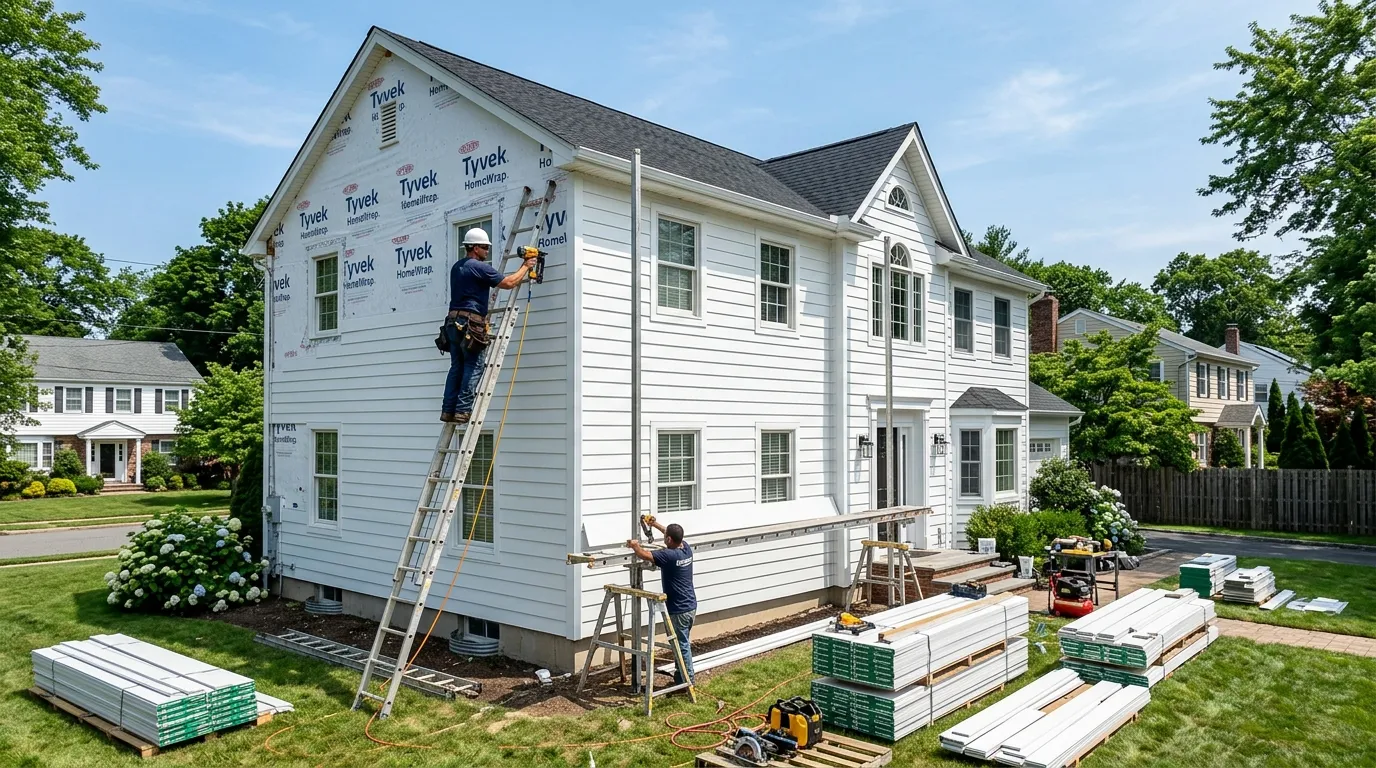
Alec's Construction replaces and repairs siding in Commack, Suffolk County — vinyl, fibre cement and cedar, with the housewrap, flashing and sheathing repair behind it — working out of the yard in East Patchogue. Siding runs through our winter on the days above freezing, and fibre cement and cedar do not mind the cold at all.
Siding in Commack
Commack's 1960s and 1970s colonials are big, simple boxes with a lot of wall area, and a lot of them are still in the original aluminum or the vinyl that replaced it in the 1990s. The size is the point — a Commack re-side is more square feet than most, and it is where the choice between vinyl and fibre cement has the largest cost difference and the largest difference in how the house looks from the street. The shaded north elevations under the trees grow algae on any material.
The Wall Behind the Siding Is the Job
Siding is a rain screen. Water gets behind every kind of siding there is — wind-driven, capillary, at every joint and every opening — and what keeps the wall dry is the water-resistive barrier behind it and the way the windows and doors are flashed into that barrier. On houses sided before the 1990s there is frequently nothing back there but building paper that failed decades ago, or bare sheathing.
A re-side is the one time the wall is open. The sheathing gets inspected and repaired where it is soft, a proper housewrap goes on, the openings get flashed in the right order — sill pan, jambs, head — and the siding goes on top as the finish. Skipping that to save a day is how a new siding job rots the wall behind it.
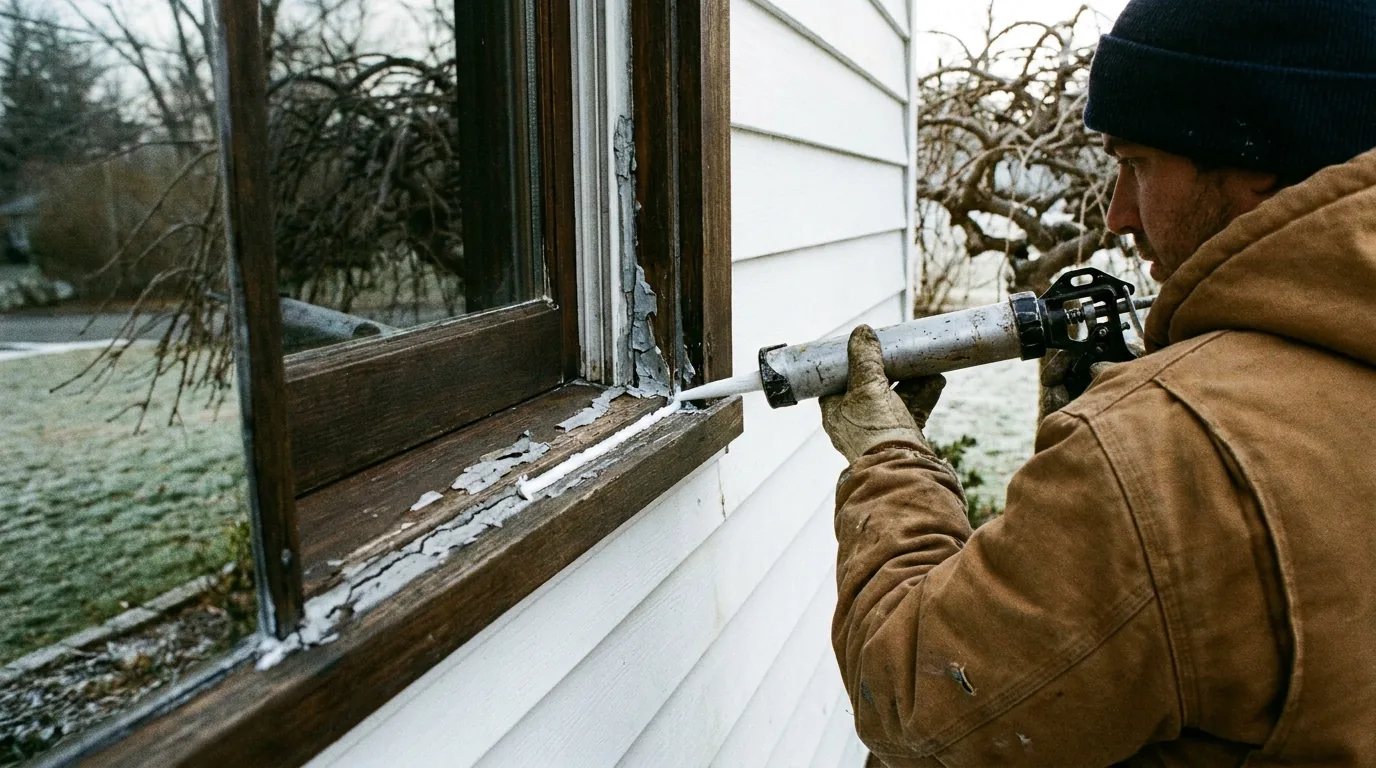
Materials, Honestly
- Vinyl — least cost, no maintenance, installed loose to move with temperature. Brittle in the cold, so winter installs are done with care and not on the coldest days.
- Fibre cement — holds a crisp edge and a painted finish, takes a colour change later, does not chalk or corrode. Reads as wood from the street. Fine in any weather.
- Cedar — what the older houses were built with. Beautiful, and it needs the maintenance it was always going to need. Repair in kind where it is mostly sound.
Permits in Commack
Commack straddles the Town of Huntington and the Town of Smithtown, and the two do not file the same way. Huntington requires plans sealed by a licensed architect or professional engineer for alterations over ten thousand dollars; Smithtown does not have the same threshold. Siding replacement in kind is usually maintenance; where sheathing is replaced or openings change, it becomes permitted work, and we file.
Free walkthrough in Commack. Alex looks at every elevation, probes the soft spots, photographs the openings, and you get a written scope and the photographs whether or not you hire us.
Frequently Asked Questions
Vinyl or fibre cement on a Commack colonial?
Both are honest choices on a Commack colonial and the difference is what you want the house to look like in fifteen years. Vinyl costs less, needs nothing, and will look like vinyl. Fibre cement costs more, holds a crisp edge and a painted finish, and reads as a wood-sided house from the street. On a big two-storey colonial the difference in appearance is real. Either way the housewrap and the window flashing behind it are the same, and that is the part not to save money on.
Vinyl or fibre cement?
Vinyl costs less, needs nothing, and looks like vinyl. Fibre cement costs more, holds a crisp edge and a painted finish, takes a colour change later, and reads as a wood-sided house from the street. Both are honest choices. The wrap and the flashing behind them are identical, and that is the part not to save on.
Can you match the existing siding for a repair?
Sometimes. Vinyl profiles and colours are discontinued constantly, and a patch in a colour that has faded for twenty years will show. Where a match is not possible we side the whole elevation so the seam is at a corner, which is invisible. We tell you which it is going to be before we start.
Can siding be installed in winter?
Yes, on the days that allow it. Fibre cement and cedar do not care about the cold. Vinyl gets brittle below about 40°F and has to be cut and nailed with more care — it is installed loose to move with temperature, and a cold-day install has to leave the right gap so it does not buckle in July. We work the winter calendar around the forecast and we do not hang vinyl on the coldest days.
Related Guides
- Siding in Huntington, NY
- Siding in Islip, NY
- Siding on Long Island
- Windows and Doors on Long Island
- Roofing on Long Island
Also Serving Commack
- ADUs in Commack — accessory apartments and grants
- Attic Insulation in Commack — air sealing, baffles and R-49 depth
- Basement Finishing in Commack — egress, ceiling height and moisture
- Bathroom Remodeling in Commack — full gut renovations
- Chimney Repair in Commack — repointing, crowns, caps and flashing
- Emergency Roof Repair in Commack — tarping, leaks and storm response
- Garage Conversion in Commack — turning the garage into living space
- Gutter Installation in Commack — seamless gutters, fascia and drainage
- House Painters in Commack — exteriors while the fall window holds
- Storm Damage & Insurance Restoration in Commack — emergency tarping and the claim
- Interior Painting in Commack — the right work for the cold months
- Kitchen Remodeling in Commack — cabinets, counters and layout
- Roofing in Commack — tear-offs, repairs and storm damage
- Windows & Doors in Commack — insert and full-frame replacement
Work With Alec's Construction
This guide is written by the crew that does the work. See Alec's Siding service — James Hardie, vinyl and cedar with the rot behind it repaired first. Licensed and insured on Long Island, one crew start to finish, free walkthrough and a written estimate inside 48 hours.
Booking the cold months now: we also handle Roofing and Painting.
Get a Free Estimate from Alec's Construction
Working across Suffolk County since 2018, one crew from start to finish. We come out, look at the actual job, and put a written number in your hand — no pressure, no obligation.
Or call (631) 312-7441