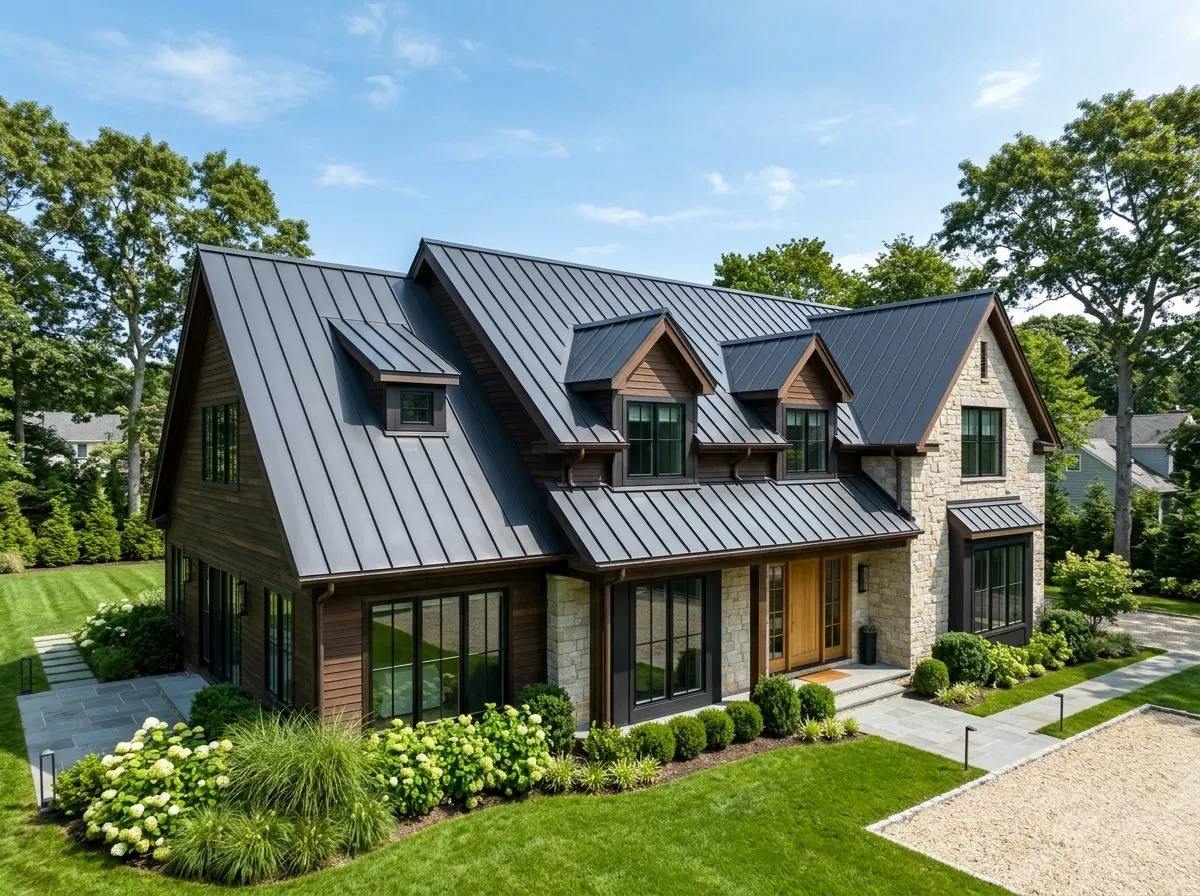
Commack splits between two towns — most of it Smithtown, a western band Huntington — and as always we verify the parcel before any job that files. But the genuinely local roofing story here is above the ceiling: Commack's 1960s ranch-and-split stock was the heartland of the power attic fan, and those fans are now sabotaging the modern ventilation on the same roofs.
The fan-versus-ridge-vent short circuit
A powered attic fan pulls air from the easiest opening available. When a later re-roof added a ridge vent — as most did — the easiest opening became the ridge vent three feet away, not the soffits at the eaves. The result:
- The fan pulls outside air in through the ridge and pushes it back out — a loop that moves lots of air past the thermostat and none through the attic
- The soffit-to-ridge convection the ridge vent was designed for is overpowered and stops
- Worse, a strong fan in a leaky house pulls conditioned air out of the living space through every ceiling gap — you pay to cool air and then pay the fan to throw it away
- The fix is choosing ONE system: seal and remove the fan and let the ridge work, or keep the fan and close the ridge. Running both is paying twice for less than either
On every Commack re-roof we make that call explicitly, in the scope. The default on a house with real soffit intake is passive ridge — no motor, no electricity, no burned-out unit leaking through its own curb in eight years, which is the other way these fans total roofs: a dead fan is a hole with a rusted hood on it.
The re-roof itself is the easy part
Commack's expanded ranches and splits are known geometry — the wave of same-age roofs, the addition transitions, the walkable pitches. Standard one-to-two day replacements, priced predictably. The ventilation decision above is the part that determines whether the new shingles reach their rated life, and it is the part every bargain bid skips.
Two towns, one hamlet
A like-for-like re-roof rarely cares which town you are in, but structural work, solar additions and permits do — and Commack parcels file with Smithtown or Huntington depending on where the line runs. We check it at the estimate so it never matters later.
Frequently Asked Questions
Should my attic fan stay when the roof is replaced?
Usually not — if the house has real soffit intake, a passive ridge vent does the job with no motor to burn out and no curb to leak. What definitely cannot stay is the current arrangement on most Commack ranches: a fan AND a ridge vent, where the fan short-circuits through the ridge three feet away and the attic barely ventilates. Pick one system; we make that call explicitly in every re-roof scope.
Does a power attic fan lower my cooling bills?
In a tight, well-insulated house, marginally. In a typical leaky one it can do the opposite — pulling conditioned air out of the living space through every ceiling gap, so you pay to cool air and then pay the fan to discard it. The passive soffit-to-ridge path, unobstructed, is the arrangement that costs nothing to run and cannot fail on.
How long does a roof replacement take?
One to two days for a typical Long Island house. Tear-off and dry-in happen the same day — we never leave a roof open overnight.
Related Reading
- Roof Ventilation — the thing that quietly kills roofs early
- Comparing Roofing Quotes — the checklist every bid must answer
- How Long a Roof Lasts Here — salt, wind and freeze-thaw
- Roof Replacement Cost on Long Island — what drives the number
- Hiring a Roofing Contractor — the questions that separate bids
Work With Alec's Construction
This guide is written by the crew that does the work. See Alec's Roofing service — tear-offs, repairs, flashing and storm damage across Suffolk and Nassau. Licensed and insured on Long Island, one crew start to finish, free walkthrough and a written estimate inside 48 hours.
Booking the cold months now: we also handle Seamless Gutters and Storm Damage & Insurance Restoration.
Filing something yourself? Our Long Island building department directory lists the address, phone and counter hours for all 23 permit offices in Nassau and Suffolk.
Also Serving Commack
- ADUs in Commack — accessory apartments and grants
- Attic Insulation in Commack — air sealing, baffles and R-49 depth
- Basement Finishing in Commack — egress, ceiling height and moisture
- Bathroom Remodeling in Commack — full gut renovations
- Chimney Repair in Commack — repointing, crowns, caps and flashing
- Emergency Roof Repair in Commack — tarping, leaks and storm response
- Fallen Tree Removal & Roof Repair in Commack — tree off the house, roof supported and repaired
- Flood & Water Damage Cleanup in Commack — wet material out, drying metered
- Garage Conversion in Commack — turning the garage into living space
- Gutter Installation in Commack — seamless gutters, fascia and drainage
- House Painters in Commack — exteriors while the fall window holds
- Hurricane & Storm Damage Repair in Commack — trees, flooding, cleanup and repairs
- Storm Damage & Insurance Restoration in Commack — emergency tarping and the claim
- Interior Painting in Commack — the right work for the cold months
- Kitchen Remodeling in Commack — cabinets, counters and layout
- Siding in Commack — James Hardie, vinyl and cedar
- Storm Debris Removal & Cleanup in Commack — trees, building debris and hauling
- Storm Roof & Siding Repair in Commack — wind damage, tarped and rebuilt
- Windows & Doors in Commack — insert and full-frame replacement
Ready to Get Started?
Free roof inspection with photos of what we find and a written scope listing underlayment, ice-and-water coverage and ventilation. Nassau and Suffolk County.