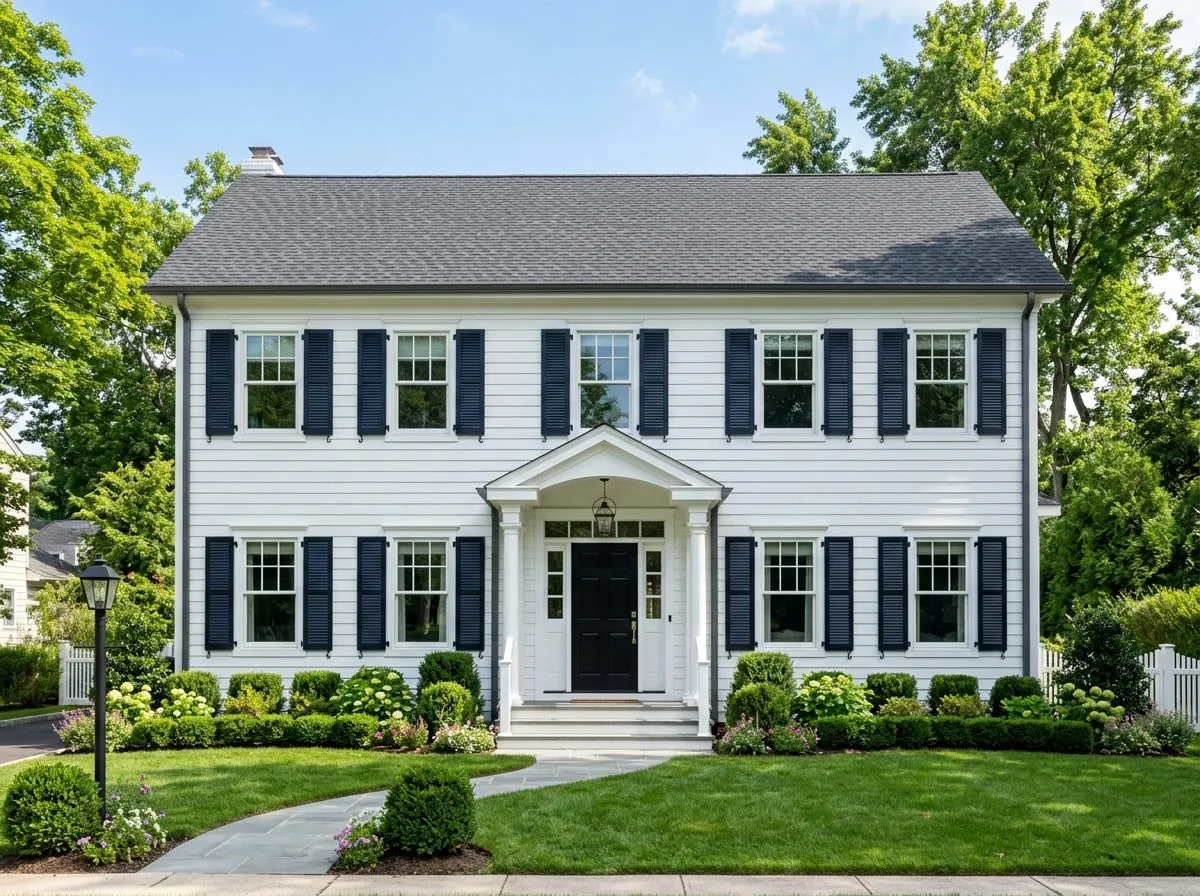
Medford is unincorporated Town of Brookhaven, and the bulk of it went up from the late 1960s through the 1980s. That build era produced two siding situations we see constantly here, and they are very different jobs.
Situation one: original T1-11 plywood siding
A lot of 1970s Long Island houses were sided in T1-11, the grooved plywood panel that served as both sheathing and finish siding in one product. It was cheap and it worked, right up until the paint film failed.
T1-11 is structural. When it delaminates at the bottom edge or swells at the panel joints, you are not looking at a cosmetic problem — the wall's sheathing is failing. It also means there is nothing behind it. Strip T1-11 and you are looking at studs and insulation, so the new assembly needs fresh sheathing, housewrap and flashing built from scratch.
That is a real cost and it surprises homeowners who were quoted "siding." We write it explicitly rather than discovering it on day two.
Situation two: 1990s vinyl at the end of its run
The other common Medford case is a re-side done in the 1990s that is now thirty years old. Vinyl of that vintage gets brittle, fades unevenly, and cracks rather than flexes when something hits it. It also frequently went on over the original siding with no housewrap.
- Chalky surface that leaves residue on your hand
- Color variation between elevations, worst on the south and west
- Cracked or missing pieces that no longer have a color match available
- Panels rattling in wind, which means the nailing was too tight or too loose
- Warped or wavy runs, which means it was nailed without an expansion allowance
Vinyl is nailed loose on purpose
This is the single most common vinyl installation error and Medford has a lot of it. Vinyl expands and contracts significantly with temperature — a twelve-foot panel moves close to half an inch across a Long Island year. It has to hang from its nail slots, not be pinned tight.
Nailed tight, it buckles into waves in July and pulls its own fasteners in January. If your current siding is wavy, that is why, and no amount of replacing individual panels fixes it.
Big simple walls price well
Medford houses tend toward large, straightforward elevations — ranches, splits and colonials with uncomplicated massing. That is good news on price per square foot. The cost driver here is almost never the wall area; it is what we find behind the old siding and how much trim, soffit and fascia comes with the job.
Frequently Asked Questions
My house has T1-11 plywood siding. Can it just be covered over?
We advise against it. T1-11 is structural sheathing as well as finish siding, so when it delaminates or swells you have a failing wall, not a cosmetic problem. Covering it traps the failure. Stripping it means the new assembly needs fresh sheathing, housewrap and flashing built from scratch — a real cost that belongs in the quote, not discovered on day two.
Why is my vinyl siding wavy?
It was nailed too tight. Vinyl expands and contracts substantially with temperature — a twelve-foot panel moves nearly half an inch across a Long Island year — so it must hang from its nail slots rather than be pinned. Nailed tight it buckles in summer and pulls fasteners in winter. Replacing individual panels does not fix it.
How long does a siding job take?
Three to six days on a typical Long Island house, depending on size, how many stories, and how much trim and flashing work comes with it. Fiber cement runs longer than vinyl because the material is heavier and slower to cut and hang.
Do you have to remove the old siding?
We recommend it and we quote it that way. Siding over siding hides whatever is wrong with the sheathing underneath, adds thickness that throws off every window and door detail, and makes proper housewrap and flashing impossible. It is cheaper today and it is how water damage stays hidden for a decade.
Related Reading
- James Hardie Fiber Cement on Long Island — HZ5 spec, real costs, and where vinyl still wins
- Siding Replacement Cost — what actually drives the number
- Storm Damage on Long Island — wind, siding and the insurance path
- Hiring a Roofing Contractor — roof and siding sell together for a reason
- Brick and Stone Veneer — where masonry beats siding on a facade
Also Serving Medford
- ADUs in Medford — accessory apartments and grants
- Attic Insulation in Medford — air sealing, baffles and R-49 depth
- Basement Finishing in Medford — egress, ceiling height and moisture
- Bathroom Remodeling in Medford — full gut renovations
- Chimney Repair in Medford — repointing, crowns, caps and flashing
- Driveway Paving in Medford — blacktop, resurfacing and repairs
- Emergency Roof Repair in Medford — tarping, leaks and storm response
- Fallen Tree Removal & Roof Repair in Medford — tree off the house, roof supported and repaired
- Flood & Water Damage Cleanup in Medford — wet material out, drying metered
- Front Steps & Stoops in Medford — rebuilds, treads and railings
- Garage Conversion in Medford — turning the garage into living space
- Gutter Installation in Medford — seamless gutters, fascia and drainage
- House Painters in Medford — exteriors while the fall window holds
- Hurricane & Storm Damage Repair in Medford — trees, flooding, cleanup and repairs
- Storm Damage & Insurance Restoration in Medford — emergency tarping and the claim
- Interior Painting in Medford — the right work for the cold months
- Kitchen Remodeling in Medford — cabinets, counters and layout
- Masonry & Pavers in Medford — patios, walkways and retaining walls
- Roofing in Medford — tear-offs, repairs and storm damage
- Storm Debris Removal & Cleanup in Medford — trees, building debris and hauling
- Storm Roof & Siding Repair in Medford — wind damage, tarped and rebuilt
- Windows & Doors in Medford — insert and full-frame replacement
Work With Alec's Construction
This guide is written by the crew that does the work. See Alec's Siding service — James Hardie, vinyl and cedar with the rot behind it repaired first. Licensed and insured on Long Island, one crew start to finish, free walkthrough and a written estimate inside 48 hours.
Booking the cold months now: we also handle Roofing and Painting.
Not sure whether the town or village files your permit? That question trips up more Long Island projects than any other — the directory sorts it out.
Ready to Get Started?
Free exterior walkthrough and a written proposal listing product spec, fastener type, housewrap and every flashing detail. James Hardie and vinyl installed across Long Island.