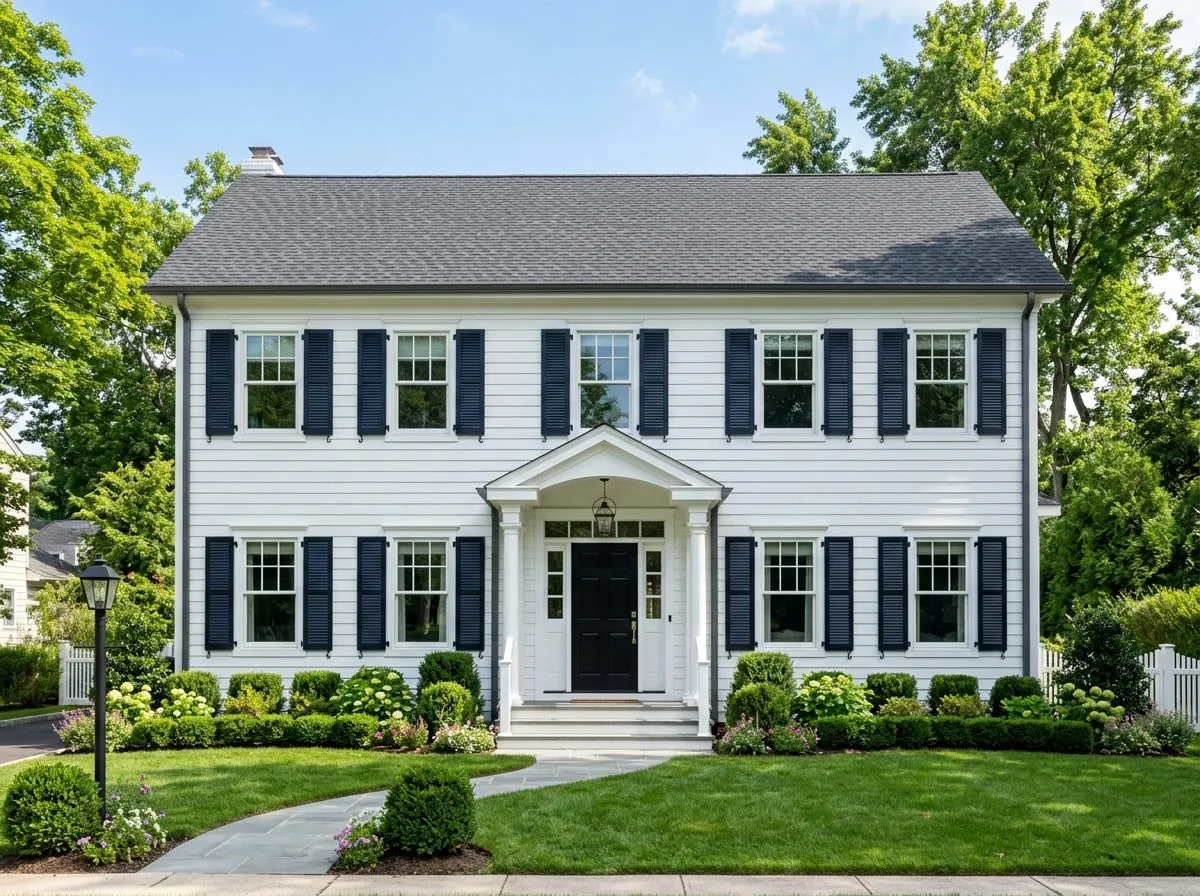
West Islip's postwar capes did not stay capes. Decade by decade they grew — full-shed dormers, second-floor pop-ups, rear extensions — until the characteristic local house is a 1950s cape wearing a larger house on top. For siding, that history lives at one place: the seam where original construction meets addition.
The transition line is the whole inspection
An addition means two wall assemblies built decades apart — different sheathing, different (or absent) housewrap, often different siding hung at different times. Where they meet, three failures cluster:
- The horizontal joint where pop-up meets original wall, flashed casually or not at all — water tracks along it and shows up inside the first-floor closets
- Step-flashing lines where the remaining first-floor roof meets the new second-floor wall: the classic expanded-cape rot line, hidden behind the siding
- Mismatched planes — the addition wall rarely lands flush with the original, and previous re-sides "solved" it with shims and caulk that are now the leak
A full re-side is the one moment the seam is open and fixable: continuous housewrap lapped over the joint, real kick-out and step flashing at every roof-to-wall line, and furring that trues the two planes so the finished wall reads as one house. That last part is what separates an expanded cape that looks renovated from one that looks stacked.
What is on these walls now
The typical stack is 1950s original (frequently asbestos-cement shingle — regulated removal, priced and handled properly, never quoted as ordinary tear-off), 1980s-90s vinyl over it, and the addition sided in whatever its decade sold. Stripping to sheathing on both eras and building one continuous assembly is the honest scope, and it is why an expanded-cape re-side quotes heavier than the house's footprint suggests.
South of Montauk, the usual rules
The blocks running toward the bay and the causeway pick up the coastal spec — stainless fasteners, salt-rated flashing, high-wind hanging schedule — for the same reasons as every bay-adjacent hamlet. Inland West Islip is a standard suburban re-side and prices like one.
Frequently Asked Questions
My cape has a second-floor addition. Why does the siding leak at the first-floor ceiling?
Almost certainly the transition line — the horizontal joint where the pop-up meets the original wall, or the step-flashing line where the remaining first-floor roof meets the new second-floor wall. Both were commonly flashed casually when the addition went on, and water tracks along the seam and surfaces at closets and ceilings below. A re-side is the moment that seam is open and permanently fixable.
Why is my re-side quote higher than my neighbor's identical-footprint cape?
Because an expanded cape is two houses' worth of wall history: original 1950s material (often asbestos-cement, which is regulated removal), a later vinyl layer, and an addition sided in its own decade — plus the furring needed to true the addition's plane to the original so the finished wall reads as one house. The footprint matches; the walls do not.
How long does a siding job take?
Three to six days on a typical house, depending on size, stories, and how much trim and flashing work rides along. Fiber cement runs longer than vinyl because the material is heavier and slower to cut and hang.
Do you have to remove the old siding?
We recommend it and quote it that way. Siding over siding hides whatever is wrong with the sheathing, throws off every window and door depth, and makes proper housewrap and flashing impossible.
Related Reading
- James Hardie Fiber Cement — HZ5 spec, real costs, where vinyl still wins
- Siding Replacement Cost — what drives the number
- Storm Damage on Long Island — wind, siding and the insurance path
- Hiring a Roofing Contractor — roof and siding sell together
- Brick and Stone Veneer — where masonry beats siding
Also Serving West Islip
- ADUs in West Islip — accessory apartments and grants
- Attic Insulation in West Islip — air sealing, baffles and R-49 depth
- Basement Finishing in West Islip — egress, ceiling height and moisture
- Bathroom Remodeling in West Islip — full gut renovations
- Chimney Repair in West Islip — repointing, crowns, caps and flashing
- Driveway Paving in West Islip — blacktop, resurfacing and repairs
- Emergency Roof Repair in West Islip — tarping, leaks and storm response
- Fallen Tree Removal & Roof Repair in West Islip — tree off the house, roof supported and repaired
- Flood & Water Damage Cleanup in West Islip — wet material out, drying metered
- Garage Conversion in West Islip — turning the garage into living space
- Gutter Installation in West Islip — seamless gutters, fascia and drainage
- House Painters in West Islip — exteriors while the fall window holds
- Hurricane & Storm Damage Repair in West Islip — trees, flooding, cleanup and repairs
- Storm Damage & Insurance Restoration in West Islip — emergency tarping and the claim
- Interior Painting in West Islip — the right work for the cold months
- Kitchen Remodeling in West Islip — cabinets, counters and layout
- Roofing in West Islip — tear-offs, repairs and storm damage
- Storm Debris Removal & Cleanup in West Islip — trees, building debris and hauling
- Storm Roof & Siding Repair in West Islip — wind damage, tarped and rebuilt
- Windows & Doors in West Islip — insert and full-frame replacement
Work With Alec's Construction
This guide is written by the crew that does the work. See Alec's Siding service — James Hardie, vinyl and cedar with the rot behind it repaired first. Licensed and insured on Long Island, one crew start to finish, free walkthrough and a written estimate inside 48 hours.
Booking the cold months now: we also handle Roofing and Painting.
We keep a permit office directory for Nassau and Suffolk, checked against each jurisdiction's own site, because we file in these counters constantly.
Ready to Get Started?
Free exterior walkthrough and a written proposal listing product spec, fastener type, housewrap and every flashing detail. Nassau and Suffolk County.