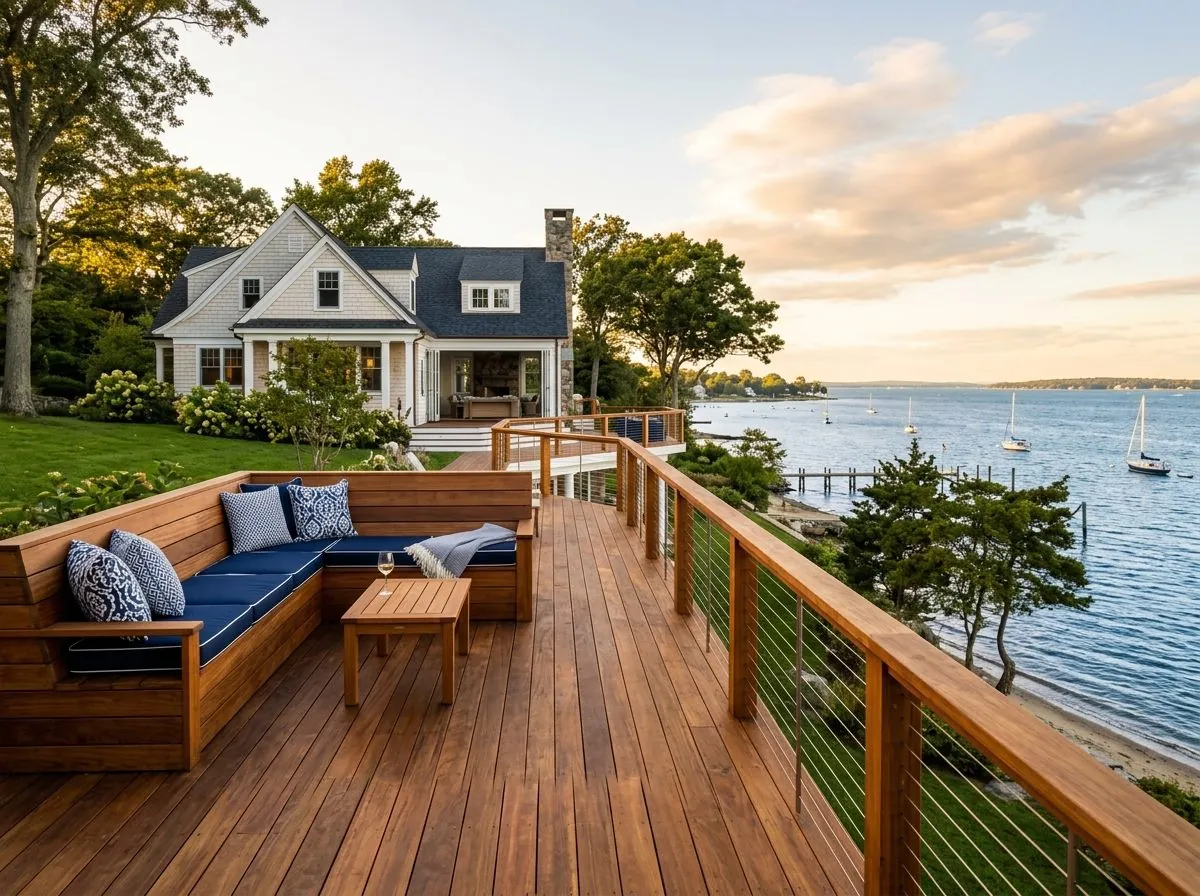
The difference between a patio you enjoy in May and one that finally gets finished in August is almost entirely front-loaded planning. Here is the calendar that works on Long Island, starting from the winter before.
December — Decide What You Actually Want
Go stand in the yard, even in the cold. Note where the sun is in the afternoon, where the wind comes from, where water pools after rain and where you naturally want to sit. Photograph the space. Rough out dimensions with a tape and some stakes.
Be specific about use. A patio for two people with morning coffee is a different project from one that has to seat twelve for dinner. Count chairs. A dining table for six needs roughly a 12 by 12 foot area once you allow for pulling chairs out; a lounge seating group needs similar. Undersized patios are the most common regret in this trade.
January — Get Contractors Out
This is the month contractors have time to actually look at your yard and think about it. Get two or three out. Ask each for a written proposal that states excavation depth, base depth after compaction, number of compaction lifts, edge restraint type and jointing sand type. That single request separates the real bids from the rest.
Ask to see a job they built four or more years ago, not last summer. Anyone can show you a new patio.
February — Materials and Permits
Visit a supplier showroom while it is quiet. Bring a photo of your house. Look at full-size samples outdoors rather than under showroom lights, and look at them wet as well as dry, because that is how they look half the time.
Start any permit process now. A ground-level patio often does not need a building permit, but confirm it — and if your project includes a retaining wall over about four feet, a roofed structure, gas or electrical work, or if your lot is near an impervious coverage limit, the approval path can take weeks to months. Anything requiring engineered drawings should start now, not in April.
March — Sign and Lock the Date
Contracts signed in March generally get April and May installation dates. Contracts signed in May generally get July. This is the month the calendar closes.
Before you sign, confirm: the base specification in writing, a payment schedule tied to milestones rather than dates, what happens if concealed conditions turn up, who pulls permits, and what the cleanup and lawn restoration includes.
April — Site Prep and Build
Ground is generally workable. Before the crew arrives: mark private utilities that public locates will not catch — irrigation, low-voltage lighting, gas runs to pool heaters and generators. Clear the work area and the access route. Plan for a dumpster or debris pile location and for material delivery, which usually needs truck access near the work.
A typical patio runs three to six working days once started. Rain days extend it, and polymeric sand needs a dry window at the end.
May — Finish and Enjoy
Final grading, lawn repair around the edges, furniture in. Do not seal yet — new pavers generally want 60 to 90 days minimum, and often a full season, before sealing.
If You Are Reading This in June
You are not out of options, you are just out of the good ones for this summer. Two honest paths.
Take a late-summer or fall date. September and October are genuinely excellent conditions on Long Island — dry, workable ground and comfortable temperatures — and the patio is ready the moment spring arrives. This is what we recommend to most people who call in June.
Or phase it. Build the core patio now and add the fire feature, seat wall or outdoor kitchen next season. Just make sure the base and any utility sleeves for the future phase go in with the first phase, because retrofitting under finished hardscape is expensive.
Budget Reality Check
- Modest patio, 300–400 sq ft, standard pavers: roughly $9,000–18,000
- Mid-size with soldier course border and a few steps: roughly $18,000–32,000
- Larger space with seat wall and fire feature: roughly $30,000–60,000
- Full outdoor living build with kitchen and structure: $60,000+
Add roughly 10 to 15 percent contingency for concealed conditions. On Long Island the usual surprises are buried debris from original construction, an old cesspool or dry well nobody knew about, and drainage that turns out to need solving before anything else can happen.
Frequently Asked Questions
When should I start planning a spring patio on Long Island?
December through February. Contractors have time to design and quote, permits have room to clear, and March is when the spring calendar fills.
How big should a patio be for a dining table?
Roughly 12 by 12 feet for a six-person table once you allow for pulling chairs out. Measure your actual furniture rather than guessing — undersizing is the most common regret.
Do I need a permit for a patio on Long Island?
A ground-level patio often does not, but many towns regulate total impervious coverage, and walls over about four feet, roofed structures, and gas or electrical work generally do require permits. Confirm with your building department.
What if I call in June?
Expect a late-summer or fall date. September and October are excellent installation conditions here, and the patio is ready for the following spring.
Related Reading
- Best Time to Install Pavers — the booking calendar in detail
- Paver Patio Cost — a full line-item breakdown
- Hiring a Masonry Contractor — how to vet the bids
- Paver Patterns — choosing a layout
- Fire Pits — extending the season on both ends
- Outdoor Kitchens — if the plan is bigger
Work With Alec's Construction
This guide is written by the crew that does the work. See Alec's Masonry & Pavers service — patios, walkways, steps, stoops and retaining walls. Licensed and insured on Long Island, one crew start to finish, free walkthrough and a written estimate inside 48 hours.
Booking the cold months now: we also handle Chimney Repair and Driveways & Blacktop.
Filing something yourself? Our Long Island building department directory lists the address, phone and counter hours for all 23 permit offices in Nassau and Suffolk.
Ready to Get Started?
Planning for next season? Call Alec's Construction at (631) 312-7441. We design and quote through the winter so you break ground in April — Nassau and Suffolk County.