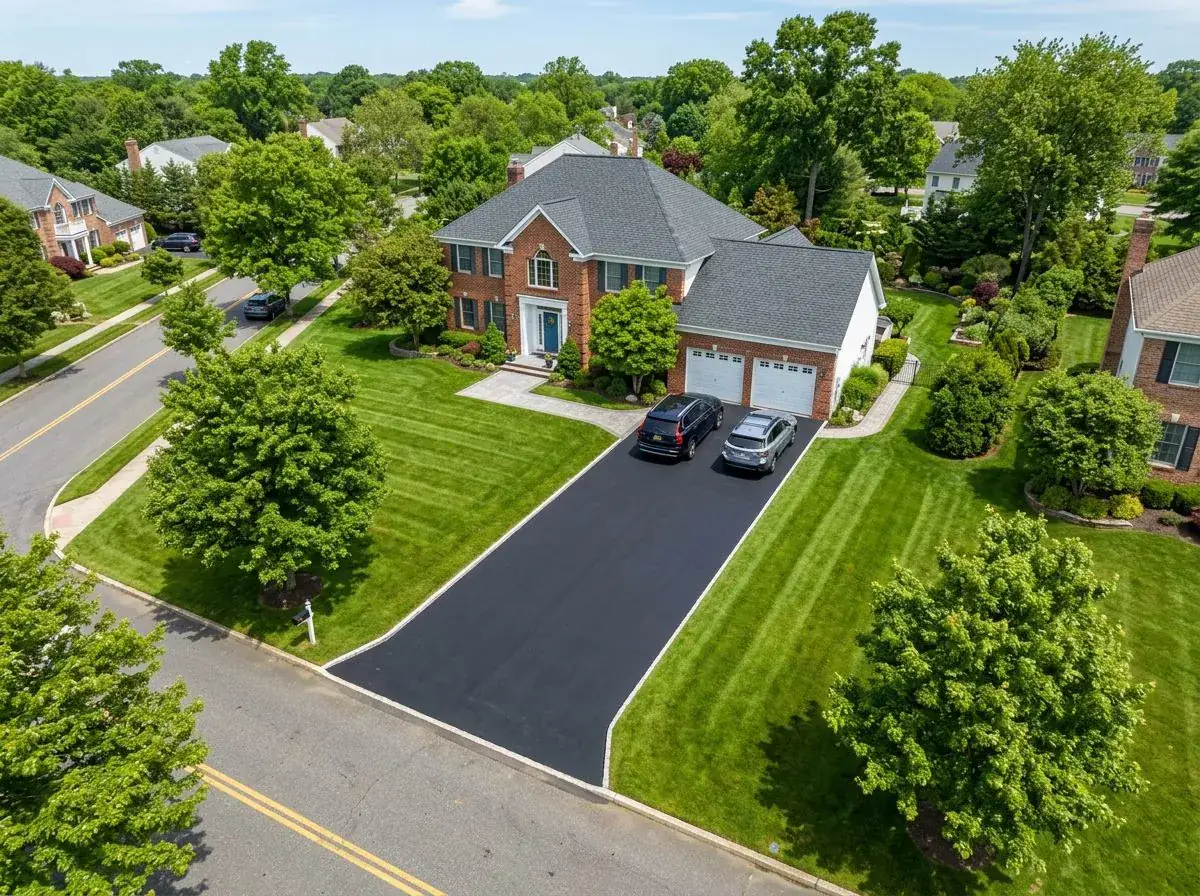
A front walkway is the piece of hardscape every visitor uses and the one most likely to be undersized. It is also, per square foot, more expensive than a patio — which surprises homeowners until you look at what the crew is actually doing.
Why Walkways Cost More Per Square Foot
A patio is a large open field. Once the border is set, the interior goes down fast in full units with very little cutting. A walkway is almost entirely edge. Every single course meets a border on both sides, and if the walkway curves, every one of those meetings is a cut. On a four-foot-wide walk you are cutting constantly and the crew never gets into the rhythm that makes a patio efficient.
Expect roughly $30 to $60 per square foot installed for a paver walkway, against $28 to $55 for a patio — and the walkway will sit at the higher end of its range more often, especially with curves.
Width: The Most Common Mistake
Builder-grade concrete walks are often 36 inches wide. Two adults cannot walk side by side on 36 inches, so one person steps onto the lawn. That is why the grass beside so many front walks is worn bare.
- 48 inches: the practical minimum for a main front walkway. Two people can pass comfortably.
- 54 to 60 inches: the width that actually feels generous and proportional on most Long Island homes with any real facade.
- 36 to 42 inches: fine for a secondary path to a side gate, shed or garden.
Widening from 48 to 60 inches on a 30-foot walk adds about 30 square feet — typically $1,000 to $1,800. It is one of the highest-return dollars in the whole project, because width is what makes a walkway feel like part of the house rather than an afterthought.
What a Walkway Costs, End to End
- Small front walk, 30 linear feet at 4 feet wide: roughly $3,600–7,200
- Typical front walk, 40 linear feet at 5 feet wide: roughly $6,000–12,000
- Walkway with steps and landing: add roughly $700–1,500 per step
- Demolition of an existing concrete walk: roughly $800–2,500
- Low-voltage path lighting: roughly $150–350 per fixture installed
Design Choices That Read Well
A soldier course border — pavers laid perpendicular along both edges — frames the walk and gives it a finished line. It costs a little more and it is the single detail that most separates a professional walkway from a DIY one.
Gentle curves beat sharp ones. A walkway that sweeps is elegant; one that zigzags looks nervous. And people cut corners — if the curve is too aggressive, they will walk across the lawn and defeat it.
Relate the material to the house. A tumbled, weathered paver suits an older colonial or a shingled cottage. A crisp, clean-edged modern paver suits contemporary construction. A bluestone walk is the classic Long Island answer and always looks correct.
Match or deliberately contrast the driveway. If the driveway is asphalt, a paver walkway with a coordinating paver apron at the driveway edge ties everything together and is a common, high-impact combination here.
Build Details for Long Island
A walkway carries foot traffic, not vehicles, so the base is lighter than a driveway — typically six inches of compacted stone in a well-draining area, more in clay-heavy soil. What matters more is edge restraint. Because a walkway is all edge, a walk without proper restraint spreads and opens joints faster than any other hardscape.
Pitch matters too. The walk should shed water to the sides, not toward the front door. And keep the finished surface slightly above the surrounding grade so it does not become a channel that collects runoff and silt.
Use polymeric sand in the joints. On a walkway, where weeds in joints are at eye level for every visitor, it is worth every dollar.
Frequently Asked Questions
How wide should a front walkway be?
48 inches minimum so two people can walk side by side; 54 to 60 inches looks and feels considerably better on most homes. Secondary paths can be 36 to 42 inches.
How much does a paver walkway cost on Long Island?
Roughly $30 to $60 per square foot installed. A typical 40-foot by 5-foot front walk lands around $6,000 to $12,000 depending on material, curves and whether demolition is involved.
Can pavers be installed over an existing concrete walkway?
Sometimes, if the concrete is sound and stable and the added height still works at the door threshold and steps. Over cracked or moving concrete it is not a good idea.
Do paver walkways get slippery?
Textured pavers offer good wet traction. Shaded walks can develop algae, which is a cleaning issue rather than a material one — a periodic wash keeps them safe.
Related Reading
- Concrete Walkway Paving — the budget alternative, priced
- Paver Patio Cost — the full line-item breakdown
- Front Steps and Stoops — where the walkway ends
- Driveway Curb Appeal — tying the whole front together
- Paver Patterns — choosing a pattern and border
- How Pavers Are Installed — base, restraint and joint sand
- Front Walkway Construction — cost, width and the stoop connection
Work With Alec's Construction
This guide is written by the crew that does the work. See Alec's Masonry & Pavers service — patios, walkways, steps, stoops and retaining walls. Licensed and insured on Long Island, one crew start to finish, free walkthrough and a written estimate inside 48 hours.
Booking the cold months now: we also handle Chimney Repair and Driveways & Blacktop.
We keep a permit office directory for Nassau and Suffolk, checked against each jurisdiction's own site, because we file in these counters constantly.
Ready to Get Started?
Front walk looking tired? Call Alec's Construction at (631) 312-7441 for a free measure and design ideas — Nassau and Suffolk County.