Winterizing advice written for Minnesota does not apply here. Long Island's winter problem is not extreme cold — it is water, wind and the freezing line being crossed over and over. We get roughly forty to fifty freeze-thaw cycles a season, wind-driven rain and salt spray off three sides, and nor'easters that arrive with the wind coming from a direction the house was never really designed for.
The things that matter here are specific. Here they are, in order of what they will cost you if you skip them.
1. Anything That Holds Water Outside
A burst pipe is the most expensive winter failure a Long Island homeowner can have, and the ones that burst are almost always outside the heated envelope.
Exterior hose bibbs. Shut off the interior valve, open the bibb outside to drain it, and disconnect the hose. A connected hose holds water against the valve — this is the single most common cause of a burst bibb and the wall damage behind it. Frost-free sillcocks still fail if a hose is left attached.
Irrigation. Blow the lines out with compressed air, or have it done. Draining is not sufficient — water sits in the low points of the lateral lines.
Outdoor showers. Common on the South Shore and East End and frequently forgotten. Shut, drain, and leave the valve open.
Pool lines, if you have one, and any exterior kitchen or bar plumbing.
Pipes in unheated space. Crawl spaces, unheated garages, the rim joist area of a basement, and any run in an exterior wall. Insulate them. In a hard cold snap, let a faucet on the most exposed run drip and open cabinet doors under sinks on outside walls.
2. The Building Envelope
This is where Long Island winter damage actually comes from — water finding openings and then freezing in them.
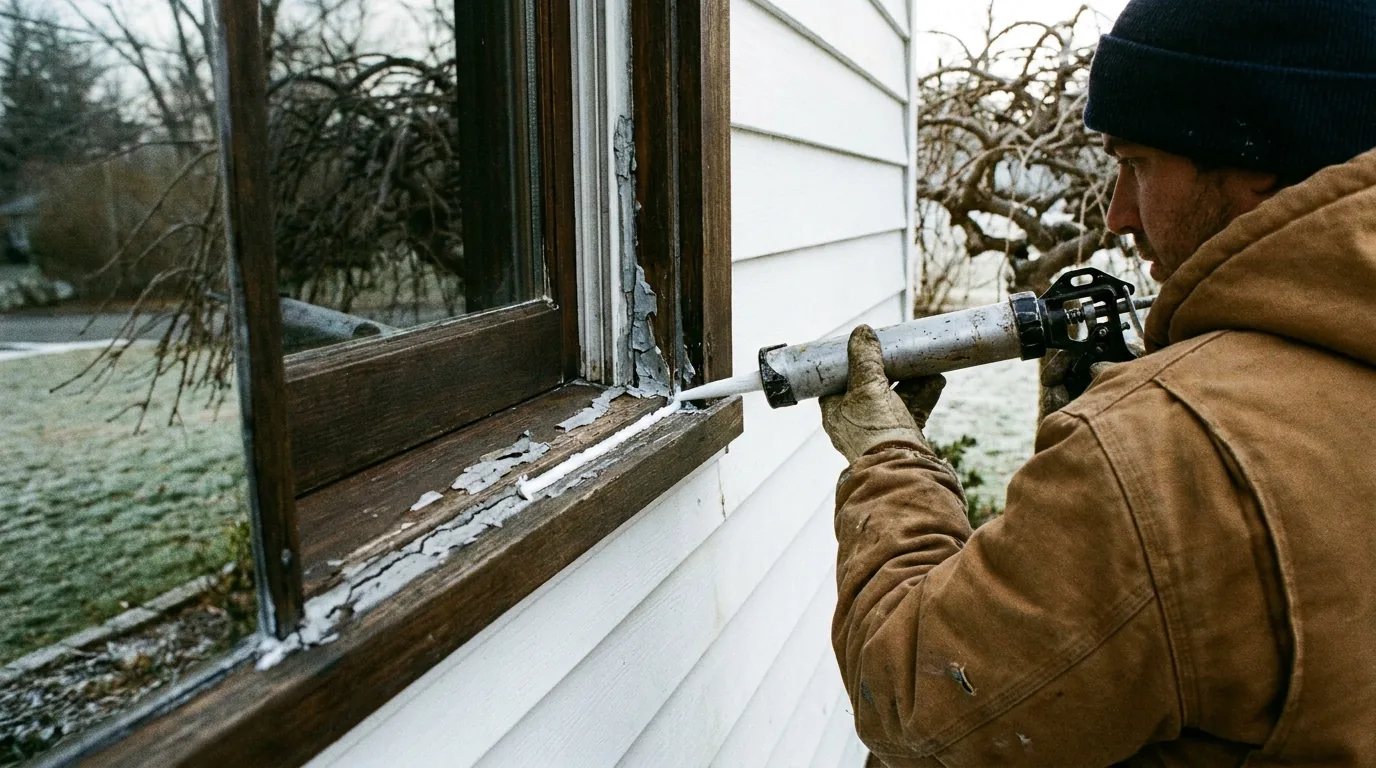
Caulk joints. Walk the exterior and look at every joint: window casing to siding, door casing to siding, corner boards, trim to trim, where the deck ledger meets the wall, where anything penetrates the wall. Any joint that has opened is a water path. Sealing them is a fall afternoon and it prevents rot that costs thousands.
Bare or peeling exterior wood. Any bare wood going into a Long Island winter will absorb water at every thaw and split at every freeze. If it is too late to paint, at minimum prime it or get a coat of sealer on it. See our exterior painting guide for the temperature limits.
Weatherstripping and door sweeps. Cheap, immediate heating bill return, and it stops the wind-driven rain that gets under a door in a nor'easter.
Windows. Check that the locks actually engage — a locked double-hung pulls the sashes together and seals far better than an unlocked one. Old wood sash with failed glazing putty should be re-glazed. Interior storm window film is genuinely effective on single-pane windows.
Foundation penetrations. Where the dryer vent, the AC line set, the electrical service and the hose bibbs come through the wall. Foam and caulk them. This is also how mice get in.
3. Roof, Gutters and the Ice Dam Chain
The most expensive interior damage on Long Island in January is water coming through a ceiling, and it usually traces back to this chain.
Gutters cleared, twice. Late October and again in early December after the oaks drop. Why twice.
Downspouts discharging four to six feet from the foundation, onto ground that slopes away.
Roof inspected before nor'easter season: lifted shingles, flashing at chimneys and valleys, pipe boot condition.
Attic insulation, air sealing and ventilation. This is the actual cure for ice dams. Clear soffit vents, adequate insulation on the attic floor, a working ridge or gable vent, and every bath and kitchen exhaust fan terminating outside rather than into the attic.
4. Heat, Before You Need It
Run the system for an hour in October. Every year, a large number of Long Island homeowners discover on the first cold night that the boiler will not fire — the same night every HVAC company on the Island is on emergency calls at emergency rates.
Change the filter. If you have a boiler, bleed the radiators. Test the thermostat. If you have a fireplace or wood stove, get the chimney inspected and swept — creosote is the leading cause of chimney fires, and Long Island's damp climate is hard on flues, crowns and caps.
Carbon monoxide detectors. Heating season is CO season. Test them and change the batteries.
5. The Things Specific to Being Near the Water
If you are on the South Shore, along a North Shore harbor, or on the bays and canals:
Rinse salt off exterior metal. Railings, light fixtures, hardware, the AC condenser. Salt accelerates corrosion dramatically over a winter.
Check the AC condenser and consider a proper cover that keeps debris out but does not trap moisture against the unit.
Storm shutters or panels if you have them — make sure the hardware is intact and you know where the panels are before you need them at 6pm on a Friday.
Photograph the exterior. Ten minutes, and it makes a nor'easter insurance claim dramatically easier. Our insurance restoration team asks for these constantly and almost nobody has them.
6. Drainage and Grade
Walk the perimeter of the house after a heavy rain and look for water standing against the foundation. If the grade slopes toward the house, that is a fall fix — regrading a frozen yard in February is not practical. Standing water at the foundation freezes, expands, and pushes on the foundation wall all winter.
What Not to Bother With
Some winterizing advice is fine elsewhere and irrelevant here. You generally do not need to shut down and drain a Long Island house you are living in. You do not need to wrap the whole exterior in anything. And plastic film over every window in an otherwise sound modern house is more trouble than it returns.
Spend the effort on water: keeping it out of the joints, out of the pipes, off the roof edge, and away from the foundation.
What We Do
Alec's Construction handles the exterior side of this across Suffolk and Nassau County — caulking and sealing, exterior carpentry and rot repair, gutters, roofing, attic insulation and ventilation — and then does the interior work all winter.
Call (631) 312-7441 or book a free walkthrough.
Frequently Asked Questions
What is the most important thing to winterize on Long Island?
Anything that holds water outside the heated envelope — exterior hose bibbs, irrigation lines, outdoor showers — and the caulk joints on the building exterior. Long Island's damage comes from water getting into small openings and then freezing forty to fifty times a winter.
Why do outdoor faucets burst even with frost-free sillcocks?
Because a hose was left connected. The hose holds water against the valve on the outside of the freeze protection, and that water freezes and splits the pipe. Always disconnect hoses, shut the interior valve, and open the bibb to drain.
Do I need to drain my irrigation system?
Blow it out with compressed air rather than just draining it. Water sits in the low points of the lateral lines after draining and will freeze and split them.
How do I stop drafts in an old Long Island house?
Weatherstripping and door sweeps first, then sealing foundation penetrations where the dryer vent, AC line set and hose bibbs come through the wall, then making sure window locks actually engage — a locked double-hung seals far better than an unlocked one.
When should I have my chimney inspected?
In the fall, before you start burning. Creosote buildup is the leading cause of chimney fires, and Long Island's damp climate is hard on flues, crowns and caps. A failed chimney flashing is also one of the most common sources of a January ceiling stain.
Should I photograph my house before winter?
Yes. A dated set of exterior photographs makes a nor'easter storm damage claim substantially easier to substantiate. It takes ten minutes and virtually no homeowner does it until after they have needed it.
Related Guides
- Fall Home Maintenance Checklist for Long Island
- Ice Dams on Long Island Roofs
- Gutter Cleaning on Long Island
- Exterior House Painting on Long Island
- Winter Interior Painting on Long Island
Get a Free Estimate from Alec's Construction
Licensed and insured, working across Nassau and Suffolk County since 2018. We come out, look at the actual job, and put a written number in your hand — no pressure, no obligation.
Book a Free WalkthroughOr call (631) 312-7441