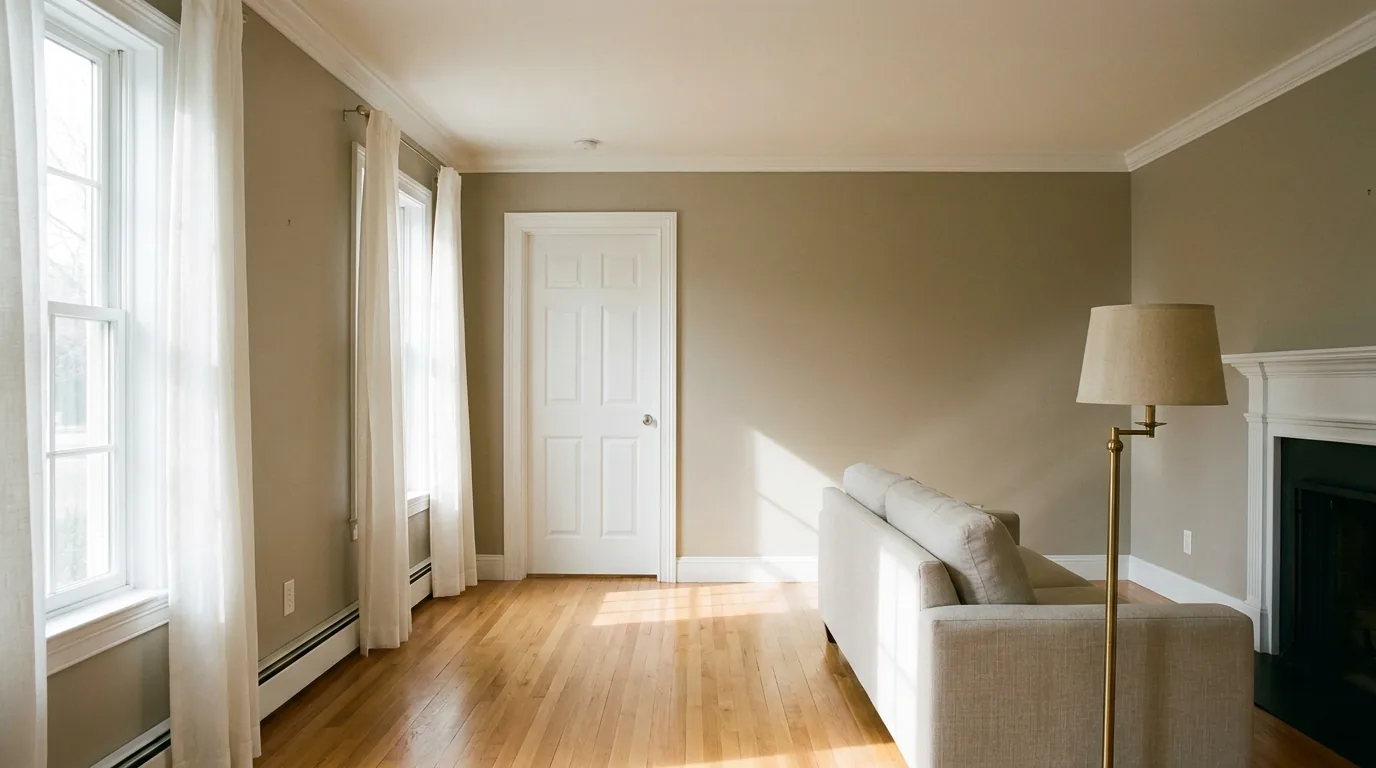
Painting contractors on Long Island have two seasons: a frantic one and a quiet one. From April through October the phone does not stop. From December through March it barely rings. That is a scheduling accident, not a quality signal — and it means the homeowners who book interior work in winter get the best crews, the best attention and the shortest lead times of the year.
The Physics Are Actually Better in Winter
The old assumption is that painting is warm-weather work. For exteriors that is true. For interiors it is backwards.
Heating season dries your house out. Indoor relative humidity on Long Island in January typically sits between 25 and 35 percent. In August, with windows open and the ocean and bays feeding humidity across the Island, indoor RH commonly runs 60 to 70 percent. Latex and acrylic paints cure by water evaporating out of the film. Lower humidity means a faster, more even cure, cleaner recoat windows, and less risk of lap marks and roller stipple setting into the finish.
Trim enamel especially. Waterborne alkyd trim enamels are the fussiest common product about humidity. They level beautifully in dry air and stay soft and tacky in humid air. January trim work simply comes out better than July trim work.
No pollen, no open windows, no yard. Long Island spring pollen is heavy enough to land in wet paint and stay in it. Summer means open windows, screens, and a crew walking in and out of a yard. Winter means a closed, clean, controlled interior.
But What About the Fumes?
This was a real objection twenty years ago. It is largely obsolete.
Modern low-VOC and zero-VOC acrylic paints — which are what we use in occupied homes, not a premium upgrade — have dramatically lower emissions than the oil-based products they replaced. We still ventilate: cross-ventilating with a window cracked in the work room, running an air mover to move air toward it, and closing off the rest of the house. But you are not evacuating the family, and the smell in a room painted with a modern low-VOC acrylic is gone within hours, not days.
The one place we still recommend a plan is trim and door enamel in a small enclosed space with no operable window. There we schedule around your day.
What Winter Availability Actually Gets You
Your first choice of crew. In June, a Long Island painting company running two or three crews sends whichever one is free. In January they send the one they want representing them.
Real scheduling. A winter interior job starts when we said it would. Summer jobs slide because the exterior ahead of them got rained out.
More attention per room. A crew doing one job at a time takes the extra hour to properly repair the corner bead rather than filling it.
Better pricing in most cases. Off-season capacity is worth something to a contractor, and it usually shows up in the number.
The Pre-Spring-Listing Play
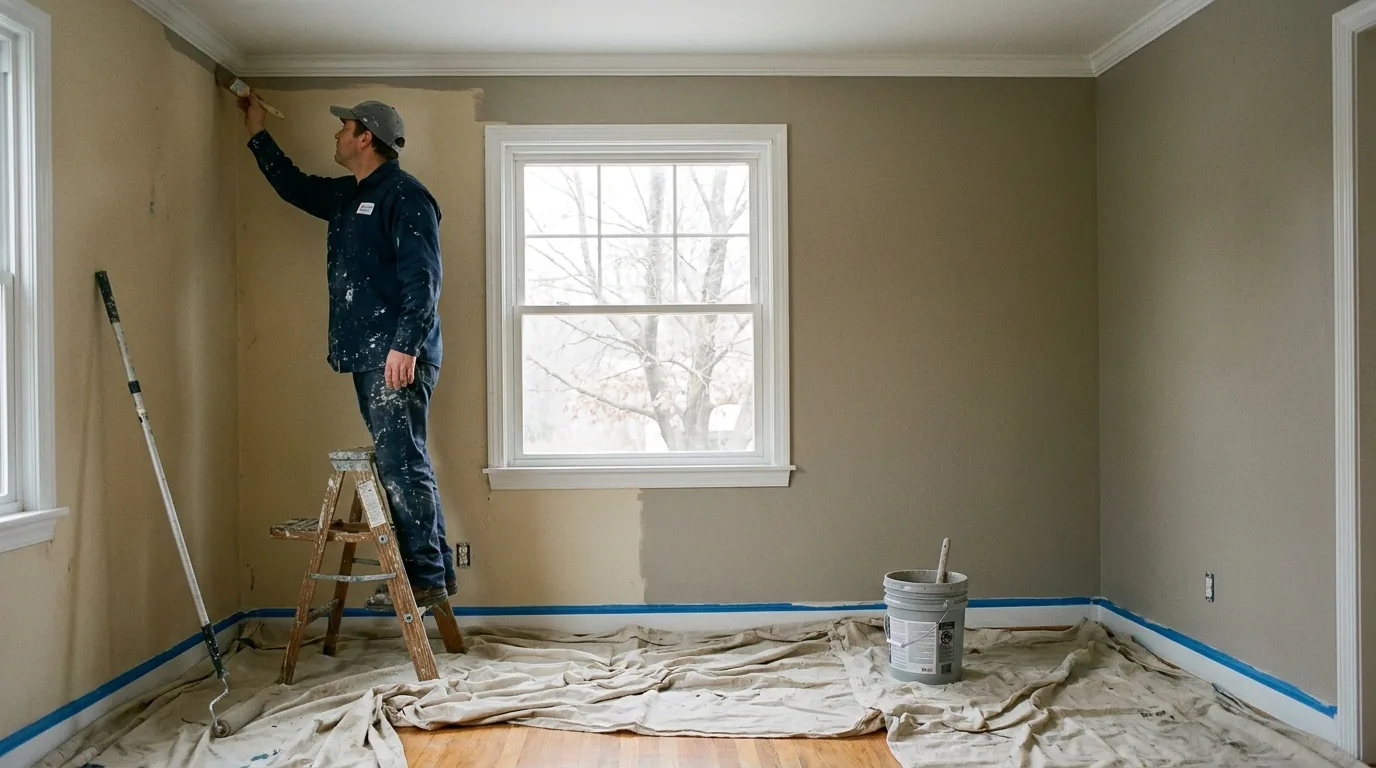
If you are selling in the spring — and on Long Island, that means listing in March, April or May — the single best thing you can do is paint the interior in January or February.
Here is why the timing matters more than most sellers realize. Listing photos are taken one to two weeks before the listing goes live. If you paint in March you are photographing a house that still smells of paint, with furniture pushed around and touch-ups pending. If you paint in January the house is finished, cured, aired out and fully restaged by the time a photographer walks in.
You are also competing for a painter against every other seller on the Island in March. In January you are competing against nobody.
Neutral, warm, light colors sell houses on Long Island. Not stark white — warm white and soft greige. Repainting a dated accent wall and a set of dark 1990s trim is one of the highest-return pre-sale moves available.
What Winter Interior Work We Do Most
Whole-house repaints ahead of spring listings. Kitchen and bathroom refreshes, including cabinet spraying, which is ideal winter work because the doors go into a controlled indoor space to be sprayed and cured. Trim, doors and stairways — the fussy detail work that benefits most from dry air and an unhurried crew. Basement finishing including framing, drywall, and finish paint on a space nobody uses in summer anyway. Popcorn ceiling removal, skim coating and repainting. Wall repair — nail pops, plaster cracks, failed seams, water-stain sealing — which is its own subject and is the real reason some repaints look great and others look tired within a year.
How We Work an Occupied House in Winter
You cannot open the whole house in January, so we sequence it.
We work one zone at a time and keep a bedroom and a bathroom outside the work area at all times. Furniture moves to the center of the room and gets covered rather than going outside. Floors get canvas drop cloths, not plastic. We contain dust from sanding with plastic barriers at the doorways and a HEPA vac rather than letting it move through the heating system. Heat stays on and set normally — paint wants a stable room, and 68 degrees is fine.
We clean up at the end of every day, not at the end of the job. In winter, when everyone is inside all the time, that matters more than it does in July.
Book It Now, Not in March
Our interior calendar for December through March fills from October onward, and the good slots go early. If you are thinking about a spring listing, or you have been looking at a tired living room since Thanksgiving, this is the moment.
Alec's Construction paints interiors across Suffolk and Nassau County. Licensed, insured, same crew year-round since 2018. Call (631) 312-7441.
Frequently Asked Questions
Is winter a good time to paint the inside of a house?
It is the best time on Long Island. Heating season drops indoor humidity to 25 to 35 percent, which makes paint cure faster and more evenly than in humid summer air. There is no pollen, no open windows, and painting contractors have their best availability of the year.
Will paint smell be a problem in winter with the windows closed?
Not with modern low-VOC and zero-VOC acrylics, which is what we use in occupied homes as standard. We still cross-ventilate the work room and run an air mover, but the smell is gone within hours and you do not need to leave the house.
Should I paint before selling my Long Island house?
Yes, and do it in January or February rather than March. The house needs to be finished, cured and restaged before listing photos are taken, and you avoid competing for a painter with every other spring seller on the Island.
What temperature should the house be when painting in winter?
Normal living temperature is fine. Around 68 degrees with the heat running consistently is ideal. Paint wants a stable room temperature more than a specific one, so do not turn the heat down while a room is curing.
Is interior painting cheaper in winter?
Usually, yes. Off-season capacity is worth something to a contractor, and winter interior work typically prices better than the same job in peak season, with shorter lead times and better crew availability.
Can you paint a basement in winter?
Yes, and it is ideal winter work. Basements are temperature-stable year-round and nobody is using the space in summer anyway. We frame, insulate, hang drywall, finish and paint as one continuous winter project.
Related Guides
- Interior Painting on Long Island
- Exterior House Painting on Long Island
- What House Painting Costs on Long Island
- Kitchen Cabinet Painting on Long Island
- Paint Colors That Work on Long Island Homes
Get a Free Estimate from Alec's Construction
Licensed and insured, working across Nassau and Suffolk County since 2018. We come out, look at the actual job, and put a written number in your hand — no pressure, no obligation.
Book a Free WalkthroughOr call (631) 312-7441