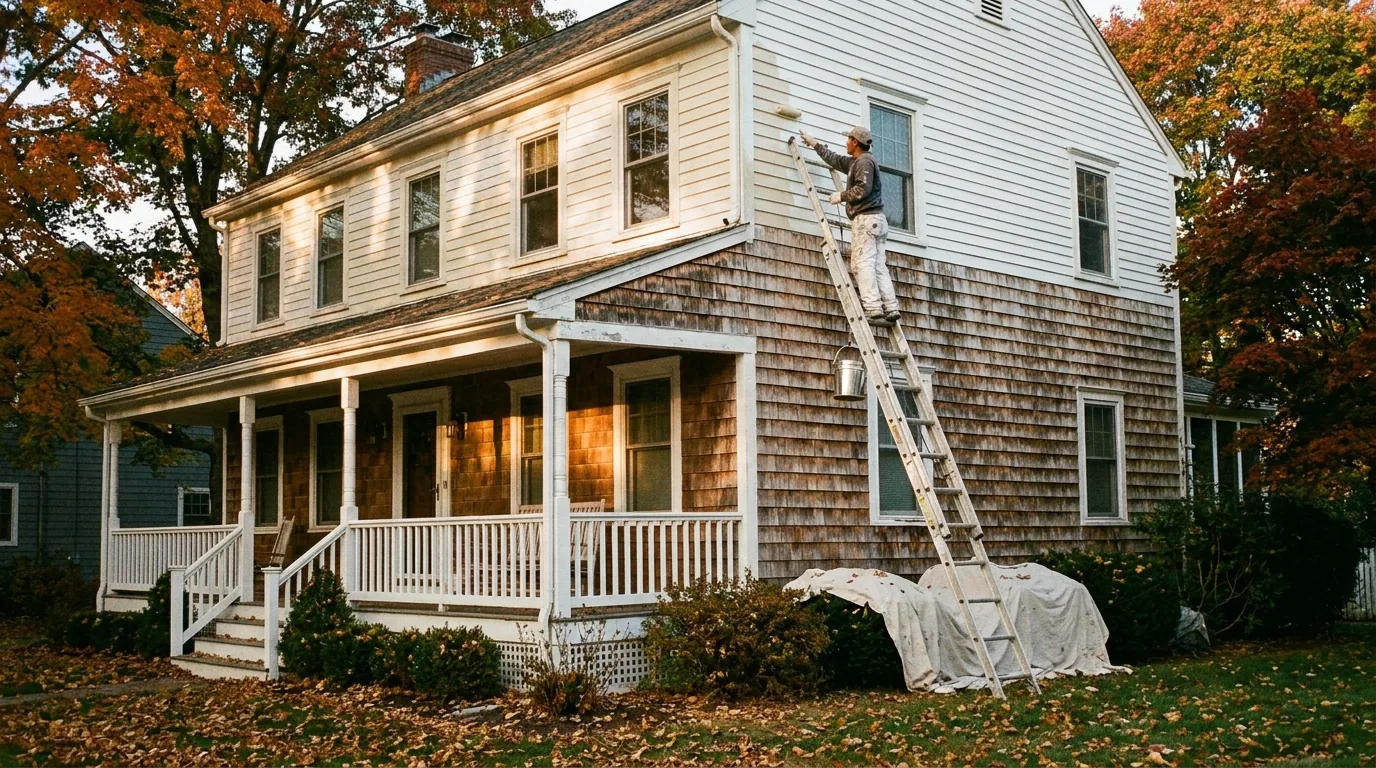
Exterior painting on Long Island is a seasonal trade with a hard stop. The paint does not care about the calendar, it cares about surface temperature and dew point, and once those fall out of range in late autumn the job waits until spring. Understanding that window is the difference between a finish that lasts a decade and one that starts peeling in the second season.
The Real Painting Window on Long Island
Most modern exterior acrylics are rated to apply down to about 35 to 50 degrees Fahrenheit depending on the product, and the number that matters is surface temperature, not air temperature, held above the minimum for several hours after application — including overnight.
On Long Island that gives you a practical season running from roughly mid-April through late October, with the two ends being weather-dependent every year. The sweet spot is September and October: warm enough surfaces, low humidity, long dry stretches and none of the July haze that keeps a north wall damp until noon.
The other constraint is dew point. In October the sun goes down early and surfaces cool fast. A coat applied at 4pm on an October afternoon may still be soft when moisture starts condensing on it at 6pm, and that produces surfactant leaching — those streaky brown runs you see on freshly painted siding after the first heavy dew. We stop applying by early afternoon in late-season work for exactly this reason.
Practical rule: if you want your exterior painted this year, the decision needs to be made in September. By the first week of November on the Island we are into the days where only south-facing walls stay warm enough, and by mid-November it is done.
What Long Island Weather Does to Exterior Paint
Three forces kill exterior finishes here, and they are not the same three as inland.
Salt air. Anywhere south of Montauk Highway, along the North Shore harbors, or on the bays and canals, airborne salt is constantly depositing on your siding. Salt is hygroscopic — it pulls moisture out of the air and holds it against the surface. This is why waterfront houses need washing before painting far more aggressively than inland ones, and why skipping the wash on a South Shore house guarantees adhesion failure.
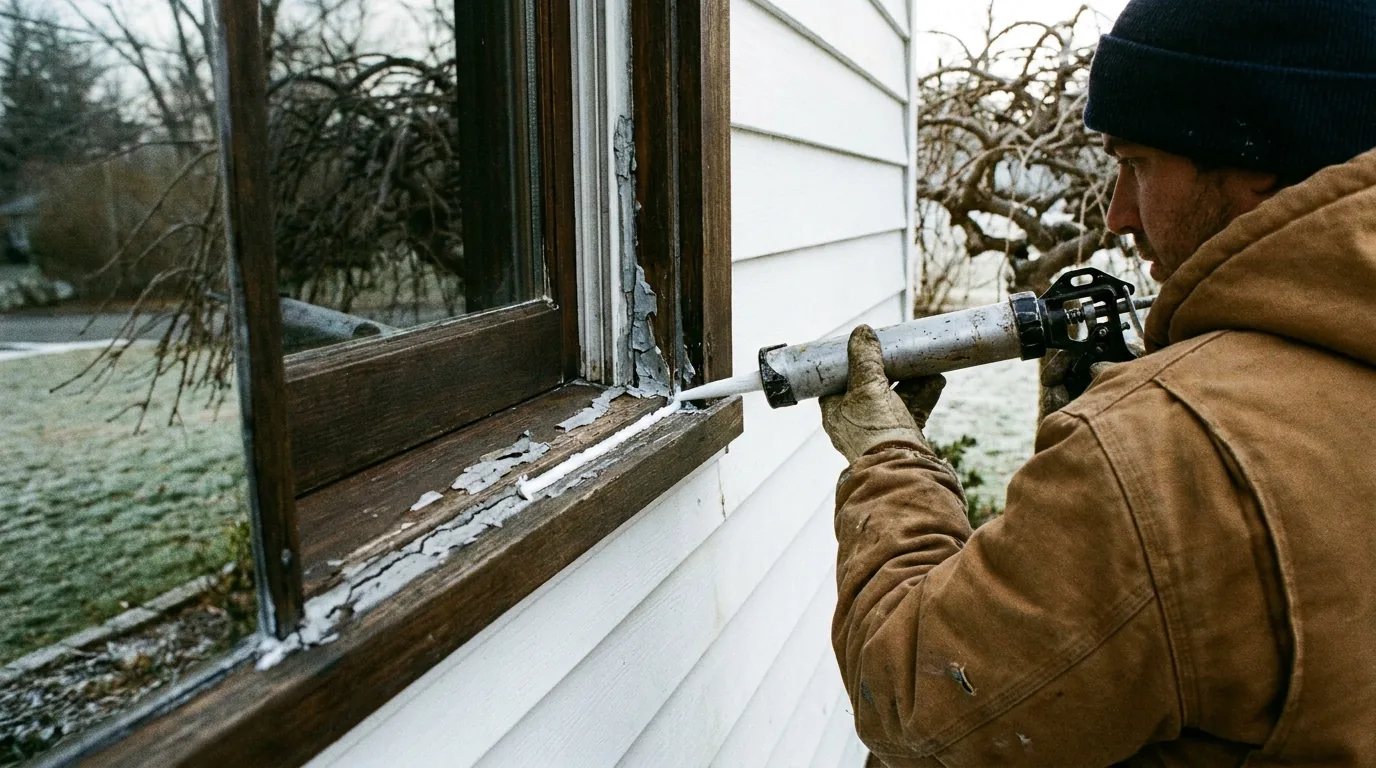
Freeze-thaw. Water gets into a hairline crack in an autumn rain, freezes, expands, widens the crack. Repeat forty times a winter. This is why unrepaired caulk joints and failed glazing putty get dramatically worse between November and March, and why fall is the right time to seal them.
UV on the south and west elevations. Every Long Island house fades unevenly. The south and west walls will always be the first to chalk and lose color. If a painter quotes you a whole-house exterior without noting that the south side needs an extra coat or more prep, they have not walked the house.
Prep Is the Job
An exterior repaint is roughly seventy percent preparation. What that should include:
- Full wash of the exterior to remove salt, chalking, mildew and dirt — mildew must be killed, not just rinsed, or it grows back through the new paint
- Scraping and sanding all failing paint back to a sound edge, feathered so the transition does not telegraph
- Spot-priming every bare substrate; bare wood, bare metal and bare filler each want a different primer
- Replacing rotted trim, sills and casing rather than filling it — this is where being a general contractor rather than only a painter matters
- Re-caulking window and door casings, corner boards, and all trim-to-siding joints with a quality elastomeric sealant
- Re-glazing failed window putty on older wood sash
- Protecting shrubs, walkways, driveways, decks and AC condensers
- Two finish coats on the elevations that need it, with the south and west sides assessed separately
Substrates: What Your House Is Made Of Changes Everything
Cedar shingle and clapboard. The classic Long Island exterior. Real cedar can be stained, solid-stained, or painted, and once you paint it you have committed — going back to a semi-transparent stain later means stripping. Cedar wants a stain-blocking primer, because cedar tannins bleed straight through standard primer and produce brown staining within weeks.
Vinyl siding. Yes, it can be painted, and yes, there are real rules. You must use a paint formulated for vinyl and you cannot go significantly darker than the original color, or the panel absorbs more heat, expands beyond its design tolerance, and warps. This is the single most common way a well-intentioned vinyl repaint destroys the siding.
Aluminum siding. Very paintable, and repainting chalked aluminum is one of the highest-return exterior jobs on the Island. It needs a thorough wash and a bonding primer.
Stucco and masonry. Wants a breathable masonry coating. Trapping moisture behind a non-permeable film on a masonry wall causes spalling.
Fiber cement. Factory finishes eventually fade. Repainting Hardie is straightforward with a 100 percent acrylic, but check whether your factory warranty has terms about it first.
Front Door, Shutters and Trim: The Cheapest Curb Appeal on the Island
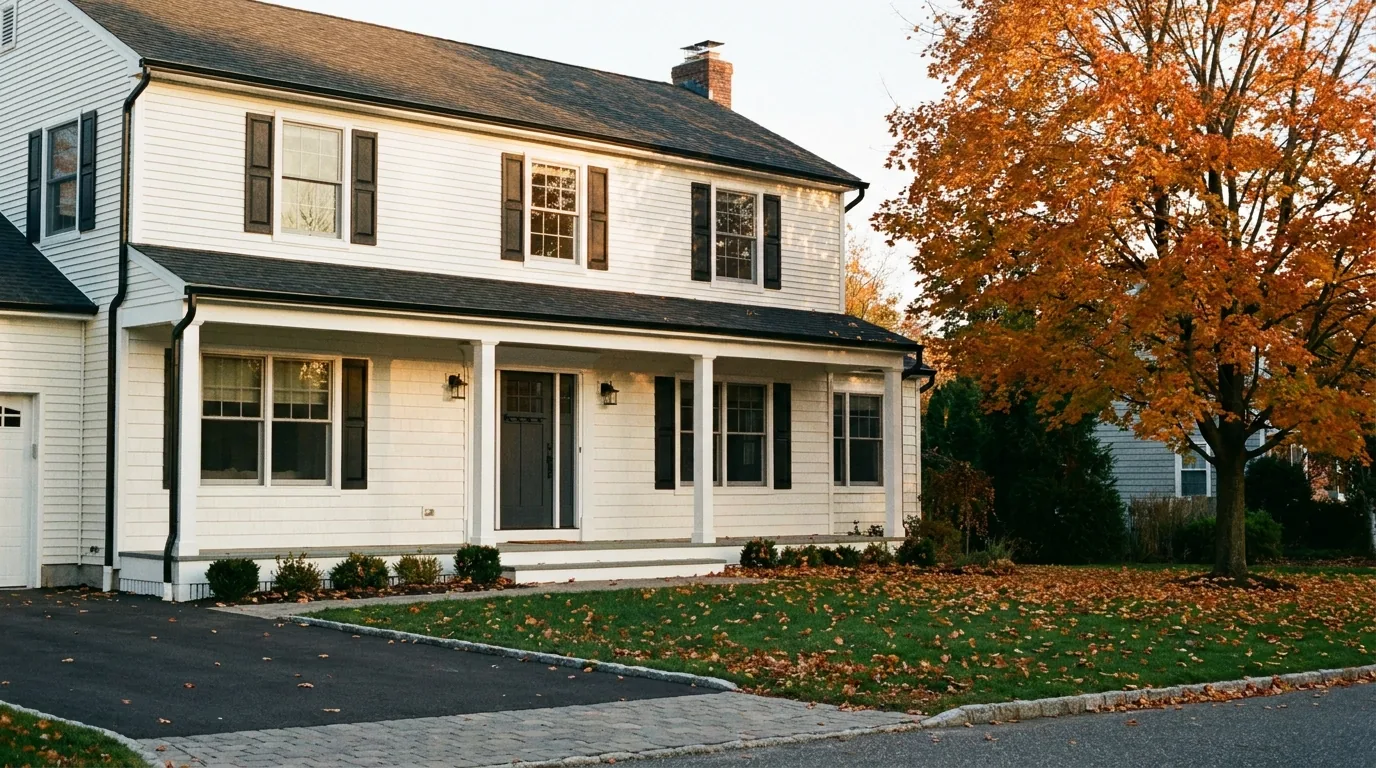
If a full exterior is not in the budget this year, the highest-value fall job is trim, shutters and the front door. A deep charcoal or black front door with fresh white casing changes the read of a house from the street more than most homeowners expect, it is a one- to two-day job, and it can be done later into the season than a full body coat because the surfaces are small and workable.
Booking Reality
Every good exterior crew on Long Island is booked out in spring. The homeowners who get the September and October slots are the ones who called in August. The homeowners who call in April get a date in July.
If you are reading this in fall, we may still have late-season capacity for trim, doors, shutters and smaller elevations, plus the prep and carpentry work that should happen before winter regardless. If you are reading this in winter, this is the right moment to get on the spring calendar and have the rot repair done first.
What We Do
Alec's Construction paints exteriors across Nassau and Suffolk County. Because we are a licensed general contractor and not only a painting company, we replace the rotted sill, rebuild the corner board and fix the flashing that caused the failure — and then paint it. Written scope, licensed and insured, since 2018.
Frequently Asked Questions
How late in the year can you paint a house exterior on Long Island?
Practically, through late October in a normal year, and into early November for small surfaces like doors and trim on south-facing walls. The limit is surface temperature staying above the product minimum for several hours after application, including overnight, plus staying clear of the dew point.
What is the best month to paint a house exterior on Long Island?
September and early October. Surfaces are still warm, humidity has dropped, and you get long dry stretches without the July haze that keeps north-facing walls damp into the afternoon.
Can you paint vinyl siding?
Yes, with vinyl-safe paint, and you cannot go significantly darker than the original color. A darker color absorbs more heat than the panel was designed for and causes warping. This is the most common way a vinyl repaint ruins the siding.
How long does exterior house paint last on Long Island?
Seven to ten years on a properly prepped job away from the water. Closer to five to seven on a waterfront or heavily salt-exposed house, and the south and west elevations always go first regardless of location.
Do you have to power wash before painting?
The house has to be washed, yes. On Long Island that is about salt, chalking and mildew, not just dirt. Mildew has to be killed with a proper solution rather than blasted, or it grows back through the new paint.
Should I paint or replace my siding?
If the siding is sound and the failure is only the finish, paint. If you have widespread rot, repeated moisture intrusion or siding at the end of its service life, painting is money spent on a surface that is coming off anyway. We will tell you straight which one you have.
Related Guides
- Interior Painting on Long Island
- What House Painting Costs on Long Island
- The Best Time to Paint a House Exterior on Long Island
- Kitchen Cabinet Painting on Long Island
- How to Choose a Painting Contractor on Long Island
Get a Free Estimate from Alec's Construction
Licensed and insured, working across Nassau and Suffolk County since 2018. We come out, look at the actual job, and put a written number in your hand — no pressure, no obligation.
Book a Free WalkthroughOr call (631) 312-7441