A clogged gutter is a five-dollar problem that turns into a five-thousand-dollar problem, and on Long Island it does it on a predictable schedule between December and March.
Why Long Island Needs Two Fall Cleanings
Most gutter advice says clean once in fall. That advice is written for places with a short, tidy leaf drop. Long Island does not have one.
Our canopy is mixed. Maples, sycamores and ash come down first, generally through late October. Oaks hold their leaves into December, and on many Island streets the oaks are the dominant tree. If you clean in late October you will have full gutters again by the first week of December — right as the first freeze arrives.
The schedule that actually works here:
- Late October — after the maples are down
- Late November to early December — after the oaks finish
If you only get one, make it the second one. A gutter that goes into January packed with wet oak leaves is a gutter that will hold ice.
What a Clogged Gutter Actually Does
Ice dams. This is the big one. Water backing up in a blocked gutter freezes at the eave, builds a dam, and forces subsequent meltwater back up under the shingles and into the ceiling. Long Island's January and February ceiling stains are far more often ice dams than roof failures. Full explanation here.
Fascia and soffit rot. Water overflowing behind the gutter runs down the fascia board. On a wood fascia that is rot within two seasons, and rotted fascia means the gutter has nothing sound to hang from, which means the whole run has to come off to replace the board.
Wet basements. A gutter that overflows dumps its entire roof area at the foundation. This is the single most common cause of a wet Long Island basement, and it is usually cheaper to fix at the gutter than to waterproof from inside.
Foundation and walkway heaving. Repeated saturation and freezing at the foundation perimeter lifts walkways, cracks slabs and stresses the foundation wall.
Pests. A gutter full of wet decomposing leaves is habitat. Squirrels, mosquitoes, carpenter ants that find their way to the soffit.
Signs Your Gutters Need Attention Now
- Water sheeting over the front edge during rain rather than going to the downspout
- Plants growing out of the gutter — this is more common on the Island than you would think
- Staining or streaking on the fascia below the gutter line
- Gutter pulling away from the fascia, or visibly sagging in the middle of a run
- Standing water in the gutter days after rain, which means pitch has been lost
- Erosion trenches or splash marks on the siding below the gutter
- A wet spot in the basement that appears only after heavy rain
Cleaning vs Repair vs Replacement
Cleaning is the annual maintenance. Clear the troughs, flush the downspouts, verify pitch.
Repair covers re-hanging a sagging run, resetting pitch, replacing failed hangers, resealing end caps and seams, and adding or redirecting downspout extensions. Most Long Island gutter problems are repair problems, not replacement problems.
Replacement makes sense when the gutters are undersized for the roof, seams are failing along the whole run, the aluminum is dented or corroded through, or the fascia behind them has rotted and has to be rebuilt anyway. Seamless aluminum in a 5 or 6 inch K-style is the standard here; 6 inch is worth it on a large roof or a steep pitch that concentrates a lot of water fast.
Gutter Guards: An Honest Assessment
Guards reduce cleaning frequency. They do not eliminate it, and anyone who tells you otherwise is selling.
They work well against large debris — oak and maple leaves, twigs. On a heavily wooded Long Island lot they are genuinely worth it.
They do not stop pine needles, shingle grit, or the fine organic sludge that builds up and eventually blocks a downspout. Micro-mesh handles needles better than the older screen and reverse-curve types.
The realistic expectation is going from twice a year to once every two or three years, plus checking the downspouts annually. That is still a real saving in labor and in ladder risk.
One caution: a guard installed over a gutter that is already sagging or out of pitch just hides the problem. Fix the gutter first.
Downspouts and Where the Water Goes
The most overlooked part of a gutter system. A perfectly clean gutter that discharges at the foundation is still causing a wet basement.
Downspouts should discharge at least four to six feet from the foundation, onto grade that slopes away, or into a proper drywell or drainage line. Extensions are cheap. On the Island, where lots are often flat and the water table can be high, this detail matters more than it does inland.
Doing It Yourself
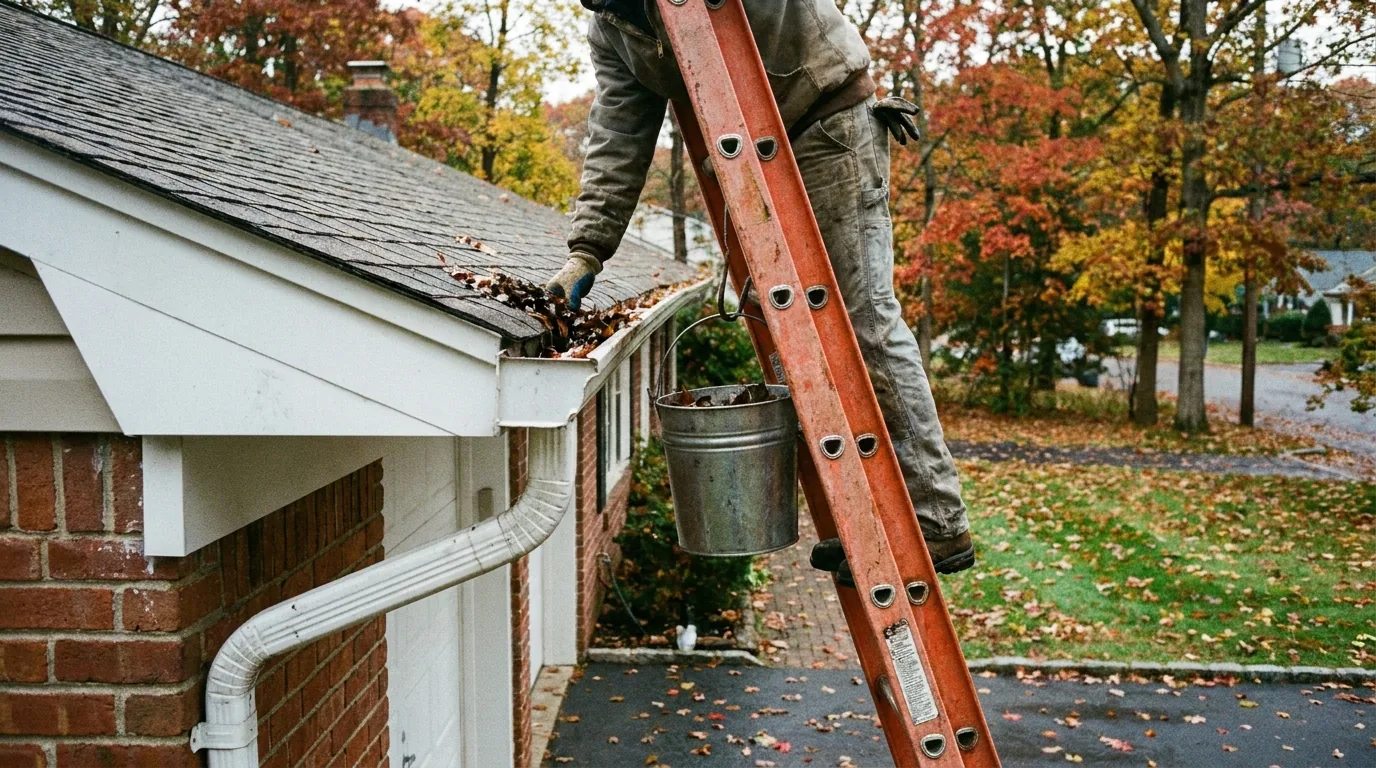
Plenty of Long Island homeowners clean their own gutters and that is fine on a one-story ranch. Some honest cautions: ladder falls are the leading cause of serious home maintenance injuries; never lean a ladder against the gutter itself; on a two-story colonial or anything with a steep pitch, hire it out. A gutter cleaning costs less than an emergency room visit.
What We Do
Alec's Construction cleans, repairs, re-pitches and replaces gutters across Suffolk and Nassau County, and because we also do roofing, siding and exterior carpentry we can replace the rotted fascia behind the gutter in the same visit instead of sending you to a second contractor.
We book fall gutter work from September. Call (631) 312-7441.
Frequently Asked Questions
How often should gutters be cleaned on Long Island?
Twice in the fall. Once in late October after the maples come down, and again in late November or early December after the oaks finish — oaks hold their leaves late here and are the dominant tree on many Island streets. If you can only do one, do the second.
What happens if you never clean your gutters?
On Long Island, ice dams in January, rotted fascia within two seasons, and a wet basement from water dumping at the foundation. Clogged gutters are the most common cause of all three, and each one costs far more to fix than a cleaning.
Do gutter guards really work?
They reduce cleaning frequency, they do not eliminate it. They handle leaves and twigs well, which matters on a wooded Long Island lot. They do not stop pine needles or fine shingle grit. Expect to go from twice a year to once every two or three years, plus an annual downspout check.
How far should downspouts discharge from the house?
At least four to six feet, onto grade that slopes away from the foundation, or into a drywell or drainage line. A perfectly clean gutter that discharges at the foundation still causes a wet basement, and this is the most commonly overlooked part of the system.
Should I repair or replace my gutters?
Most Long Island gutter problems are repair problems — re-hanging a sagging run, resetting pitch, replacing hangers, resealing seams. Replace when seams are failing along the whole run, the aluminum is corroded through, the gutters are undersized for the roof, or the fascia behind them has rotted and needs rebuilding.
Is it safe to clean my own gutters?
On a single-story ranch, generally yes with a proper ladder that is not leaned against the gutter itself. On a two-story colonial or a steep pitch, hire it out. Ladder falls are the leading cause of serious home maintenance injuries.
Related Guides
- Fall Home Maintenance Checklist for Long Island
- Winterizing Your Long Island Home
- Ice Dams on Long Island Roofs
- Deck Staining and Sealing in Fall
- Finishing a Basement in Winter
Get a Free Estimate from Alec's Construction
Licensed and insured, working across Nassau and Suffolk County since 2018. We come out, look at the actual job, and put a written number in your hand — no pressure, no obligation.
Book a Free WalkthroughOr call (631) 312-7441