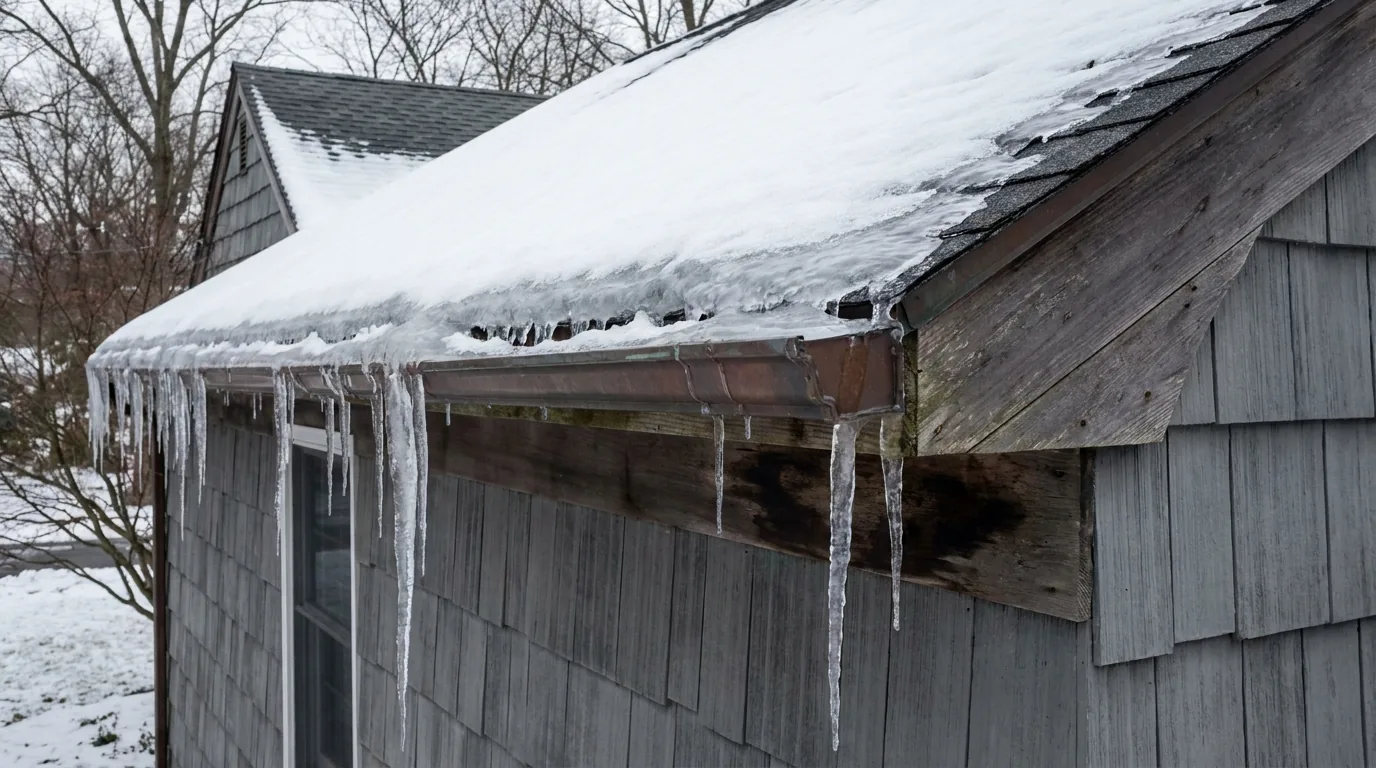
Every January and February we get the same call from Long Island homeowners: a brown stain spreading across a bedroom ceiling, usually along an outside wall, with no leak in the summer and no obvious damage to the roof. Almost every time, it is an ice dam — and almost every time, the homeowner's first instinct is to blame the roof.
The roof is usually fine. The attic is the problem.
How an Ice Dam Forms
It takes three things, and Long Island supplies all three reliably.
1. Snow on the roof. 2. Heat escaping from the living space into the attic, warming the underside of the roof deck. 3. A cold eave — the roof overhang, which extends past the exterior wall and has no heated space beneath it.
Heat from the house melts snow on the upper roof. That meltwater runs down the roof surface under the snow layer. When it reaches the eave, which is at outdoor temperature, it refreezes. Repeat over a few days and you build a ridge of ice at the roof edge.
Now the dam is there. Subsequent meltwater pools behind it. Asphalt shingles are designed to shed water flowing downhill — they are not watertight against standing water. The pooled water works back up under the shingle courses, through the deck, and into your ceiling.
The icicles hanging off your gutter are not the problem. They are the symptom that tells you the mechanism is running.
Why Long Island Gets Them Badly
Our temperature sits right on the line. Ice dams need freeze-thaw cycling, not deep cold. A place that stays at 5 degrees all winter gets fewer ice dams than Long Island does, because nothing melts. Our winters hover around freezing and cross it constantly, which is the perfect ice dam machine.
Older housing stock with under-insulated attics. A large share of Island homes were built in the post-war boom and were insulated to the standards of their day. Many have three or four inches of settled fiberglass where current practice would call for far more.
Blocked soffit vents. The single most common defect we find. Someone added insulation in the attic at some point and pushed it right out over the top plate, sealing off the soffit vents. Now there is no intake air, the attic cannot stay cold, and the roof deck warms up.
Wet coastal snow. Long Island snow is heavy and wet, which holds more water than dry inland powder and produces more meltwater per storm.
The Real Fix Is Not on the Roof
This is the part that surprises people. You do not solve ice dams with a better roof. You solve them by keeping the attic cold.
Air sealing first. Before insulation, seal the paths heat takes into the attic: the attic hatch, recessed light housings, bath and kitchen exhaust fans that dump into the attic instead of outside, plumbing stacks, and the top plates of interior walls. Air leakage moves far more heat than conduction does, and it is the step most often skipped.
Then insulation. Bring the attic floor up to current levels. Insulation goes on the attic floor, not against the roof deck, in a vented attic.
Then ventilation. Clear soffit vents at the eave for intake, and a ridge or gable vent for exhaust. Install rafter baffles at the eaves so insulation cannot block the soffit vents again. Air flows in low, out high, and keeps the deck at outdoor temperature.
Exhaust fans must terminate outside. A bathroom fan venting into the attic is dumping warm wet air exactly where you least want it. We find this constantly on Long Island.
Ice and water shield at the eaves. On a roof replacement, a self-adhering membrane along the eaves is code in our climate zone and is the last line of defense. It does not prevent the dam; it prevents the dam from getting into your house.
What To Do When Water Is Coming In Right Now
Do not get on the roof. An icy roof in January is how people die doing home maintenance.
Do not chip at the ice with a hammer, an axe or a chisel. You will destroy the shingles underneath and turn a temporary problem into a roof replacement.
Do not use salt directly on the shingles. Rock salt corrodes flashing, damages gutters and kills the plantings below.
Do rake snow off the lower three or four feet of roof from the ground with a roof rake. Removing the snow removes the fuel.
Do get the water managed inside — bucket it, and pull back any wet insulation so it can dry rather than sit against the ceiling.
Do call someone who does steam removal for a serious dam. Low-pressure steam melts ice out without damaging shingles. Not a pressure washer.
Do photograph everything for insurance before anything is cleaned up.
After: Repair the Damage Properly
Once the dam is gone, the ceiling stain is still a report on what happened. Wet insulation in the wall or ceiling cavity has to come out and dry or be replaced — it has lost its R-value and it will grow mold. The stain has to be sealed with a stain-blocking primer, not painted over with latex, or it will bleed back through in weeks. More on that here.
And then fix the attic, before next winter, or you will be doing this again.
What We Do
Alec's Construction handles the whole chain on Long Island: attic air sealing, insulation and ventilation, gutter repair, roof repair and replacement with proper eave protection, and the interior repair and repainting afterward. One licensed contractor for the cause and the damage.
Call (631) 312-7441.
Frequently Asked Questions
What causes ice dams on a Long Island roof?
Heat escaping from the living space into the attic warms the roof deck and melts snow, the meltwater runs down and refreezes at the cold eave, and the resulting ice ridge forces later meltwater back up under the shingles. Long Island's constant freeze-thaw cycling around 32 degrees makes it worse than colder climates.
Do ice dams mean my roof is bad?
Usually not. Ice dams are an attic insulation and ventilation problem, not a roofing problem. A new roof on an under-insulated, poorly ventilated attic will get ice dams too. The fix is air sealing, insulation and clear soffit-to-ridge ventilation.
How do I get rid of an ice dam?
Rake snow off the lower few feet of roof from the ground, and call for professional low-pressure steam removal on a serious dam. Never chip at the ice with tools, never get on an icy roof, and do not put rock salt directly on shingles.
Will gutter guards prevent ice dams?
No. Clogged gutters make ice dams worse by holding water at the eave, so keeping gutters clear helps, but the dam forms from heat loss through the attic regardless of what the gutters are doing. Guards are not a prevention measure.
Do heat cables stop ice dams?
They create a channel for meltwater to escape, which can prevent water backing up into the house. They are a symptom management tool, not a cure, they add to your electric bill every winter, and they have a limited service life. Fix the attic instead where you can.
Does homeowners insurance cover ice dam damage?
Often yes for the resulting interior water damage, though coverage varies by policy and carrier. Photograph everything before cleanup. Our insurance restoration team handles Long Island claims like this regularly.
Related Guides
- Fall Home Maintenance Checklist for Long Island
- Winterizing Your Long Island Home
- Gutter Cleaning on Long Island
- Deck Staining and Sealing in Fall
- Finishing a Basement in Winter
Get a Free Estimate from Alec's Construction
Licensed and insured, working across Nassau and Suffolk County since 2018. We come out, look at the actual job, and put a written number in your hand — no pressure, no obligation.
Book a Free WalkthroughOr call (631) 312-7441