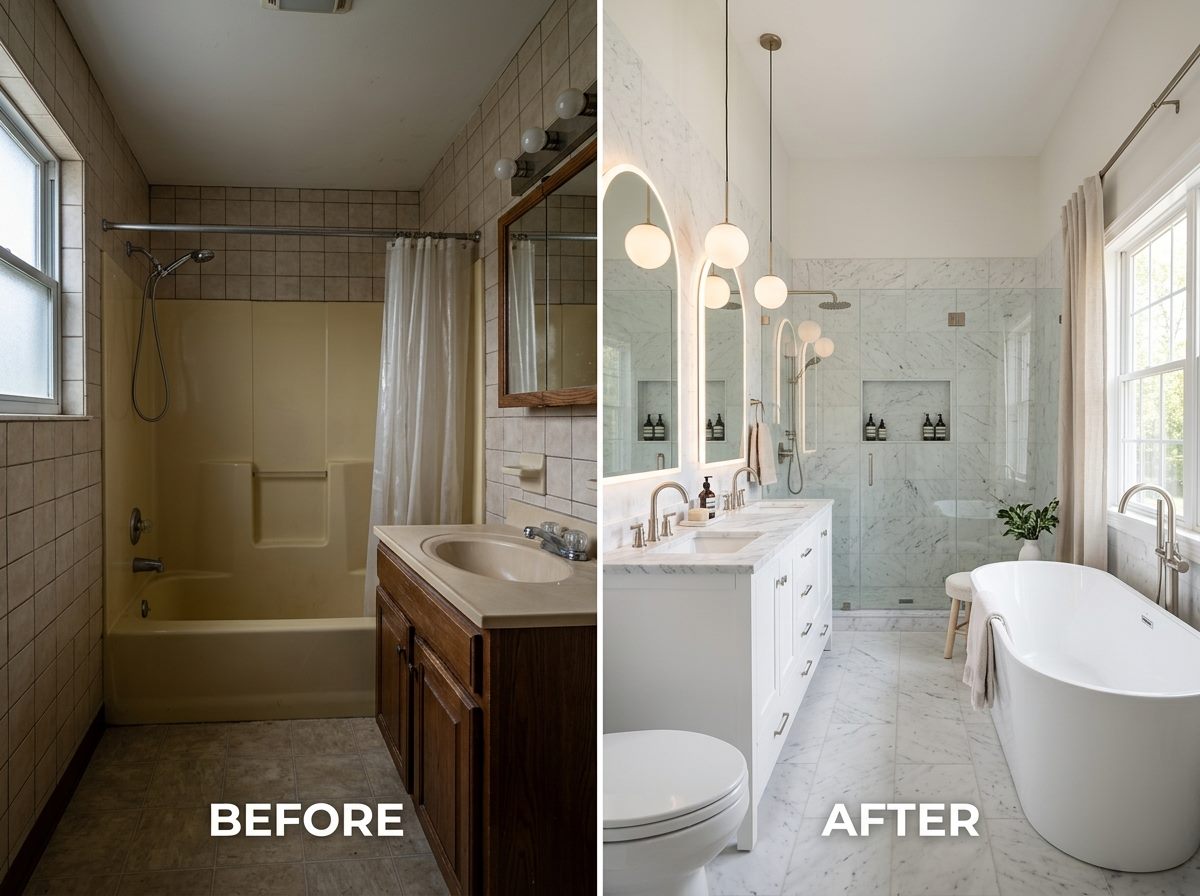
Bathrooms are small rooms with a lot going on — plumbing, electrical, ventilation, waterproofing and tile all inside a few dozen square feet. That density is why bathroom remodels cost what they do and why shortcuts show up so quickly.
These are the questions homeowners ask us most before starting. Alec's Construction is a licensed Suffolk County general contractor serving Babylon, Islip, Brookhaven, Smithtown, Huntington, Riverhead and the East End.
How much does a bathroom remodel cost per square foot?
A hall or guest bathroom refresh with mid-range fixtures generally runs $18,000 to $32,000. A full primary bathroom renovation typically runs $35,000 to $65,000, and larger primaries with custom tile, double vanities and frameless glass exceed that. Moving plumbing fixtures from their existing locations is the single biggest cost driver — keeping the layout can save many thousands.
How long should a bathroom remodel take?
Four to seven weeks for a full gut on a typical bathroom, assuming materials are on site before demolition. The sequence is demolition, rough plumbing and electrical, inspection, waterproofing, tile, then fixtures and finishes. Tile and waterproofing cannot be rushed — most of the failures we are called in to repair trace back to compressed schedules at exactly that stage.
Do I need a building permit for a bathroom remodel?
If you are replacing fixtures in place and doing cosmetic work, often not. If you are moving plumbing, altering electrical circuits, changing the room's footprint or adding a bathroom, then yes. Adding a bathroom in an unsewered part of Suffolk County can also trigger health department review because it affects sanitary flow.
Tub or shower: which is better for resale value?
Function and resale both matter. A walk-in shower is more comfortable for most adults, more accessible as people age, and visually opens a small room. But a house with no tub at all is a harder sell to families with small children. The common guidance holds up: keep at least one tub somewhere in the house, and make the primary bathroom a shower if that is what you actually use.
What is the most expensive part of a bathroom remodel?
Labor, and specifically the trades. Plumbing and electrical rough-in, waterproofing and tile setting are where the hours go. Fixtures and finishes are the visible spend but rarely the largest one. This is why moving a toilet three feet can cost more than upgrading every fixture in the room.
Can I remodel with only one bathroom in the house?
Yes, but plan for it honestly. A full gut means several weeks without that bathroom. Options include sequencing the work so the toilet is reinstated quickly, arranging a temporary setup, or staying elsewhere during the roughest stretch. Homeowners who plan for this cope fine; homeowners who assume it will be a few days do not.
What kind of ventilation do I need?
A properly sized exhaust fan ducted to the exterior — not into the attic, which is a mistake we still find regularly and which causes mold and rot above the ceiling. Long Island humidity makes this more important than in drier climates. Sizing should match the room volume, and a timer or humidity sensor keeps it running long enough to actually clear the moisture.
What is the right waterproofing for a shower?
A continuous waterproofing system behind the tile — sheet or liquid membrane over an appropriate substrate — not just cement board and thinset. Tile and grout are not waterproof; the membrane behind them is what keeps water out of the framing. This is the most consequential invisible decision in the entire project.
Heated floors — worth it?
In a bathroom, more than anywhere else in the house. Electric radiant mats are relatively inexpensive to add during a tile installation and transform how the room feels in a Long Island winter. Retrofitting later means tearing out the floor, so if you are ever going to do it, do it during the remodel.
Does a bathroom remodel add value?
Bathrooms and kitchens consistently return the most of any interior renovation. A dated or failing bathroom actively suppresses offers, which means the return often shows up as a faster sale at a stronger number rather than a line-item gain. Mid-range finishes generally return better than luxury ones.
Should I move the plumbing?
Only when the existing layout genuinely does not work. Relocating a toilet or shower drain means opening the floor and reworking waste lines, which on an upper floor means opening the ceiling below as well. If the layout is merely dated rather than dysfunctional, put the money into finishes, storage and lighting instead.
What should I decide before demolition starts?
Every fixture and finish, in hand or confirmed with a delivery date. Tile, vanity, faucets, glass, lighting and hardware. Mid-project selection changes are the leading cause of both delays and change orders. A remodel that starts fully specified runs on schedule; one that does not will not.
How much does a small bathroom remodel cost?
A small hall or powder bathroom generally runs $12,000 to $25,000 for a full gut with mid-range finishes. Small rooms do not cost proportionally less, because the same trades are involved and the same waterproofing, rough-in and inspection sequence applies. What you save is materials and tile area, not labor.
Related Guides
- Bathroom remodel cost breakdown
- Walk-in shower guide
- Bathroom permits
- Small bathroom remodels
- Bathroom remodel timeline
Work With Alec's Construction
This guide is written by the crew that does the work. See Alec's Bathroom Remodeling service — full gut renovations, tile, plumbing and vanities. Licensed and insured on Long Island, one crew start to finish, free walkthrough and a written estimate inside 48 hours.
Booking the cold months now: we also handle Kitchen Remodeling and Painting.
We keep a permit office directory for Nassau and Suffolk, checked against each jurisdiction's own site, because we file in these counters constantly.
Also Serving Questions Long Island
- ADUs in Questions Long Island — accessory apartments and grants
Have a Question We Did Not Answer?
Alec's Construction is a licensed Suffolk County general contractor. Tell us about your project and we will walk you through what is possible on your property, what it costs, and how long it takes.
Get a Free Consultation