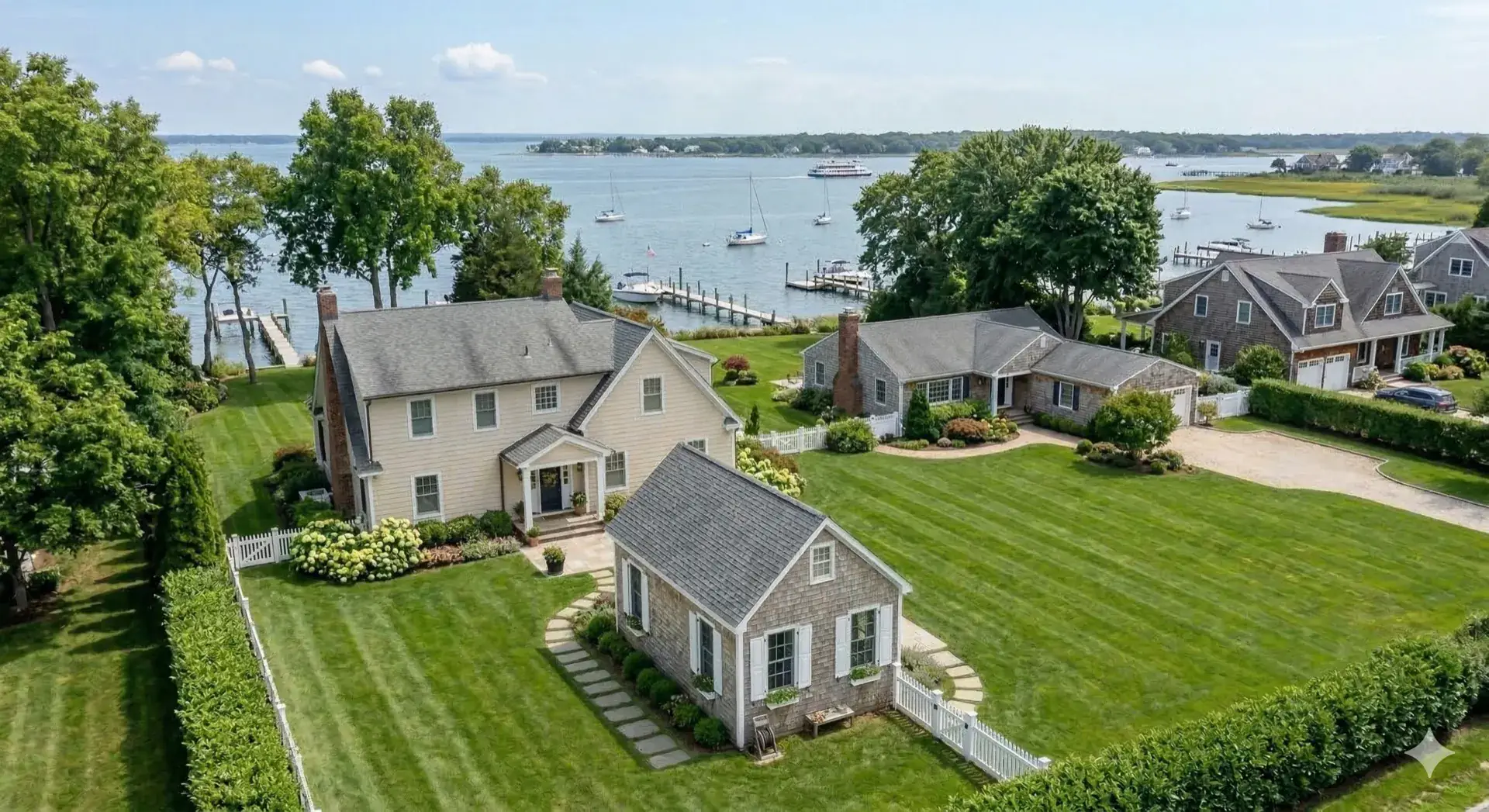
Most water damage on Long Island is fresh water — a pipe, a roof leak, a window well — and our water damage guide covers that. Hurricane flooding on the South Shore and in the North Shore harbour villages is a different thing: it is salt water that rose into the house from the bay or the Sound, and it changes what comes out, what is dried, what is replaced and who pays.
Where Surge Goes in a Long Island House
Surge comes up the creeks, canals and rivers on a south or southeast wind and over the bulkheads onto the streets south of Montauk Highway, and on the North Shore up the harbours on a northeast wind into the downtowns at the foot of the hills. It enters the house at the lowest point: the crawl space, the slab-on-grade den or garage conversion, the basement, and on the canal grids the whole first floor of a cape or ranch built at grade. It fills the wall cavities from the bottom, wets the insulation, the sheathing, the sill plate and the bottom of every stud, and it sits on every electrical box, outlet and appliance below the water line.
Salt Water Changes the Rules
Fresh water can be dried. Salt water leaves salt behind in everything it touched, and salt is corrosive and hygroscopic — it keeps pulling moisture from the air into the material it is in. The practical consequences:
- Electrical that sat in surge water is replaced, not dried. Outlets, switches, boxes, wiring that was submerged, the panel if it went under, and any appliance or mechanical with a motor or a board.
- Boilers, water heaters, furnaces and air handlers that took surge water are generally replaced. The oil tank, if there is one, is checked for displacement and contamination.
- Sheetrock and insulation below the water line come out. Salt in the paper face and in fibreglass does not dry clean.
- Framing that stays gets washed down, dried with equipment and metered before it is closed.
What Comes Out
Wet sheetrock cut back above the water line, all insulation below it, carpet and pad, laminate and engineered flooring that swelled, cabinets whose boxes took water, doors that swelled, wet contents that cannot be cleaned. Photographed in place, photographed as it comes out, and kept where the flood adjuster can see it if there is anywhere to keep it. Then drying with real equipment — air movers and dehumidifiers, not a fan in the doorway — and moisture readings on the framing before anything is closed.
The Flood Claim
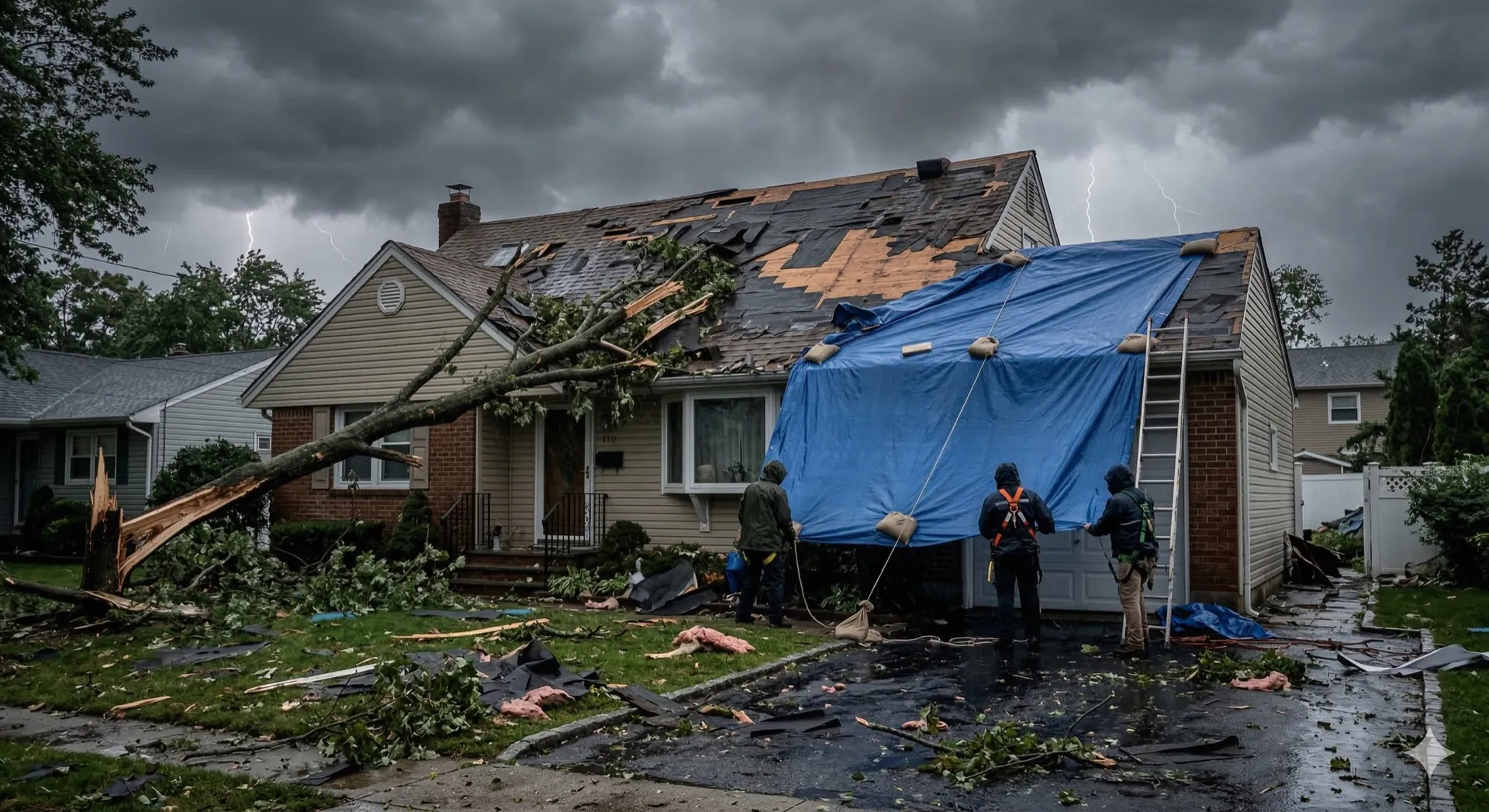
Water that rose into the house is a flood claim under a flood policy — National Flood Insurance Program or private — and the homeowners policy excludes it. The flood adjuster wants to see the water line, the material as found, and an itemised scope of what was damaged below it. Wind damage to the same house — the roof, the siding, the rain that came in through them — is a separate homeowners claim with a separate adjuster, and the two scopes are written separately so each carrier sees what belongs to them. Houses with no flood policy are paying for the flood repair themselves, which is why the flood map for an address is worth knowing before a storm, not after.
Flood Zone Rules Shape the Repair
Where a house in a mapped flood zone is damaged past a certain share of its value, the town's floodplain rules may require it to be brought into compliance as part of the repair permit — which can mean elevating the living floor above the base flood elevation, and using flood-resistant materials and flood openings in any enclosure below it. That is a conversation to have with the building department early, before a scope is written, and it is one of the first things we settle on the walkthrough for any house south of Montauk Highway or in a harbour village.
Fast Rebuilds That Have to Be Redone
A lot of South Shore houses were rebuilt in a hurry after the 2012 surge: new sheetrock on studs that were never dried to a measured number, insulation back into wet floors, electrical spliced rather than replaced. A second wetting, even a small one, brings the mould out of those walls. The repair the second time is to open the assemblies fully, dry them to a measured moisture content and close them only when the meter says so. We take the readings and give them to you.
Free walkthrough anywhere in Suffolk County. If there is water in the house now, call rather than fill in the form: (631) 312-7441.
Frequently Asked Questions
Does homeowners insurance cover hurricane flooding on Long Island?
No. Water that rose from the bay, a canal, a creek, a harbour or the ground is flood damage, and a standard homeowners policy excludes it. Flood is covered by a separate flood policy — National Flood Insurance Program or private — and a new flood policy generally has a waiting period before it takes effect. The wind damage to the same house, and the rain that came in through it, is a homeowners claim and is scoped separately.
Can salt-water-soaked electrical be dried and reused?
It should not be. Salt water leaves salt in every connection it touched, salt is corrosive and it keeps drawing moisture from the air, and the result is corrosion and heat at connections months later. Outlets, switches, boxes and wiring that were submerged, the panel if it went under, and any appliance or mechanical with a motor or a control board are replaced. That is a standard flood-scope item and adjusters expect it.
How high do you cut the drywall after a flood?
Above the water line and above the wet insulation behind it, to the next convenient joint — commonly the four-foot line on a first floor that took a foot or two of water, because it uses a full sheet on the rebuild. The insulation below that comes out entirely; wet fibreglass does not dry in a wall. The framing behind it is washed, dried with equipment and metered before new board goes on.
Will the town make me elevate my house after a flood?
Possibly, if the house is in a mapped flood zone and the damage is past the threshold in the town's floodplain rules — a share of the building's value that varies by jurisdiction. Where it applies, the repair permit can require the living floor to be brought above the base flood elevation, with flood-resistant materials and openings in any enclosure below it. We raise it with the building department before the scope is written, not at the permit counter.
Related Guides
- Hurricane Damage Repair on Long Island
- What to Do in the First 48 Hours After Hurricane Damage
- Storm Cleanup and Debris Removal on Long Island
- Hurricane & Storm Damage Repair — our service page
- A Tree Fell on Your House
- Storm Damage Insurance Claims on Long Island
- Water Damage Restoration on Long Island
Work With Alec's Construction
This guide is written by the crew that does the work. See Alec's Hurricane & Storm Damage Repair service — fallen trees, flooding, roof and siding damage, cleanup and the rebuild. One crew start to finish, free walkthrough and a written estimate inside 48 hours.
Booking the cold months now: we also handle Roofing and Storm Damage & Insurance Restoration.
Get a Free Estimate from Alec's Construction
Working across Suffolk County since 2018, one crew from start to finish. We come out, look at the actual job, and put a written number in your hand — no pressure, no obligation.
Or call (631) 312-7441