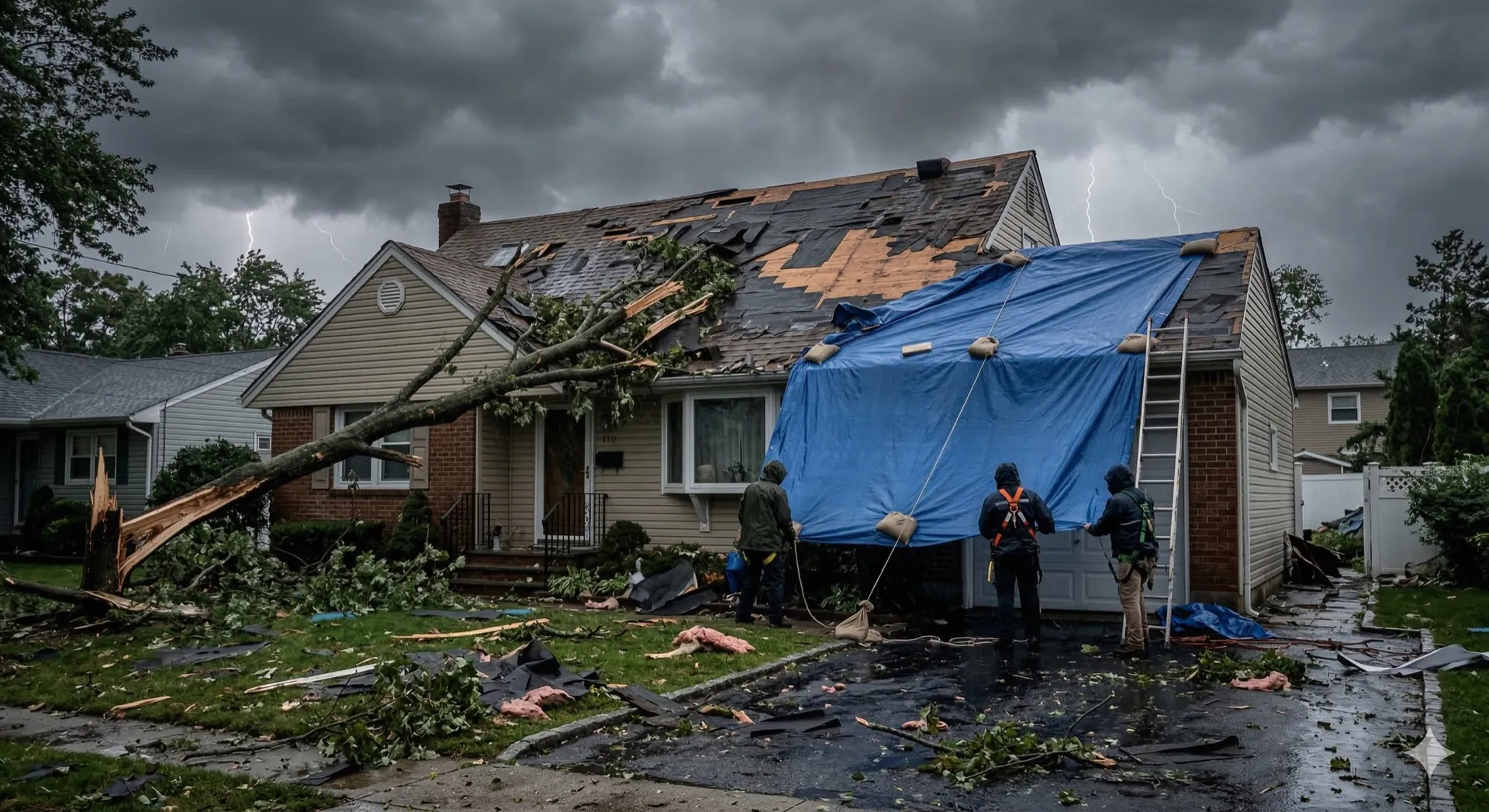
After a hurricane the property is covered in three kinds of debris, and they go three different places. There is the tree — limbs, crowns, sometimes the whole thing with the root plate up — which the town will often take from the curb eventually but will not take off your roof. There is the building debris: roofing, siding, gutters, fence, the shed roof, glass. And there is the wet material coming out of the house — carpet, insulation, sheetrock, contents — which nobody wants and which has to go before it grows mould. Cleanup is the part of storm damage that homeowners try to do themselves, and it is where the injuries happen.
Trees and Limbs
A tree on the ground is a chainsaw job and mostly a matter of time. A tree on a structure is not. The tree may be holding the roof up as much as crushing it, it is under tension in ways that are not visible, and cutting the wrong section first drops the load onto the house or onto whoever is cutting. We look at what the tree is resting on, decide whether the structure needs shoring before the weight comes off, and take it down in an order that keeps the roof supported. Nothing near a downed line is touched until the utility has made it safe — power lines in a fallen tree are the most common way people are killed after a storm.
Suffolk towns generally run brush and storm-debris pickup from the curb after a major storm, usually with rules about length, bundling and what counts as storm debris. We tell you what your town is doing that week and take what they will not.
Roofing, Siding and Building Debris
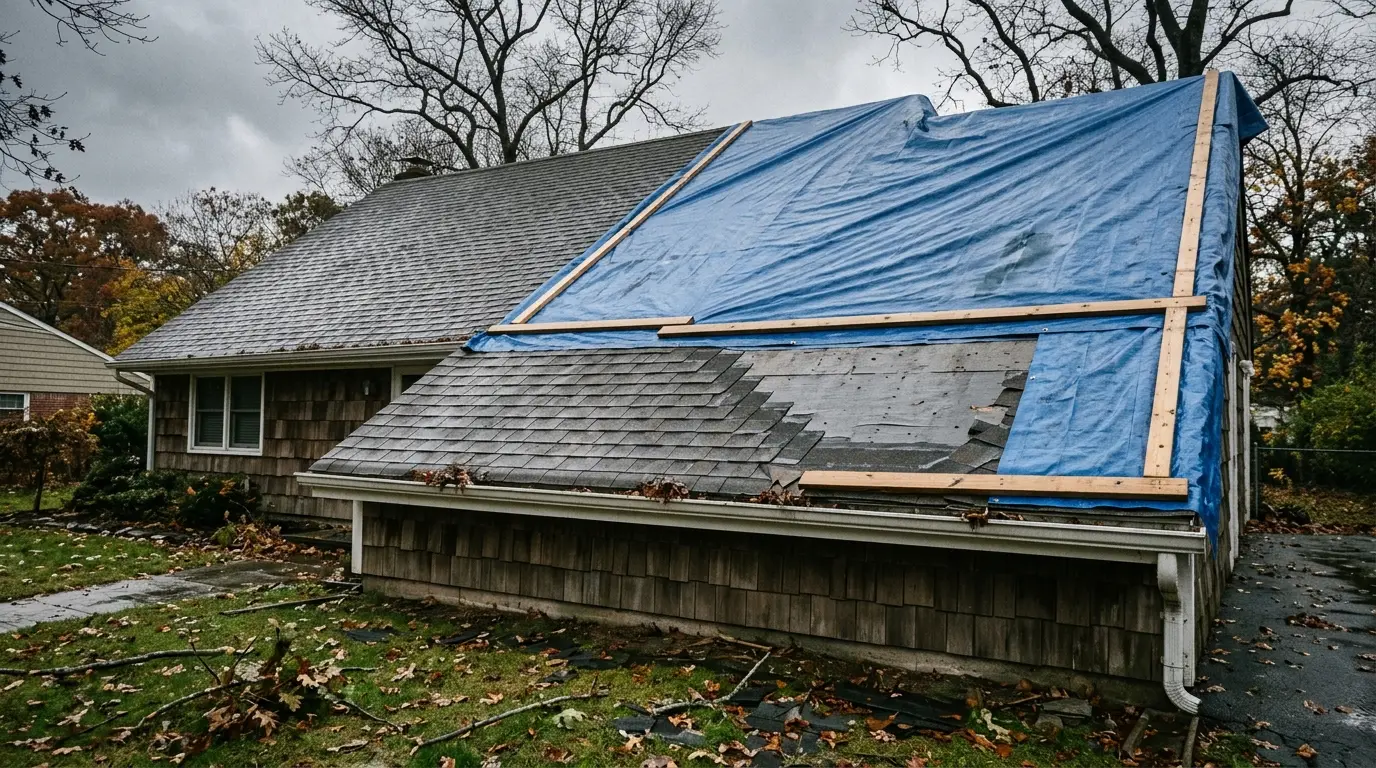
Shingles, vinyl siding, aluminum gutters, fence sections, broken glass and the pieces of whatever the wind took apart end up across the yard and the neighbours' yards. It is sharp, it has nails in it, and it hides the things you do not want to step on. Photograph it where it lies before it is picked up — it is evidence of what the wind did — and then it gets bagged, loaded and hauled. Damaged roofing and siding still on the house comes off as part of the repair, not before it.
Wet Material From Inside the House
This is the debris with a clock on it. Wet carpet and pad, wet fibreglass or cellulose insulation, sheetrock that has lost its strength, soaked upholstered furniture and mattresses — mould can begin on any of it within a day or two, and a house that sits wet while it waits for an adjuster becomes a mould remediation on top of a storm repair. It comes out, it is photographed as it goes, and where there is anywhere to keep it — a garage, a tarp on the driveway — it stays where the adjuster can see it until the visit. Salt water adds a rule: anything electrical that sat in surge water is replaced, not dried.
Dumpsters, Hauling and Town Rules
A storm cleanup fills a dumpster fast, and after a hurricane every dumpster on Long Island is spoken for. We bring hauling with us as part of the job rather than leaving you to find a container in the week everyone is looking for one. Where a dumpster sits on the street rather than the driveway, some villages require a permit for it; we handle that where it applies. Wet building material and general debris go to a transfer station; treated lumber, appliances and anything with a refrigerant go separately.
What Cleanup Is Not
Cleanup is not repair, and a cleared yard is not a fixed house. Once the debris is gone the tarp is still on the roof, the wall is still open and the drying equipment is still running. The cleanup gets the crew to the house; the scope and the rebuild are the job. We do both, as one job, on one scope for the adjuster.
Hazards
- Downed lines, and trees or debris touching them — the utility first, always.
- Gas — if you smell it, leave and call from outside.
- Trees on structures, under tension.
- Nails and glass under leaves and mud.
- Wet floors over electrical, and outlets that took water.
- Generators run indoors or in garages.
- Chainsaws in the hands of people who do not use them every day, on wood that is under load.
Call or text (631) 312-7441. Tell us what is on the ground, what is on the house and what is wet inside, and we come with the right crew and the right equipment.
Frequently Asked Questions
Will the town pick up storm debris on Long Island?
After a major storm most Suffolk towns and villages run curbside brush and storm-debris collection for a period, with rules about how it is cut, bundled and placed. They take what is at the curb; they do not take a tree off your roof or building material out of your house. We tell you what your town is doing that week, get the brush to the curb in the form they want it, and haul what they will not take.
Is tree removal covered by insurance after a storm?
When the tree fell on a covered structure, most homeowners policies pay for the damage and pay something toward removing the tree, up to a limit that varies by policy. A tree that fell in the yard and hit nothing is usually not covered. Photograph the tree where it lies before it is cut, showing what it hit, so the claim is clear.
Can I throw out wet carpet and drywall before the adjuster comes?
Yes, and you should — leaving it in place grows mould and makes the claim worse, and emergency mitigation is expected of you under the policy. Photograph it in place first, photograph it as it comes out, and keep it where the adjuster can see it if there is anywhere to keep it. Note what was removed and roughly how much. What you do not do is make permanent repairs before the scope is agreed.
Do you haul the debris or do I need a dumpster?
We bring the hauling as part of the job. After a hurricane every dumpster on Long Island is committed for weeks, and leaving homeowners to find a container is how cleanup stalls. Where a dumpster does sit on the street in a village that requires a permit for it, we handle the permit.
Related Guides
- Hurricane Damage Repair on Long Island
- What to Do in the First 48 Hours After Hurricane Damage
- Flood Cleanup After a Hurricane on Long Island
- Hurricane & Storm Damage Repair — our service page
- A Tree Fell on Your House
- Storm Damage Insurance Claims on Long Island
- Water Damage Restoration on Long Island
Work With Alec's Construction
This guide is written by the crew that does the work. See Alec's Hurricane & Storm Damage Repair service — fallen trees, flooding, roof and siding damage, cleanup and the rebuild. One crew start to finish, free walkthrough and a written estimate inside 48 hours.
Booking the cold months now: we also handle Roofing and Storm Damage & Insurance Restoration.
Get a Free Estimate from Alec's Construction
Working across Suffolk County since 2018, one crew from start to finish. We come out, look at the actual job, and put a written number in your hand — no pressure, no obligation.
Or call (631) 312-7441