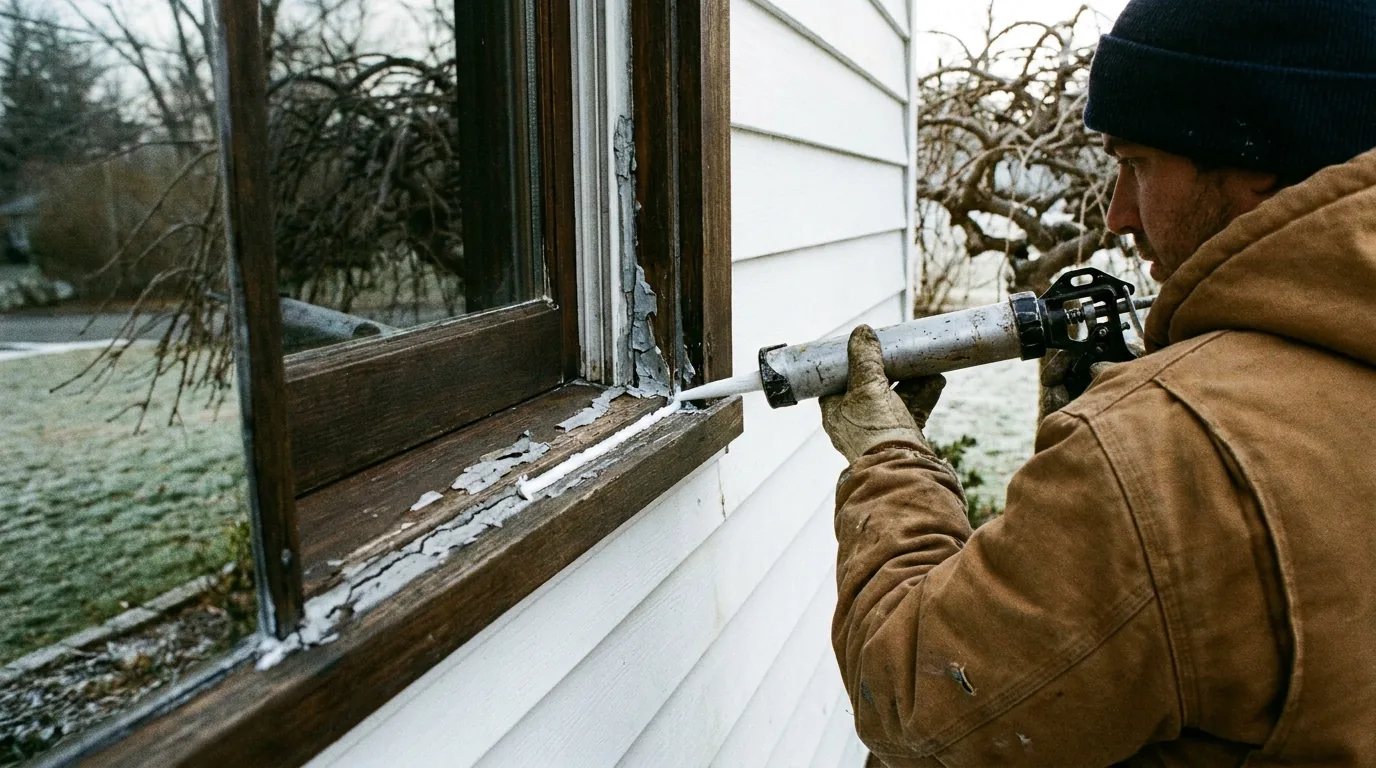
A burst supply line puts water into a house at several gallons a minute, and it keeps doing it until somebody closes a valve. Ten minutes decides how much of the house has to be rebuilt.
The First Ten Minutes
Find the main shut-off and close it. In most Long Island houses it is in the basement on the street-facing wall, near where the service enters, often beside the meter. Find it now, while nothing is wrong, and make sure everyone in the house knows where it is and that it actually turns.
Kill power to any area taking water. Water into a ceiling means water into light fixtures and possibly into the panel.
Open the taps. Once the main is closed, opening fixtures drains the remaining pressure and reduces what is left to leak out.
Photograph everything before you clean up. Wide shots of each affected room, close shots of the failure, the standing water, and the ceiling. Timestamps.
Then start extraction. Standing water on Long Island in winter goes bad fast — hardwood cups within a day, drywall wicks moisture up the wall, and insulation in the cavity holds it indefinitely. Getting the water out and air moving in the first twenty-four hours is what separates a drying job from a demolition job.
Which Pipes Freeze Here
Long Island does not have a deep-freeze climate, which is exactly why so many pipes here are in places that would never be allowed further north.
Pipes in exterior walls. Very common in post-war capes and ranches, especially kitchen sink supplies on an outside wall. The insulation is behind the pipe rather than in front of it, so the pipe sits between the cold sheathing and the warm room with nothing protecting it.
Crawl space and unconditioned basement runs. Uninsulated copper in a vented crawl space is the single most common burst we see.
Garage walls and unheated additions. Sunrooms and three-season rooms that were plumbed for a wet bar or a sink and then not heated.
Attic runs. Less common, but catastrophic when they go, because the water comes down through the whole house.
Hose bibs that were never shut off. The classic Long Island November mistake: the outside tap left connected to a hose. The hose holds water against the valve, the valve freezes, and the split shows up inside the wall.
Vacant and second homes. On the East End and the south shore this is a whole category. A house at fifty degrees with the water on is a house waiting for one cold night with a power cut.
Why It Bursts
Not where the ice is. The ice plug forms and then keeps growing, and it pushes water ahead of it toward the closed fixture. Pressure builds in that trapped column until the pipe splits — usually between the ice and the tap, not at the freeze point itself.
Which is why leaving a tap cracked open during a hard freeze genuinely works: it gives the pressure somewhere to go.
And why the flood often happens on the thaw rather than during the cold. The pipe splits while frozen, but nothing comes out until the plug melts. People find it when the weather warms.
Preventing It
- Insulate the pipes that are in cold space, and understand that pipe insulation slows heat loss, it does not add heat. On a truly cold run, heat trace cable with a thermostat is what actually works.
- Air seal before you insulate. A pipe in an exterior wall fails because cold outside air is moving through the cavity. Sealing the rim joist and the wall penetrations does more than wrapping the pipe.
- Disconnect every hose in autumn and shut the interior valve to each outside tap, then open the tap to drain it.
- Keep the heat at 55 or above, including in rooms you do not use, and open cabinet doors under sinks on exterior walls during a hard freeze.
- On a vacant house, either keep real heat on with a low-temperature alarm, or shut the water at the main and drain the system properly. Half measures are what fail.
The Insurance Reality
Sudden and accidental water discharge from a burst pipe is a standard covered peril on a homeowners policy. Two things commonly reduce or void the claim.
Freezing while the house was unoccupied without reasonable heat. Most policies have an explicit exclusion: if the house was vacant and you did not maintain heat or drain the system, the freeze damage is not covered. This is the one that catches second homes and houses on the market.
Long-term seepage rather than a sudden event. A slow leak that has been going for months is maintenance, not a claim. A pipe that split last night is a claim.
Document the sudden event clearly, keep the mitigation invoices — extraction and drying are usually reimbursable — and report promptly. Your policy requires you to prevent further damage once you know about it.
The Repair
Once the water is off and the space is drying, the real scope appears: what has to come out, what can be dried in place, and what has to be rebuilt.
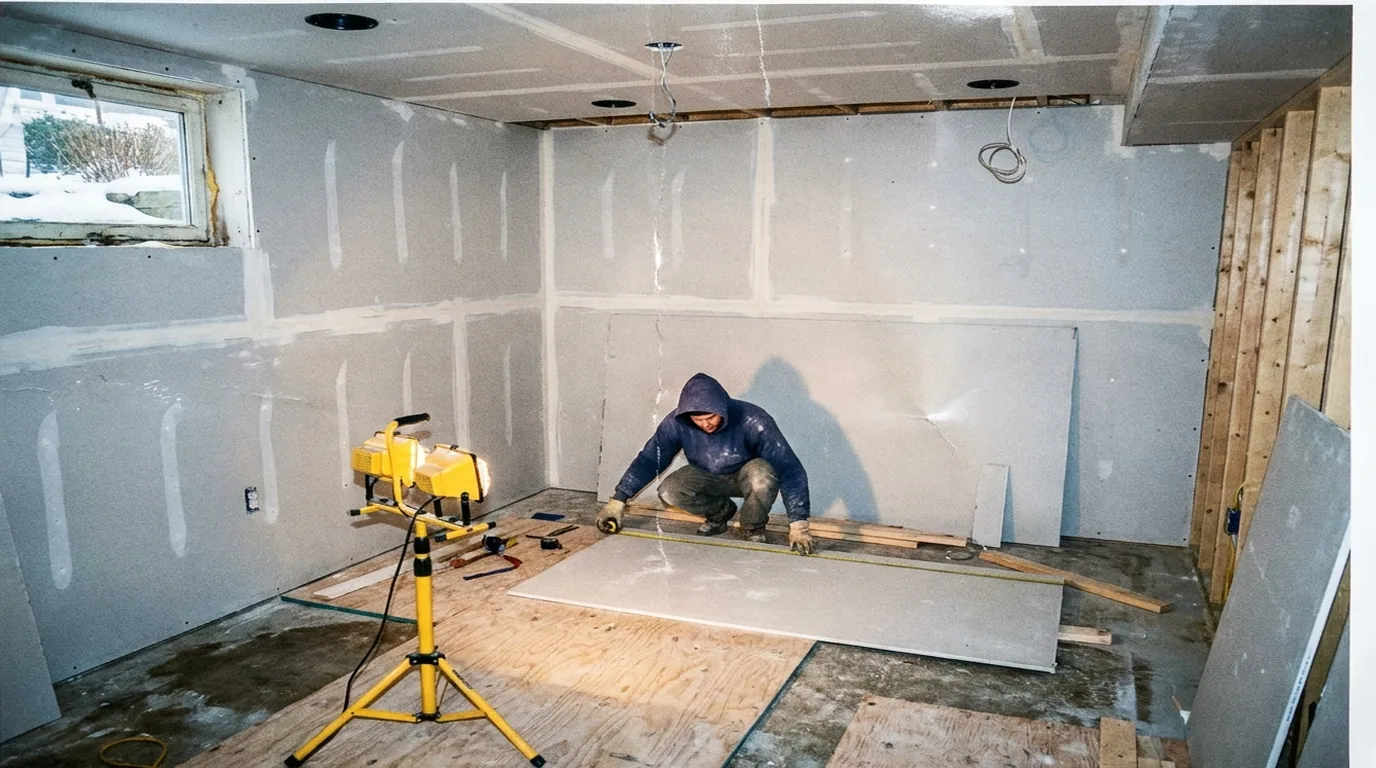
We handle the building side of it — opening the wall or ceiling, removing wet insulation and drywall, replacing softened framing and subfloor, then putting it back with insulation, drywall, trim and paint — and we work the claim documentation alongside you.
Burst pipe or winter water damage on Long Island: (631) 312-7441.
Frequently Asked Questions
What should I do the moment a pipe bursts?
Close the main shut-off, kill power to any area taking water, open the taps to drain remaining pressure, and photograph everything with timestamps before you clean anything up. Then get extraction and air movers going — the first twenty-four hours decide whether it is a drying job or a demolition job.
Where does a frozen pipe actually burst?
Usually between the ice plug and the closed tap, not at the freeze point. The plug forms and keeps growing, pushing water ahead of it into a trapped column until the pressure splits the pipe. That is also why cracking a tap open during a hard freeze works — it gives the pressure somewhere to go.
Which pipes freeze most often on Long Island?
Supply lines in exterior walls, particularly kitchen sinks on an outside wall in post-war capes and ranches; uninsulated runs in vented crawl spaces and unheated basements; plumbing in garage walls and unheated sunrooms; and outside hose bibs left connected to a hose over the winter.
Does insurance cover a burst pipe?
Sudden and accidental discharge from a burst pipe is a standard covered peril. Two things commonly void it: freezing while the house was unoccupied without reasonable heat maintained or the system drained, which most policies explicitly exclude, and long-term seepage, which reads as maintenance rather than a sudden event.
How do I protect a vacant Long Island house over the winter?
Either keep real heat on with a low-temperature alarm that will actually reach you, or shut the water at the main and drain the system properly. Half measures — a thermostat at fifty with the water still on and nobody checking — are what fail, and they are also what most policies exclude.
Related Guides
- Emergency Roof Repair on Long Island
- Ice Dam Removal — What Is Safe and What Is Not
- Ice Dams: Cause, Cure and Prevention
- Roof Leak Repair on Long Island
- Storm Damage Roof Claims
- Filing a Roof Insurance Claim
Work With Alec's Construction
This guide is written by the crew that does the work. See Alec's Storm Damage & Insurance Restoration service — emergency tarping, documentation and the claim itself. Licensed and insured on Long Island, one crew start to finish, free walkthrough and a written estimate inside 48 hours.
Booking the cold months now: we also handle Roofing and Siding.
Get a Free Estimate from Alec's Construction
Licensed and insured, working across Nassau and Suffolk County since 2018. We come out, look at the actual job, and put a written number in your hand — no pressure, no obligation.
Book a Free WalkthroughOr call (631) 312-7441