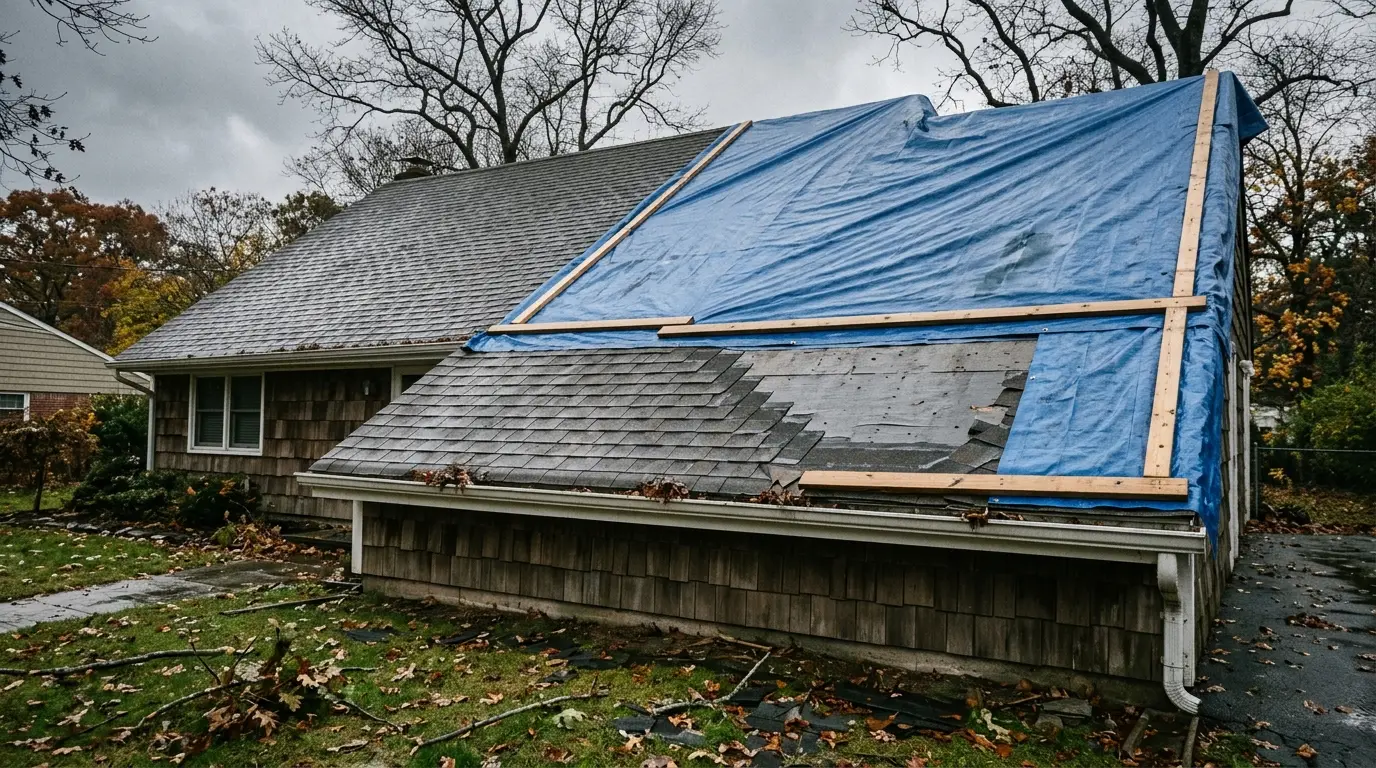
Alec's Construction handles storm damage and insurance restoration in Coram, Suffolk County — emergency tarping, drying, the documentation, and the rebuild — working out of the yard in East Patchogue. Winter is when most of it happens here: nor'easters from November, ice dams from January, and burst pipes any night the temperature drops after a power cut.
Winter Damage in Coram
Coram is inland, dry and heavily treed, and the winter claims are wind, ice and branches. The 1970s splits and hi-ranches have roofs that are now on their second or third shingle layer in some cases, and a nor'easter finds the weak spots in an old roof quickly. Ice dams follow the same split-level pattern as the rest of central Brookhaven, and the water damage shows up in the lower-wing bedrooms.
Ice Dams Are the Inland Winter Claim
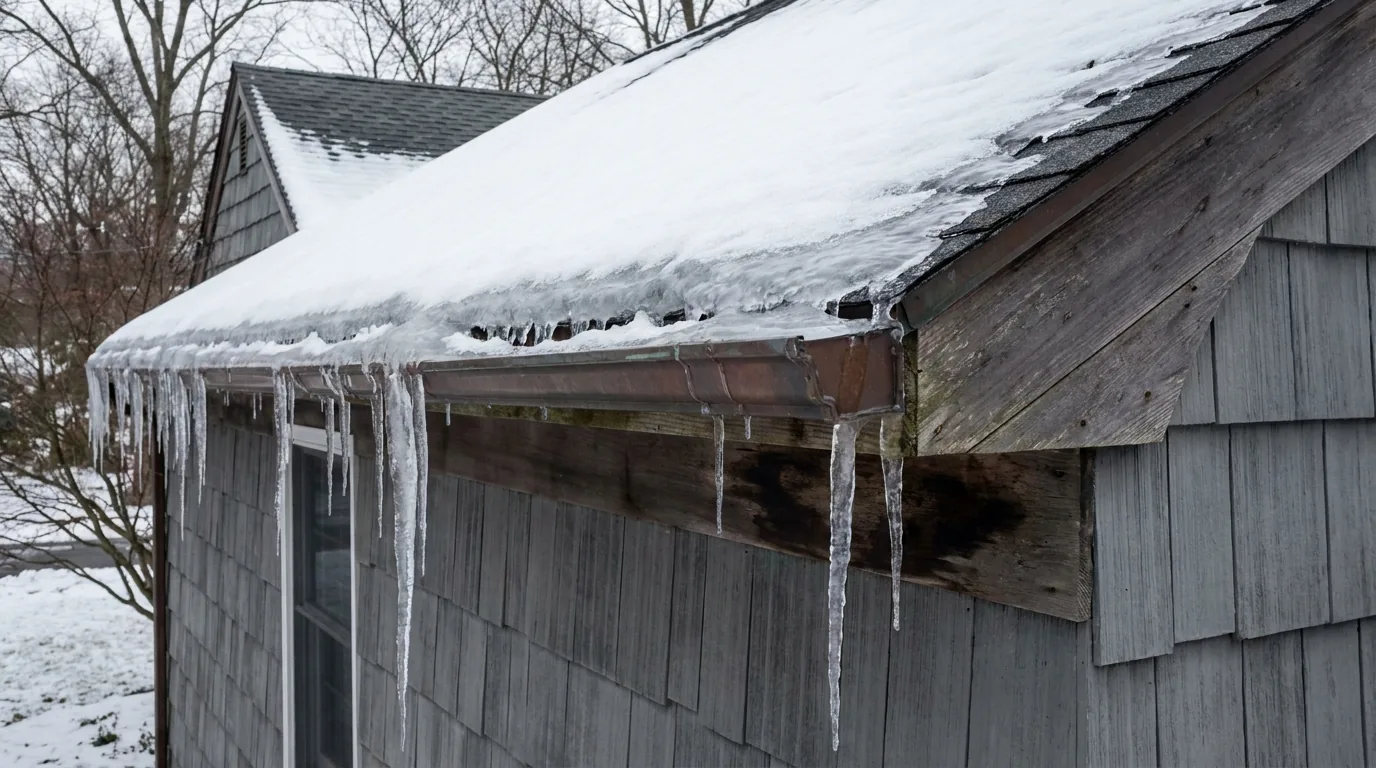
Away from the water the winter damage is ice rather than tide, and on split-level and hi-ranch stock it is the ice dam almost every time. Heat gets into the attic — through an uninsulated hatch, a bath fan venting into the attic, the never-insulated low-slope section over the lower wing — melts the snow from underneath, and the meltwater refreezes at the cold eave into a dam. The water behind it has nowhere to go but under the shingles and over the top plate into the wall.
The interior damage is the claim: the ceiling, the wall, the wet insulation, the floor below. The attic is the cause, and if it is not corrected the claim repeats, which carriers notice. We restore the interior and correct the attic in the same project.
How a Winter Claim Goes
1. Stop the water. Tarp the roof, cover the opening, shut the supply, pull the wet material that will grow mould if it stays. Same day where we can. 2. Document as found. Photographs of everything before it is disturbed — the damage, the cause, the water path. This is what the claim rests on. 3. Write the scope. Line by line, the way the adjuster reads one, with the photographs attached. Storm damage and pre-existing wear kept separate, so the claim is for what the storm did. 4. Meet the adjuster at the house if it helps, and answer the questions with the photographs. 5. Rebuild to the agreed scope, and correct the cause — the flashing, the attic, the pipe run — so the same claim does not come back next winter.
What Is Usually Covered and What Is Not
Wind damage and the water it drives in, ice-dam water damage, a tree on the house and the tree's removal up to a limit, and burst-pipe water damage in a heated house are the usual winter claims under a standard homeowners policy. Tidal flooding is a flood-policy claim on a separate policy. The age of a roof is not a claim, and the attic that caused the ice dam is not a claim — those are the fixes, and we tell you which is which before you file.
Building Department in Coram
Coram files with the Town of Brookhaven. Emergency repairs to make a house safe do not wait for a permit, but the rebuild that follows is permitted work like any other — structural repairs, roofing, electrical — and we file it.
Free walkthrough in Coram, and if it is an emergency, call rather than fill in the form.
Frequently Asked Questions
My Coram roof lost shingles in a storm. Repair or replace, and what does insurance cover?
The carrier covers the storm damage — the shingles that were lost and the interior water damage that followed — and not the age of the roof. If the roof was at the end of its life the adjuster may write for a repair where the storm hit and leave the rest to you. We document the storm damage clearly and separately from the wear, so the claim is for what the storm did, and we give you an honest read on whether a repair on a roof that age is worth doing or whether the claim should fund part of a replacement.
Do you work with the adjuster?
Yes. We write the scope the way the adjuster reads one, line by line with the photographs attached, and we meet them at the house if it helps. We do not adjust the claim — that is your carrier's job or a public adjuster's — but a scope that matches what the adjuster sees is what gets a claim settled without a second visit.
What should I do first after storm damage?
Stop the water and document everything before anything is cleaned up. Photograph the damage as you found it — the roof, the ceiling, the wall, the floor, the yard — and then call. We tarp and dry what needs it the same day where we can, and we photograph as we go so the claim file shows the damage the way the adjuster is going to see it.
Is ice dam damage covered by homeowners insurance?
The water damage usually is — the ceiling, the wall, the wet insulation — because it is sudden and accidental water intrusion. What is not covered is the cause, which is the attic, and the carrier will expect it to be corrected so the claim does not repeat. We restore the damage as the claim and correct the attic as the fix.
Related Guides
- Storm Damage Restoration in Bay Shore, NY
- Storm Damage Restoration in Islip, NY
- Insurance Restoration on Long Island
- Frozen Pipe Insurance Claims
- Storm Damage Insurance Claims
Also Serving Coram
- ADUs in Coram — accessory apartments and grants
- Attic Insulation in Coram — air sealing, baffles and R-49 depth
- Basement Finishing in Coram — egress, ceiling height and moisture
- Bathroom Remodeling in Coram — full gut renovations
- Chimney Repair in Coram — repointing, crowns, caps and flashing
- Driveway Paving in Coram — blacktop, resurfacing and repairs
- Emergency Roof Repair in Coram — tarping, leaks and storm response
- Garage Conversion in Coram — turning the garage into living space
- Gutter Installation in Coram — seamless gutters, fascia and drainage
- House Painters in Coram — exteriors while the fall window holds
- Interior Painting in Coram — the right work for the cold months
- Kitchen Remodeling in Coram — cabinets, counters and layout
- Masonry & Pavers in Coram — patios, walkways and retaining walls
- Roofing in Coram — tear-offs, repairs and storm damage
- Siding in Coram — James Hardie, vinyl and cedar
- Windows & Doors in Coram — insert and full-frame replacement
Work With Alec's Construction
This guide is written by the crew that does the work. See Alec's Storm Damage & Insurance Restoration service — emergency tarping, documentation and the claim itself. Licensed and insured on Long Island, one crew start to finish, free walkthrough and a written estimate inside 48 hours.
Booking the cold months now: we also handle Roofing and Siding.
Get a Free Estimate from Alec's Construction
Working across Suffolk County since 2018, one crew from start to finish. We come out, look at the actual job, and put a written number in your hand — no pressure, no obligation.
Or call (631) 312-7441