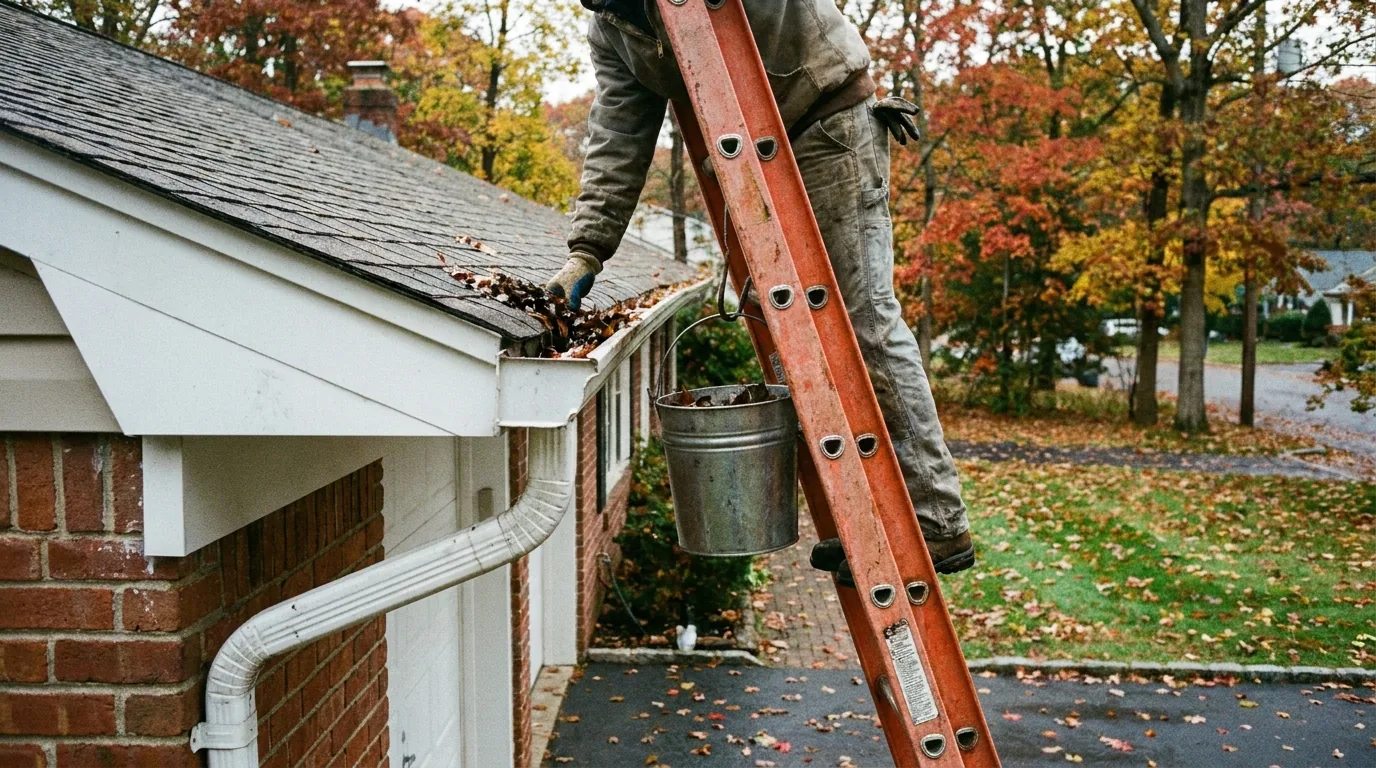
Alec's Construction repairs chimneys in Coram, Suffolk County — crowns, caps, repointing, spalled brick and the roofline flashing — working out of the yard in East Patchogue.
What Chimneys Do Wrong in Coram
Late-1970s and 1980s construction, which means a lot of factory-built fireplaces in framed chases rather than solid masonry. The chase cover on top of those is usually galvanised steel, and galvanised chase covers rust through and pour water straight down inside the chase.
Flashing Before Masonry
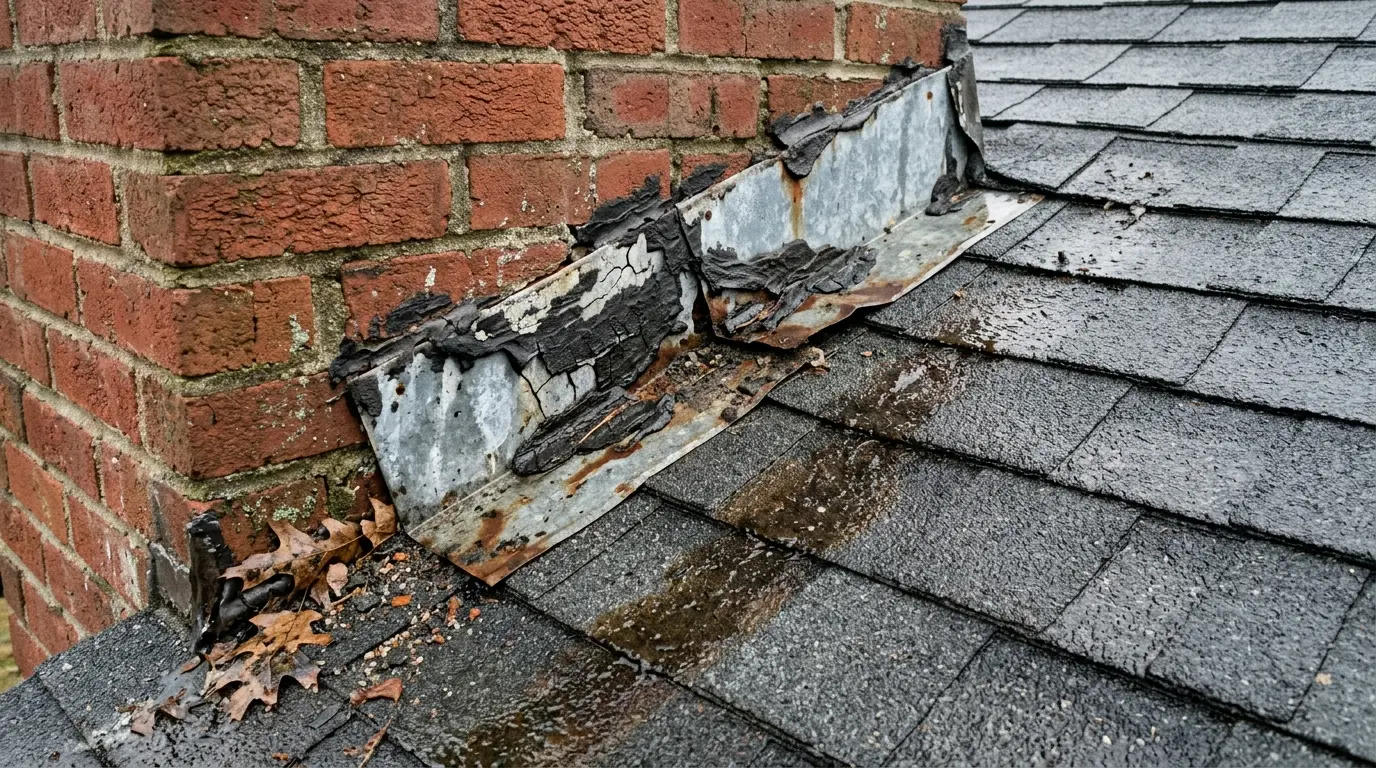
If there is a stain on a ceiling anywhere near the chimney, the flashing is the first suspect and the masonry is the second. Chimney flashing is a two-part detail: step flashing woven in with the shingle courses, and counterflashing let into a cut in the mortar joint and lapped over the steps so water cannot get behind it.
What is on a great many Long Island chimneys instead is roof cement, troweled over the joint by somebody who was up there for a different reason. Roof cement is brittle within a few winters, it cracks, and it hides the failure while the water keeps going in. It also has to be chipped off before a proper repair can be made, which makes the eventual job larger.
The Crown and the Cap Are Two Different Things
The crown is the sloped surface on the very top of the chimney, covering the brickwork around the flue tiles, and it is what keeps water out of the masonry. On a lot of houses here it is a thin skim of mortar troweled over the brick — never the right material, cracked within a decade. A proper crown is cast concrete, reinforced, sloped, with an overhang and a drip edge and a bond break at the flue tile.
The cap sits above the crown over the flue opening, and it keeps rain, snow, debris and animals out of the flue itself. It should be stainless, not galvanised: galvanised caps rust, streak the masonry below and end up in the yard. A blocked flue on a gas or oil appliance is a carbon monoxide problem, which makes the cap a safety item rather than only a maintenance one.
Repointing, and the Mortar That Matters
Failed, recessed or missing mortar joints get cut out to depth and repointed. On older chimneys the mortar has to be compatible with the existing masonry — a mortar that is harder than the brick will not let the wall move, and the brick takes the damage instead. That is a real decision, not a bag choice, and it is worth asking about.
Spalled brick gets replaced. Coating it or repointing around it leaves the failure in the wall.
Permits and Departments in Coram
Coram files with the Town of Brookhaven. Repointing, crown and flashing repairs are generally maintenance rather than permitted alterations, but rebuilding a chimney above or below the roof line is a different scope, and we confirm with the department rather than assume.
Book It Before the First Fire
Masonry wants temperatures above freezing to cure, so chimney repointing and crown work are autumn jobs on Long Island and the calendar fills from September. Flashing, caps and sheet-metal work can be done later in the cold.
Free walkthrough in Coram. Alex goes up, photographs the crown, the cap, the joints and the flashing, and you get the photos whether or not you hire us.
Frequently Asked Questions
My Coram fireplace is metal, not brick. Who fixes that?
We do, and it is a different repair from masonry. A factory-built fireplace sits in a wood-framed chase, and the leak is almost always the sheet-metal chase cover on top — usually a flat galvanised pan with no cross-break that ponds water, rusts through and lets it into the framing. The fix is a stainless cover fabricated to the chase with a cross-break and a drip edge, plus a storm collar at the flue, and any carpentry the water has already caused.
Can chimney work be done in winter?
Masonry repairs want temperatures above freezing for the mortar to cure properly, so repointing and crown work are autumn jobs and we book them accordingly. Flashing, caps, chase covers and sheet-metal work can be done in the cold. If you call us in January with a leak we will stop the water and schedule the masonry for the spring rather than lay mortar that will fail.
What is the first thing to check on a chimney?
The flashing, if there is any sign of a stain on a ceiling near the chimney. Chimney flashing leaks are far more common than chimney masonry leaks, and roof cement smeared over old step flashing — which is what is on a great many Long Island chimneys — is brittle within a few winters. Proper step flashing with counterflashing let into a mortar joint is the real repair.
Why is my chimney brick flaking?
That is spalling: the brick absorbs water, the water freezes and expands, and it pushes the face of the brick off. Long Island gets a lot of these cycles because the winter temperature keeps crossing freezing rather than staying below it. The water usually comes from a cracked crown, failed mortar joints or an open flue, and fixing those stops it progressing.
Related Guides
- Chimney Repair in East Patchogue, NY
- Chimney Repair in Islip, NY
- Chimney Caps on Long Island
- Chimney Waterproofing on Long Island
- Chimney Crown Repair on Long Island
Also Serving Coram
- Attic Insulation in Coram — air sealing, baffles and R-49 depth
- Basement Finishing in Coram — egress, ceiling height and moisture
- Bathroom Remodeling in Coram — full gut renovations
- Driveway Paving in Coram — blacktop, resurfacing and repairs
- Emergency Roof Repair in Coram — tarping, leaks and storm response
- Gutter Installation in Coram — seamless gutters, fascia and drainage
- House Painters in Coram — exteriors while the fall window holds
- Interior Painting in Coram — the right work for the cold months
- Kitchen Remodeling in Coram — cabinets, counters and layout
- Masonry & Pavers in Coram — patios, walkways and retaining walls
- Roofing in Coram — tear-offs, repairs and storm damage
- Siding in Coram — James Hardie, vinyl and cedar
- Windows & Doors in Coram — insert and full-frame replacement
Work With Alec's Construction
This guide is written by the crew that does the work. See Alec's Chimney Repair service — repointing, crowns, caps and roofline flashing. One crew start to finish, free walkthrough and a written estimate inside 48 hours.
Booking the cold months now: we also handle Roofing and Seamless Gutters.
Get a Free Estimate from Alec's Construction
Working across Suffolk County since 2018, one crew from start to finish. We come out, look at the actual job, and put a written number in your hand — no pressure, no obligation.
Or call (631) 312-7441