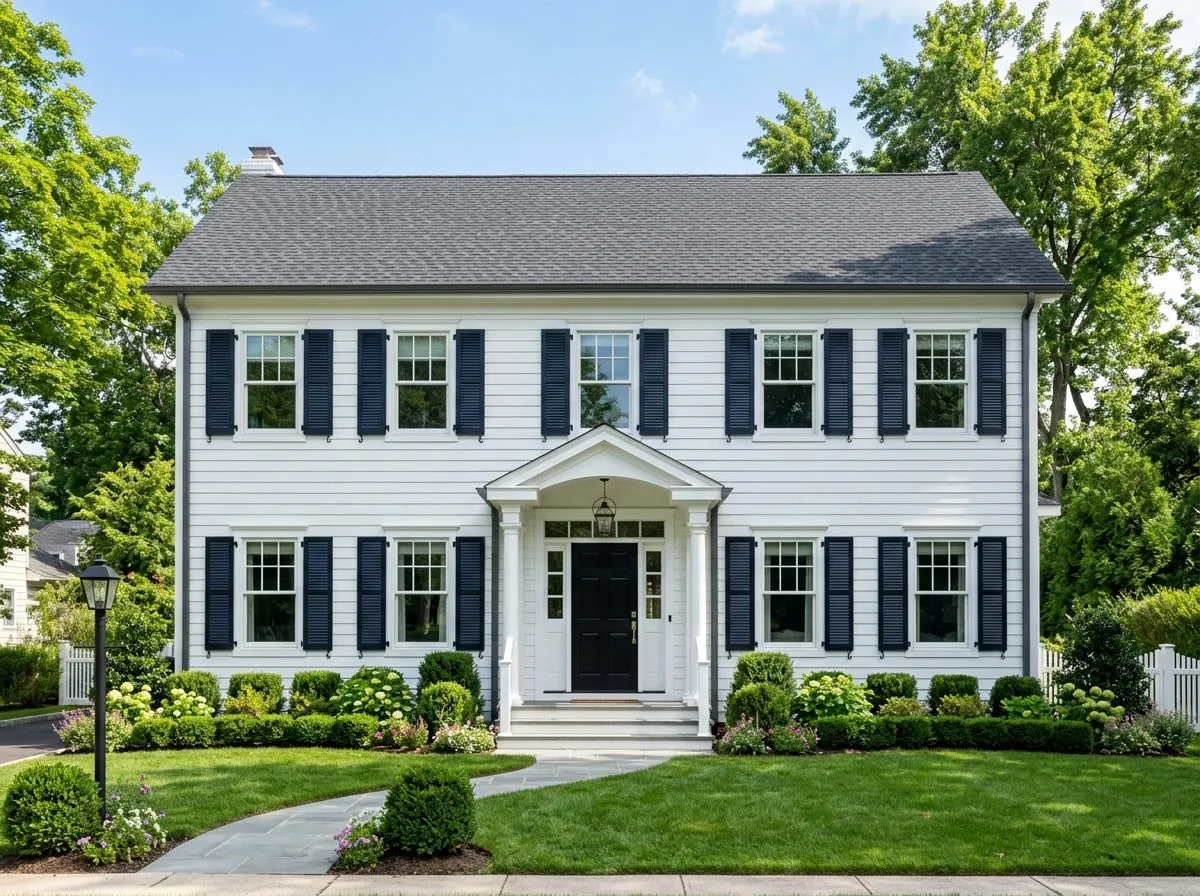
On Coram's wooded lots we get called for "rot" that turns out to be nothing of the kind: rows of neat round holes, galleries chewed under the trim, corners drilled out at the fascia line. Wooded-lot siding damage here has wings, and it concentrates on exactly the housing stock Coram has — wood siding, cedar trim and T1-11 from the 1970s build-out.
Reading the holes
- Woodpeckers: clusters of round holes, often in lines, usually high on shaded walls and at the fascia. They are frequently hunting insects already in the wood — the holes are a symptom twice over
- Carpenter bees: single clean half-inch holes on the underside of trim, rails and fascia, with sawdust below and galleries running a foot or more inside. Woodpeckers then tear the surface open to eat the larvae — the one-two punch that shreds a fascia board in two seasons
- Actual rot is soft, dark and at water lines — bottom courses, below windows. Different problem, different fix
Why patching fails every year
Filling the holes and repainting treats the entrance, not the attraction. The bees return to the same soft, unpainted or thin-painted wood faces each spring; the woodpeckers return to wherever insects live. On a wooded lot the pressure is constant — the woods are the reservoir — so the answer is material, not vigilance.
Neither bird nor bee works fiber cement or vinyl. Fiber cement is a mineral board with nothing to chew and nothing living inside it; a woodpecker that samples it moves on. For a wooded Coram lot with recurring damage, replacing the vulnerable elements — full walls, or just the cedar trim and fascia that take the worst of it — is the fix that ends the annual patch cycle. We do trim-and-fascia-only conversions here regularly; it is the cheapest permanent version of the fix.
T1-11 takes it worst
Coram's 1970s T1-11 is soft plywood with deep grooves — easy drilling for bees, easy excavation for birds, and because T1-11 is the sheathing as well as the siding, their galleries go straight toward structure. Wildlife-damaged T1-11 is usually the moment to strip it and build a real wall assembly: sheathing, housewrap, and a siding nothing wants to eat.
The wooded-lot basics still apply
Shaded north walls that never dry, algae and mildew, gutters loaded with oak leaves soaking the fascia — the standard deep-lot conditions run in the background of every Coram siding decision, and they favor the same answer the wildlife does: mineral board, painted right, with the canopy cut back off the walls.
Frequently Asked Questions
Something is drilling perfect round holes in my siding. What is it?
Half-inch single holes on the underside of trim and fascia with sawdust below are carpenter bees; clustered rows of holes higher on the wall are woodpeckers — often hunting the bee larvae, which is why the two arrive together and shred a fascia board in two seasons. It concentrates on wood and T1-11 on wooded lots, and patching treats the entrance, not the attraction.
Will they attack fiber cement or vinyl?
No — fiber cement is a mineral board with nothing to chew and nothing living inside it, and vinyl offers neither food nor nesting. On wooded Coram lots with recurring damage, converting the vulnerable elements — sometimes just the cedar trim and fascia — is the permanent version of the fix, and the trim-only conversion is its cheapest form.
How long does a siding job take?
Three to six days on a typical house, depending on size, stories, and how much trim and flashing work rides along. Fiber cement runs longer than vinyl because the material is heavier and slower to cut and hang.
Do you have to remove the old siding?
We recommend it and quote it that way. Siding over siding hides whatever is wrong with the sheathing, throws off every window and door depth, and makes proper housewrap and flashing impossible.
Related Reading
- James Hardie Fiber Cement — HZ5 spec, real costs, where vinyl still wins
- Siding Replacement Cost — what drives the number
- Hiring a Roofing Contractor — roof and siding sell together
- Brick and Stone Veneer — where masonry beats siding
- Storm Damage on Long Island — wind, siding and the insurance path
Also Serving Coram
- ADUs in Coram — accessory apartments and grants
- Attic Insulation in Coram — air sealing, baffles and R-49 depth
- Basement Finishing in Coram — egress, ceiling height and moisture
- Bathroom Remodeling in Coram — full gut renovations
- Chimney Repair in Coram — repointing, crowns, caps and flashing
- Driveway Paving in Coram — blacktop, resurfacing and repairs
- Emergency Roof Repair in Coram — tarping, leaks and storm response
- Fallen Tree Removal & Roof Repair in Coram — tree off the house, roof supported and repaired
- Flood & Water Damage Cleanup in Coram — wet material out, drying metered
- Garage Conversion in Coram — turning the garage into living space
- Gutter Installation in Coram — seamless gutters, fascia and drainage
- House Painters in Coram — exteriors while the fall window holds
- Hurricane & Storm Damage Repair in Coram — trees, flooding, cleanup and repairs
- Storm Damage & Insurance Restoration in Coram — emergency tarping and the claim
- Interior Painting in Coram — the right work for the cold months
- Kitchen Remodeling in Coram — cabinets, counters and layout
- Masonry & Pavers in Coram — patios, walkways and retaining walls
- Roofing in Coram — tear-offs, repairs and storm damage
- Storm Debris Removal & Cleanup in Coram — trees, building debris and hauling
- Storm Roof & Siding Repair in Coram — wind damage, tarped and rebuilt
- Windows & Doors in Coram — insert and full-frame replacement
Work With Alec's Construction
This guide is written by the crew that does the work. See Alec's Siding service — James Hardie, vinyl and cedar with the rot behind it repaired first. Licensed and insured on Long Island, one crew start to finish, free walkthrough and a written estimate inside 48 hours.
Booking the cold months now: we also handle Roofing and Painting.
Filing something yourself? Our Long Island building department directory lists the address, phone and counter hours for all 23 permit offices in Nassau and Suffolk.
Ready to Get Started?
Free exterior walkthrough and a written proposal listing product spec, fastener type, housewrap and every flashing detail. Nassau and Suffolk County.