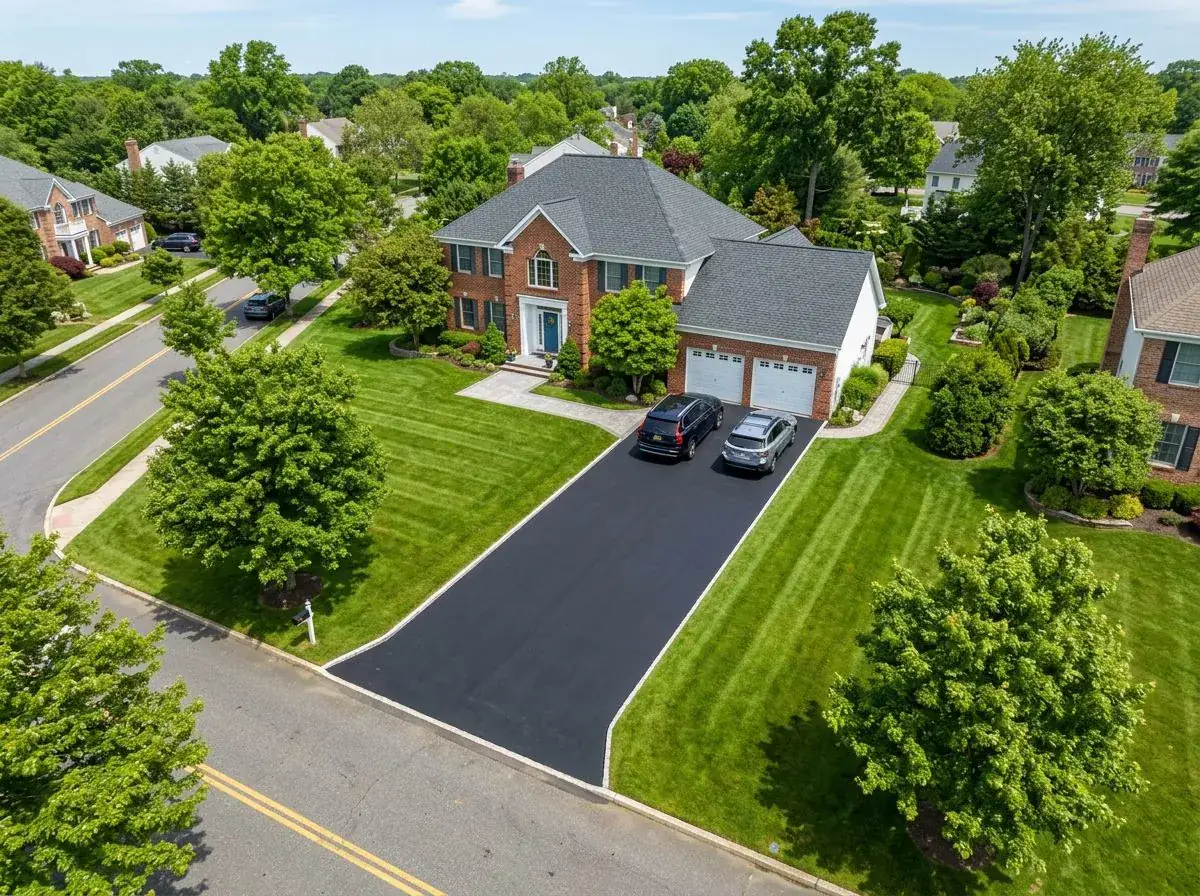
Garden City hardscape has a vocabulary, and you can read it walking any block in the village: bluestone walks, brick borders, formal terraces off the rear of the house, low brick garden walls with stone caps. It was set by the architects who built these blocks in the 1910s through 1930s, and hardscape that speaks it looks inevitable — while a contemporary tumbled-paver kit patio behind a 1925 Colonial looks like a rental car in the driveway.
The village materials, honestly compared
- Full-thickness bluestone — the village default for walks and terraces. Beautiful, durable, repairable stone by stone, and the most expensive line on this list. Thermal-finish for flatness, natural cleft for texture
- Clay brick — borders, aprons, garden walls and whole walks. On these houses it should match the house brick in tone, and real clay (not concrete "brick" pavers) is what weathers correctly
- Bluestone-and-brick combinations — stone field, brick border: the classic village walk, and still the best-value formal look here
- Concrete pavers — legitimate where budget governs, in the right color and format; the large-format, muted lines read far better against period houses than tumbled cobble kits
Rear terraces are the village patio
What Garden City calls a patio is usually a terrace: rectilinear, aligned to the house geometry, framed with planting rather than seat walls, sitting a step or two above the lawn with a stone or brick edge. That form is why these yards photograph so well at eighty years old — it ages with the house instead of dating against it. We design in that grammar, and we will say so when a trend item would fight it.
The technical side is unforgiving in a good way
Formal, rectilinear hardscape shows every flaw a rustic design hides: a joint line that wanders, a border course out of square, settlement that breaks a straight edge. The base work is identical to any correct install — excavation, compacted lifts, edge restraint, drainage worked out first — but the setting tolerances are tighter, and bluestone in particular wants a full mortar or properly screeded bed by a crew that sets stone weekly, not occasionally.
Village standards apply outdoors too
Coverage rules are enforced knowledgeably, front-yard work is visible work on these blocks, and the protected street trees put root zones off limits to careless excavation. None of it is an obstacle if it is designed in from the start; all of it is a change order if it is discovered late. We do the coverage math and the tree plan at design.
Restoration before replacement
A settled 1920s bluestone walk is usually restorable — the stone lifts, the base gets rebuilt, the original stone goes back down. Original full-thickness bluestone with eighty years of weathering cannot be convincingly matched with new stone, so salvage is not sentimentality; it is the better-looking and usually cheaper answer. The same goes for old brick, which is why our first question on village walks is what can be saved, not what can be sold.
Frequently Asked Questions
Bluestone or pavers for a Garden City patio?
On a period house, bluestone — or a bluestone field with brick border — is the village vocabulary and ages with the house. Concrete pavers are legitimate where budget governs; choose large-format, muted lines rather than tumbled cobble kits, which date fast against 1920s architecture. We price both honestly.
Can my settled old bluestone walk be saved?
Usually, and it should be. The stone lifts, the base gets rebuilt correctly, and the original stone is reset. Eighty-year-old full-thickness bluestone cannot be convincingly matched with new stone, so salvage is both the better-looking and usually the cheaper answer.
How long does a paver or bluestone patio take?
Three to five days for a typical terrace. Most of it is excavation and base work — the part you never see and the only part that decides whether a formal, rectilinear design still shows straight lines in ten years.
Related Reading
- Paver Patio Cost on Long Island — the full price breakdown
- Brick and Stone on the House Itself — the vertical version of this decision
- Cambridge Pavers — where manufactured pavers fit
- How a Patio Is Built — excavation through jointing
- Hiring a Masonry Contractor — the questions that separate bids
Also Serving Garden City
- Basement Finishing in Garden City — egress, ceiling height and moisture
- Chimney Repair in Garden City — repointing, crowns, caps and flashing
- Driveway Paving in Garden City — blacktop, resurfacing and repairs
- Emergency Roof Repair in Garden City — tarping, leaks and storm response
- Gutter Installation in Garden City — seamless gutters, fascia and drainage
- House Painters in Garden City — exteriors while the fall window holds
- Interior Painting in Garden City — the right work for the cold months
- Roofing in Garden City — tear-offs, repairs and storm damage
- Siding in Garden City — James Hardie, vinyl and cedar
Work With Alec's Construction
This guide is written by the crew that does the work. See Alec's Masonry & Pavers service — patios, walkways, steps, stoops and retaining walls. Licensed and insured on Long Island, one crew start to finish, free walkthrough and a written estimate inside 48 hours.
Booking the cold months now: we also handle Chimney Repair and Driveways & Blacktop.
Every town here has villages inside it running their own building department. Our directory sorts out which counter your address actually files at.
Ready to Get Started?
Free design consultation in the village vocabulary — bluestone, brick and the written base spec that keeps formal lines straight. Nassau and Suffolk County.