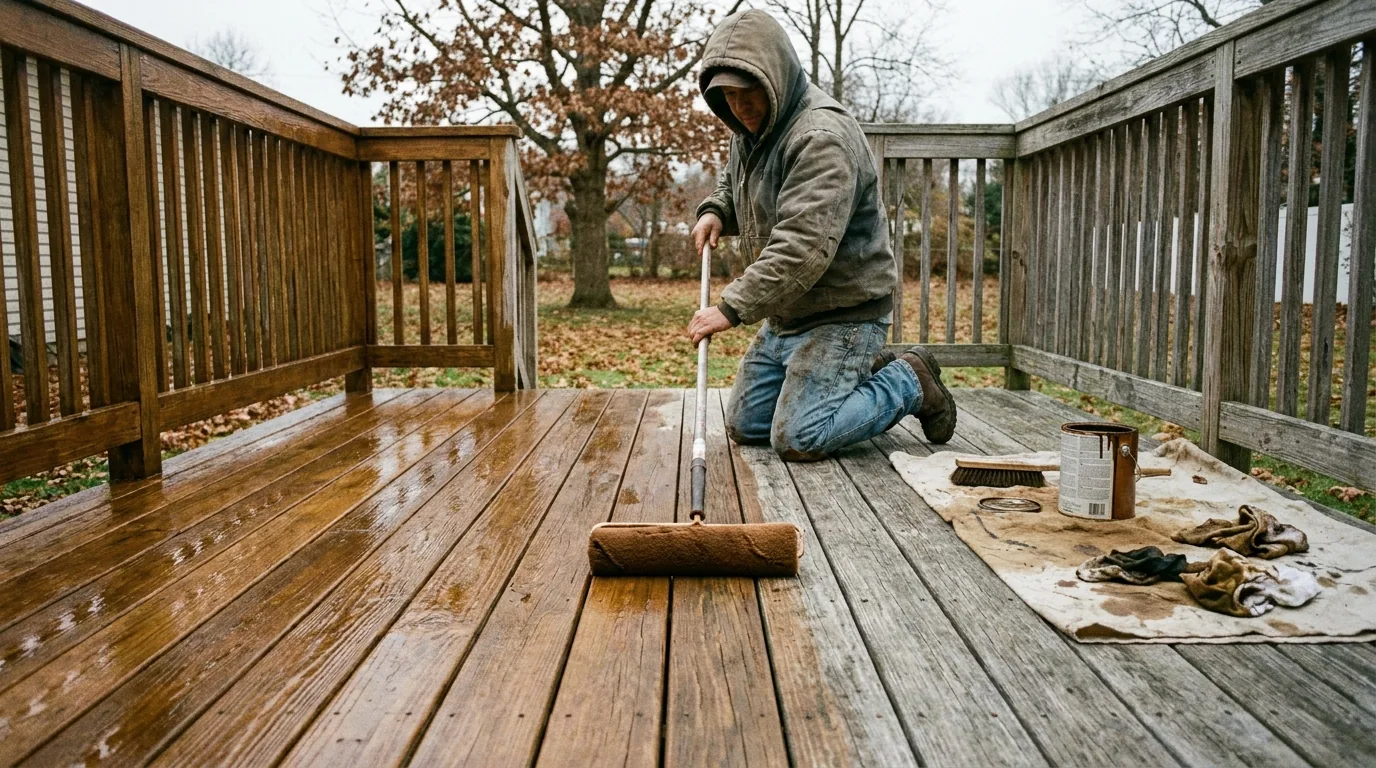
An unsealed wood deck going into a Long Island winter is a deck that will look ten years older in the spring. Water gets into the end grain and the checks in the board face, freezes forty or fifty times over the winter, and splits the wood from the inside. That is where the grey, splintered, cupped boards come from — not from sun, from ice.
Fall sealing is the cheapest thing you can do to keep a deck alive.
Why Fall Beats Spring for Deck Work
Spring is a race against your own use. You want the deck ready for Memorial Day, so you clean and stain in April when the wood is still holding winter moisture and the temperatures are marginal. Stain applied over damp wood does not penetrate and does not last.
Fall wood is dry. After a Long Island summer the boards have had months to dry out. Stain penetrates properly into dry wood, which is the entire mechanism by which it protects.
You are not using the deck. No rearranging furniture around a curing finish, no waiting to have people over.
It goes into winter sealed. This is the real argument. The damage happens between December and March. Sealing in April protects the deck for a season that was never the threat.
The Temperature Window
Most deck stains want application above 50 degrees Fahrenheit, and — same rule as exterior paint — the surface must stay above that for several hours after, including overnight. Oil-based penetrating stains are somewhat more forgiving of cool weather than film-forming products.
On Long Island that gives you roughly mid-September through late October, sometimes into the first week of November in a mild year. The wood also has to be genuinely dry: allow two to three dry days after rain, and a full week after pressure washing, before staining.
Clean First, and Do It Right
Stain applied over a dirty or mildewed deck fails. Long Island decks, especially shaded ones and anything on the South Shore, grow mildew aggressively.
Wash with a deck cleaner that contains a mildewcide, not just water. Killing the mildew matters — pressure alone knocks it off the surface and leaves the spores.
Go easy with the pressure washer. This is the most common way homeowners damage their own deck. High pressure on softwood tears out the soft spring growth between the harder grain lines and leaves a furred, fuzzy surface that will never take stain evenly. Use a wide fan tip, keep the wand moving, keep it well back from the wood.
Brighten if you used a cleaner with sodium percarbonate or bleach — a brightener with oxalic acid neutralizes it and restores the wood's pH so the stain absorbs evenly.
Let it dry completely. A week after washing is not excessive on Long Island in October.
Stain Types, Honestly Compared
Clear sealer. Water repellency, little or no UV protection. The deck will grey. Cheapest, needs redoing most often, fine if you like the silver weathered look and only want the water protection.
Semi-transparent stain. The best all-round choice for most Long Island decks. Adds color and real UV protection while letting the grain show. Penetrates rather than forming a film, which means it wears rather than peels — so recoating is a clean-and-recoat, not a strip.
Semi-solid. More pigment, more UV protection, less grain. Good on an older deck where the wood is no longer attractive.
Solid stain. Essentially paint. Maximum protection and color, no grain. It forms a film, which means when it eventually fails it peels and has to be stripped or sanded. Once you go solid you are committed.
The general rule: you can always go more opaque next time, never less. Start as transparent as you can live with.
Composite Decks Still Want Fall Attention
Trex and similar composites do not need staining, but they do need a fall cleaning. Composite decking grows surface mildew in Long Island's damp shoulder seasons, particularly on north-facing and shaded decks, and letting a winter's worth of wet leaves sit on it produces staining that is genuinely hard to remove in the spring. Clear the leaves, wash it, and check the fasteners.
Check the Structure While You Are Down There
Fall staining is a good excuse to look at the parts nobody looks at. On Long Island the ones that fail:
- Ledger board attachment where the deck meets the house — the single most common serious deck failure. Look for proper flashing and lag bolts or structural screws, not nails.
- Post bases where a post meets a concrete footing or the ground. Rot starts at the bottom.
- Joist hangers for rust, especially within a mile of salt water.
- Railing posts — grab each one and push. Any movement is a safety issue.
- Stair stringers, which take the most water and the most weight.
If a board is soft enough to push a screwdriver into, it is not a staining problem.
What We Do
Alec's Construction cleans, repairs, rebuilds and stains decks across Suffolk and Nassau County. We book fall deck work from late August, and because we are a general contractor we can replace the rotted ledger or rebuild the stairs rather than staining over a problem.
See our deck and patio service or call (631) 312-7441.
Frequently Asked Questions
Is fall a good time to stain a deck on Long Island?
It is the best time. The wood is dry after summer, so stain penetrates properly, you are not using the deck, and it goes into winter sealed — which matters because freeze-thaw is what actually destroys deck boards, not summer sun.
How late can you stain a deck on Long Island?
Generally through late October, sometimes into the first week of November in a mild year. Most stains need surface temperatures above 50 degrees for several hours after application, including overnight, and the wood must be genuinely dry.
How long after pressure washing can I stain a deck?
About a week on Long Island in the fall. The wood has to be dry all the way through, not just on the surface, or the stain will not penetrate and will fail early.
What kind of stain is best for a Long Island deck?
Semi-transparent is the best all-round choice for most decks. It gives real UV protection while showing the grain, and because it penetrates rather than forming a film it wears instead of peeling — so recoating later is a clean-and-recoat rather than a strip.
Do composite decks need anything in the fall?
They do not need staining, but they need cleaning. Composite grows surface mildew in Long Island's damp shoulder seasons, and a winter of wet leaves sitting on the boards leaves staining that is difficult to remove in spring.
How do I know if my deck needs repair before staining?
Check the ledger board where the deck meets the house, the post bases at ground level, the joist hangers for rust, and push on every railing post. If a board is soft enough to take a screwdriver, it needs replacing, not staining.
Related Guides
- Fall Home Maintenance Checklist for Long Island
- Winterizing Your Long Island Home
- Gutter Cleaning on Long Island
- Ice Dams on Long Island Roofs
- Finishing a Basement in Winter
Get a Free Estimate from Alec's Construction
Licensed and insured, working across Nassau and Suffolk County since 2018. We come out, look at the actual job, and put a written number in your hand — no pressure, no obligation.
Book a Free WalkthroughOr call (631) 312-7441