Gravel driveways have a lot going for them in summer. They drain, they look natural, and they are simple. Then winter comes. The plow scrapes half the stone onto the lawn. Shoveling is a fight. Ruts fill with water, freeze, and turn into ankle-breakers. In spring there is a line of gravel in the grass and bare spots where the driveway used to be.
If you are tired of that cycle, winter is a good time to think about a change, because you are seeing the driveway at its worst. Here is how to decide whether converting makes sense, and what the job really involves.
Why Gravel Struggles in a Long Island Winter
- Plowing and snow blowing. Loose stone does not have a hard surface for a blade to ride on, so a plow or snow blower throws gravel along with the snow. Every winter you lose some driveway.
- Ruts and potholes. Tires push stone aside, especially where the base underneath is soft. Water collects in the ruts, freezes and thaws, and the holes get bigger.
- Mud season. When the top of the ground thaws but the ground below is still frozen, water has nowhere to go, and a thin gravel driveway can turn soft.
- Ice you cannot clear. You cannot shovel a gravel driveway down to a clean surface, and de-icers and sand just disappear into the stone.
Reasons to Keep Gravel
Gravel is not a mistake. It can be the right choice for very long rural driveways, for secondary parking areas, or for properties where drainage rules or the site make a hard surface difficult. Water soaks through gravel instead of running off, which matters on some lots. If those apply to you, a well-built gravel driveway with a proper base and edging can still work. If you like the look but want a solid surface, permeable pavers are worth a look.
Choosing the New Surface
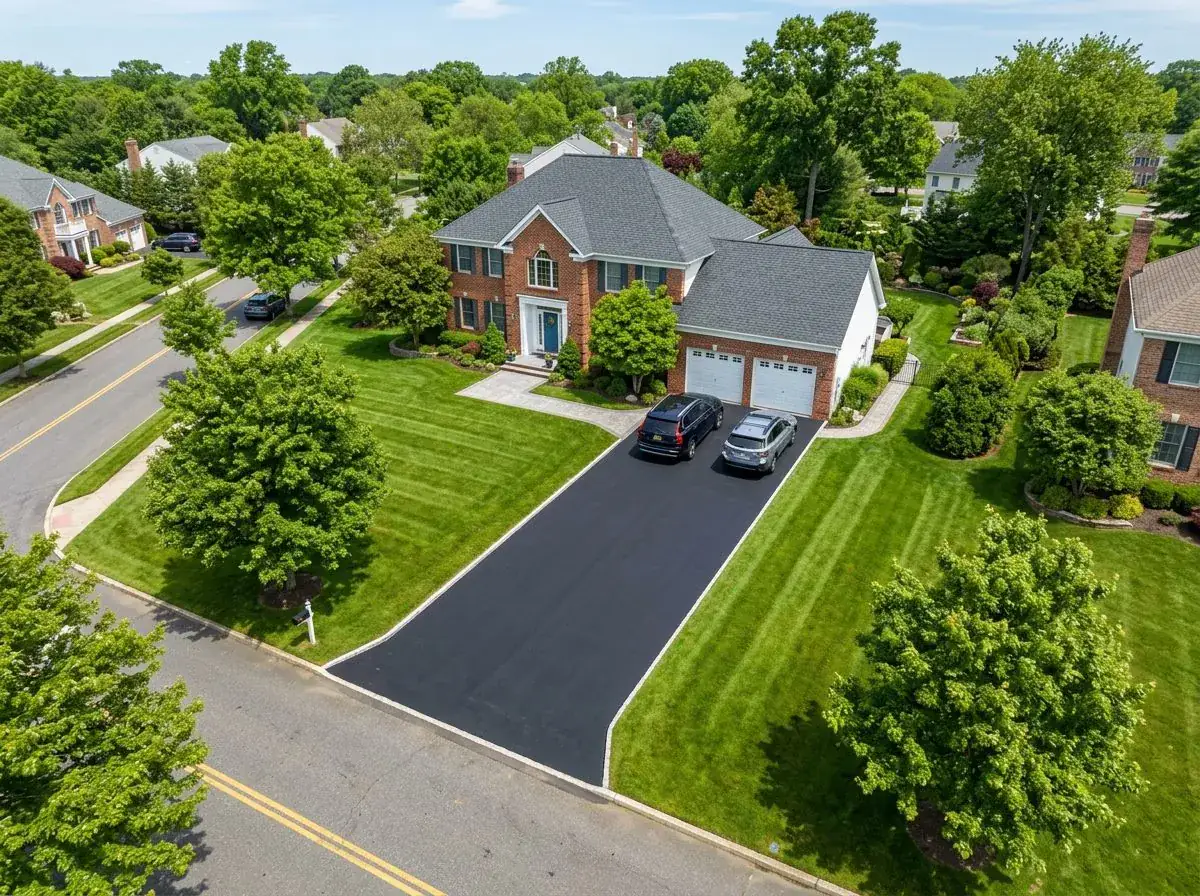
- Blacktop is the most common conversion. It handles freeze-thaw well, plows clean, and is easy to patch. It does need sealcoating from time to time.
- Concrete lasts a long time with little upkeep, but it does not like rock salt and is harder to repair invisibly.
- Pavers give the most finished look, and sections can be lifted and reset if the ground shifts.
Our asphalt vs. concrete guide and paver driveway guide go deeper. Whichever you choose, adding Belgian block along the edges keeps the borders crisp and gives the plow a clear line. See Belgian block edging.
What the Conversion Involves
People often assume you can pave right over gravel. Sometimes the existing stone can be part of the new base, but only if it is deep enough, clean enough and well compacted. More often it needs work.
- Excavation and grading. Loose surface stone, organic material and soft spots come out. The driveway is graded so it pitches water away from the house and garage.
- Base. A properly compacted crushed stone base goes in. This is the part you never see and the part that decides whether the driveway lasts. See how thick a blacktop driveway should be.
- Drainage. A gravel driveway may have been hiding a drainage problem, because water just soaked through. A hard surface sends that water somewhere. A good plan decides where, whether that is pitch, a swale, or a drain.
- Edging and the apron. Belgian block or pavers, and a clean connection at the street.
- Paving. The finished surface goes down and is compacted.
Permits and Runoff
Turning gravel into a hard surface adds impervious area to your lot, and work at the street touches the town or village right-of-way. Depending on where you live, a new apron, a curb cut, or changes at the road can require a permit, and some towns and villages have rules about runoff and how much of a lot can be paved. Rules vary, so check with your local building department or ask us to confirm for your address before work starts.
Timing
Conversion is a spring or summer job. Excavation needs ground that is not frozen, and asphalt plants slow down or close in the coldest months. Winter is the time to get a walkthrough, decide on surface and edging, and get on the schedule. Read planning a spring driveway over the winter for the full list of what to settle now.
Getting Through This Winter
- Ask your plow company to raise the blade or use shoes so less stone ends up on the lawn.
- Use sand for traction rather than relying on salt.
- Mark the edges so the plow stays on the driveway.
- Note where ruts and puddles form. That is useful information for the new driveway's grading plan.
What We Do
Alec's Construction converts gravel driveways to blacktop, concrete and pavers across Long Island, with Belgian block and paver borders. We start with the base and the drainage, because that is what a gravel driveway was quietly getting away with.
Call (631) 312-7441 or book a free walkthrough.
Frequently Asked Questions
Can you pave right over a gravel driveway?
Sometimes the existing stone can become part of the new base, but only if it is deep, clean and well compacted. Usually loose stone and soft spots are removed, the area is regraded, and a new compacted crushed stone base goes in before paving.
Is blacktop better than gravel in winter?
For most homes, yes. Blacktop can be plowed and shoveled to a clean surface, it does not rut, and ice can be cleared. Gravel loses stone to the plow and forms frozen ruts every winter.
Do I need a permit to pave a gravel driveway on Long Island?
It depends on the town or village and the scope. Work at the street or a new curb cut can require a permit, and some places have rules about runoff and paved area. Check with your local building department or ask your contractor to confirm.
Will paving my gravel driveway cause drainage problems?
It can if water is not planned for, because a hard surface sends water somewhere instead of letting it soak in. A good conversion includes grading and, if needed, a drain so water goes away from the house.
When is the best time to convert a gravel driveway?
Spring through early fall. Excavation needs unfrozen ground and asphalt plants slow down or close in the coldest months. Winter is the best time to plan and book a walkthrough.
Related Guides
- Asphalt vs. Concrete Driveway on Long Island
- Belgian Block Driveway Edging
- Permeable Pavers on Long Island
- Driveway Drainage on Long Island
- Blacktop and Driveway Services
Get a Free Estimate from Alec's Construction
Serving homeowners across Long Island. We come out, look at the actual job, and put a written number in your hand — no pressure, no obligation.
Or call (631) 312-7441