Gutter companies sell gutters. That is not a conspiracy, it is just what they do, and it means "you need a full replacement" is the answer you get most often regardless of what is actually wrong.
A fair number of Long Island gutter problems are $200 to $600 repairs. Here is how to tell which one you have before anybody gets on a ladder with a sales sheet.
Four Problems That Are Repairs, Not Replacements
Standing water in the run. If water sits in the gutter after a rain, the pitch is wrong or a hanger has dropped. Re-pitching a run costs $200 to $600 and takes a couple of hours. If the aluminum itself is sound, replacing it changes nothing that re-pitching would not have.
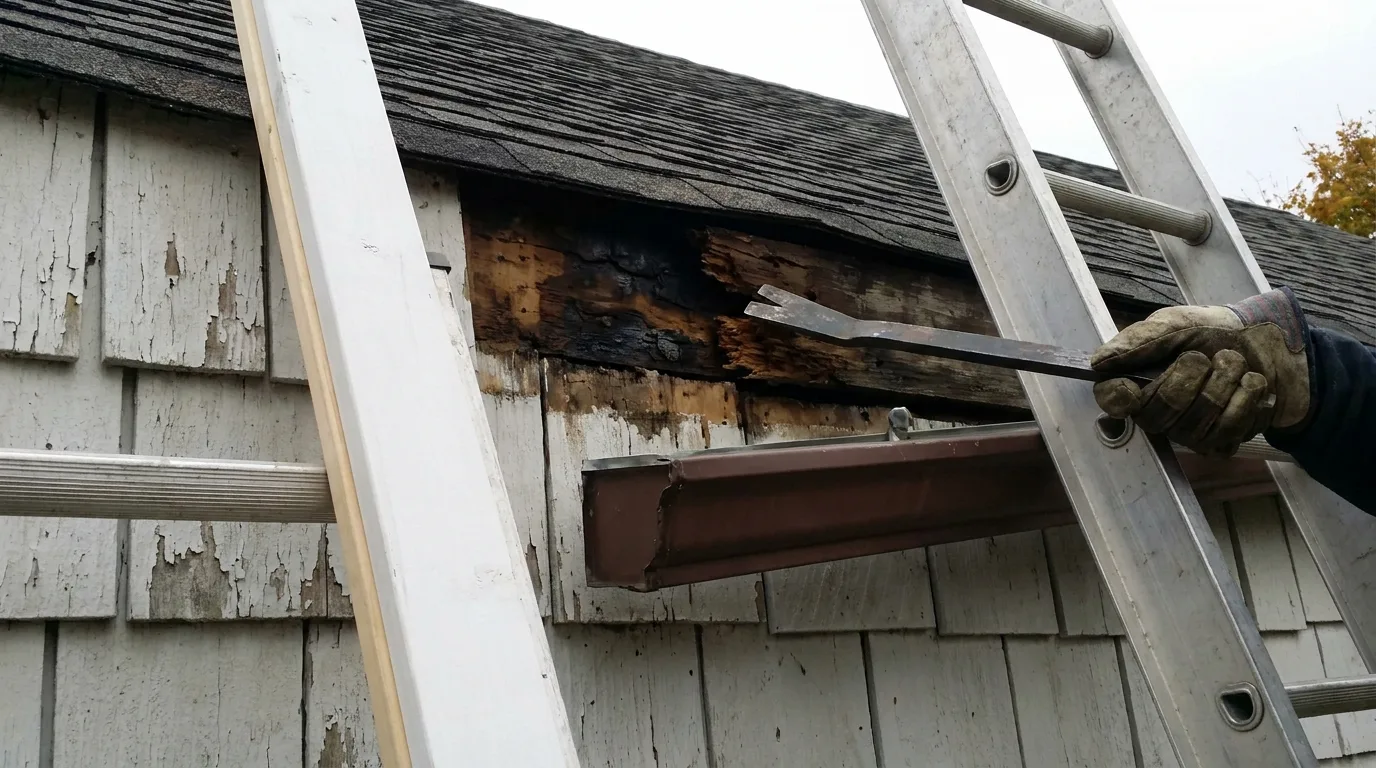
One sagging section. A gutter that has pulled away in one spot usually means the spikes let go or the hanger spacing was too wide. Re-securing with hidden hangers is $150 to $450 per run. The exception is when the fascia behind it is rotten — then the fascia is the job and the gutter comes off anyway.
A leaking seam or corner. On a sectional gutter, joints fail — that is what joints do. A corner or outlet can be cleaned, re-riveted and re-sealed. If it is one or two joints, repair. If it is every joint on the house, the sealant across the whole system has reached the end of its life and you are on a maintenance treadmill.
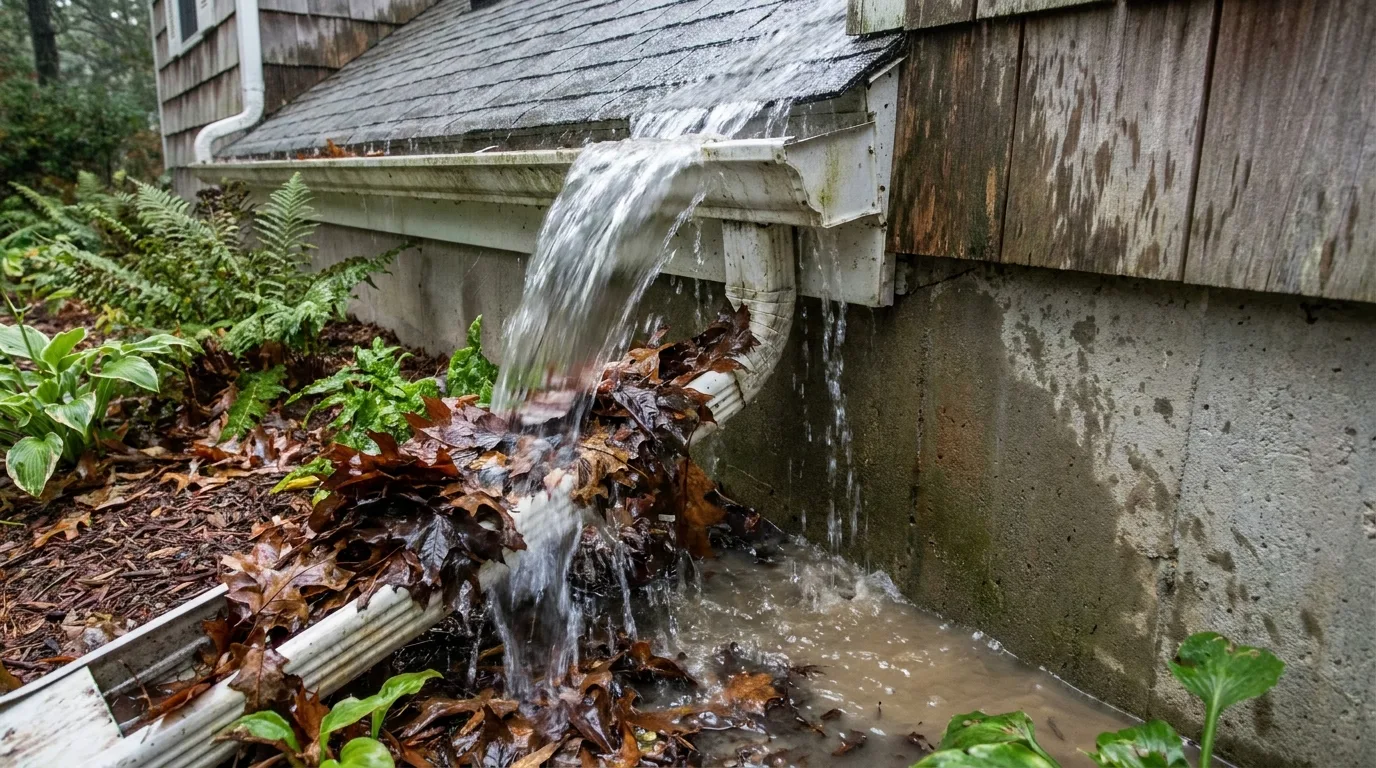
Overflowing at one spot only. Usually a clog at the outlet or in the downspout, not a system failure. Clear it and watch it in the next rain before spending anything.
Seven Signs It Is Actually Time to Replace
1. Corrosion, pitting or rust-through. Aluminum does not rust, but it does corrode, especially where salt air is constant — Babylon, Lindenhurst, Massapequa, Bay Shore, the harbours and canals. Galvanized steel gutters on older Long Island houses rust from the inside out and the first visible sign is usually a stain on the siding.
2. Cracks, splits and separated seams throughout. Not one joint. All of them. Sealant across a whole sectional system fails at roughly the same age, and chasing it joint by joint is a losing game.
3. Multiple sags and pulled-away runs. When the gutters are letting go in several places, the fasteners, the spacing and often the fascia have all reached the end together.
4. Hammer marks and pushed-back nails. If there are nail heads driven flush and re-driven along the face of the gutter, that is a spike system that has been failing for years. Spikes cannot be made to hold in fascia they have already enlarged the hole in.
5. Peeling paint or stained siding directly below the gutter line. That is water getting behind or over the gutter and running down the wall. Sometimes it is a missing drip edge, sometimes the gutter has pulled forward — but it means water is not going where it should, and it has been happening long enough to leave a mark.
6. The gutters are badly undersized. Five-inch gutter with one 2x3 downspout serving 45 feet of a steep two-story roof is not fixable by repair. It never worked. Replacing it with 6-inch and correct downspout count is the fix.
7. You are replacing the roof. Hanging thirty-year-old aluminum back on a new roof makes no sense, and doing gutters at the same time is cheaper because the crew, the staging and the drip-edge work are already happening. Doing them together also means the drip edge, the gutter apron and the first shingle course get detailed as one system rather than by two different trades a year apart.
The Test That Settles It
Go outside during a steady rain — not a drizzle, a real rain — and walk the house. Look at:
- Where water is coming over the front lip. Everywhere, or one spot?
- Whether any run is visibly sagging under the water load
- Whether water is running down the fascia behind the gutter
- Where each downspout is discharging and whether it is pooling against the house
- Whether water is shooting straight over the gutter off a steep roof plane
Five minutes in the rain tells you more than any inspection on a dry day. If it is one spot, it is a repair. If it is the whole house, it is a system.
Check the Fascia Before You Decide Anything
This is the part that changes the maths. Push a screwdriver gently into the fascia board behind the gutter at a few points, especially at corners, at downspout outlets, and anywhere you have seen overflow. If it goes in easily, that wood is gone.
On a Long Island house that has been overflowing for a few seasons, some of it usually is — and that means the gutter is coming off regardless. At that point a repair is not really on the table, because there is nothing solid to fasten a repaired gutter back to. See fascia and soffit repair for what that work involves.
This is also where a general contractor and a gutter company give different answers honestly. A gutter company sees a gutter. We see a roof edge — drip edge, fascia, soffit, ventilation and gutter as one assembly, where the gutter is the last piece to go on rather than the whole job.
What We Actually Do on a Walkthrough
We probe the fascia, check the pitch with a level, count the downspouts against the run lengths, look at where the water discharges, check for drip edge, and look at the roof edge for the signs of past ice damming. Then we tell you which of the four repairs would fix it, or why it needs replacing, in writing.
Sometimes the answer is a $300 re-pitch. We would rather say that and do the roof for you in five years.
Call (631) 312-7441, or see the gutter service page.
Frequently Asked Questions
How do I know if my gutters need replacing or just repairing?
Repair when it is one spot: standing water from lost pitch, one sagging section, one leaking corner, or a single clogged outlet. Replace when it is the whole system: corrosion, failed seams throughout, multiple sags, repeatedly re-driven spikes, or gutters that are simply undersized for the roof.
How much does gutter repair cost on Long Island?
Re-pitching a run runs $200 to $600, re-securing with hidden hangers $150 to $450 per run, and downspout replacement $80 to $200 each. Full seamless replacement runs about $9 to $22 per linear foot depending on size and material.
How long do aluminum gutters last on Long Island?
Twenty to thirty years inland with proper hangers and cleaning. Closer to fifteen to twenty on salt-exposed houses near the bays, canals and harbours, where corrosion and fastener failure both run faster.
Should I replace gutters when I replace the roof?
Usually yes, if the gutters are more than about fifteen years old. The staging and drip-edge work are already happening, so it is cheaper done together, and the roof edge gets detailed as one assembly rather than by two trades a year apart.
Why is water running down behind my gutter?
Almost always a missing or wrong drip edge, or a gutter that has pulled forward at the top. Water wicks backward along the underside of the shingle and down the fascia. It rots fascia quietly and you often do not see it until the gutter comes off.
Can sagging gutters be fixed without replacing them?
Yes, if the aluminum is sound and the fascia behind it is solid — re-secure with hidden hangers at 24-inch spacing and re-pitch. If the fascia is soft, the gutter has to come off for the fascia repair anyway, and replacement usually makes more sense at that point.
Related Guides
- Seamless Gutters on Long Island
- What Gutter Installation Costs on Long Island
- Are Gutter Guards Worth It on Long Island?
- Downspouts and Drainage on Long Island
- Fascia and Soffit Repair on Long Island
Get a Free Estimate from Alec's Construction
Licensed and insured, working across Nassau and Suffolk County since 2018. We come out, look at the actual job, and put a written number in your hand — no pressure, no obligation.
Book a Free WalkthroughOr call (631) 312-7441