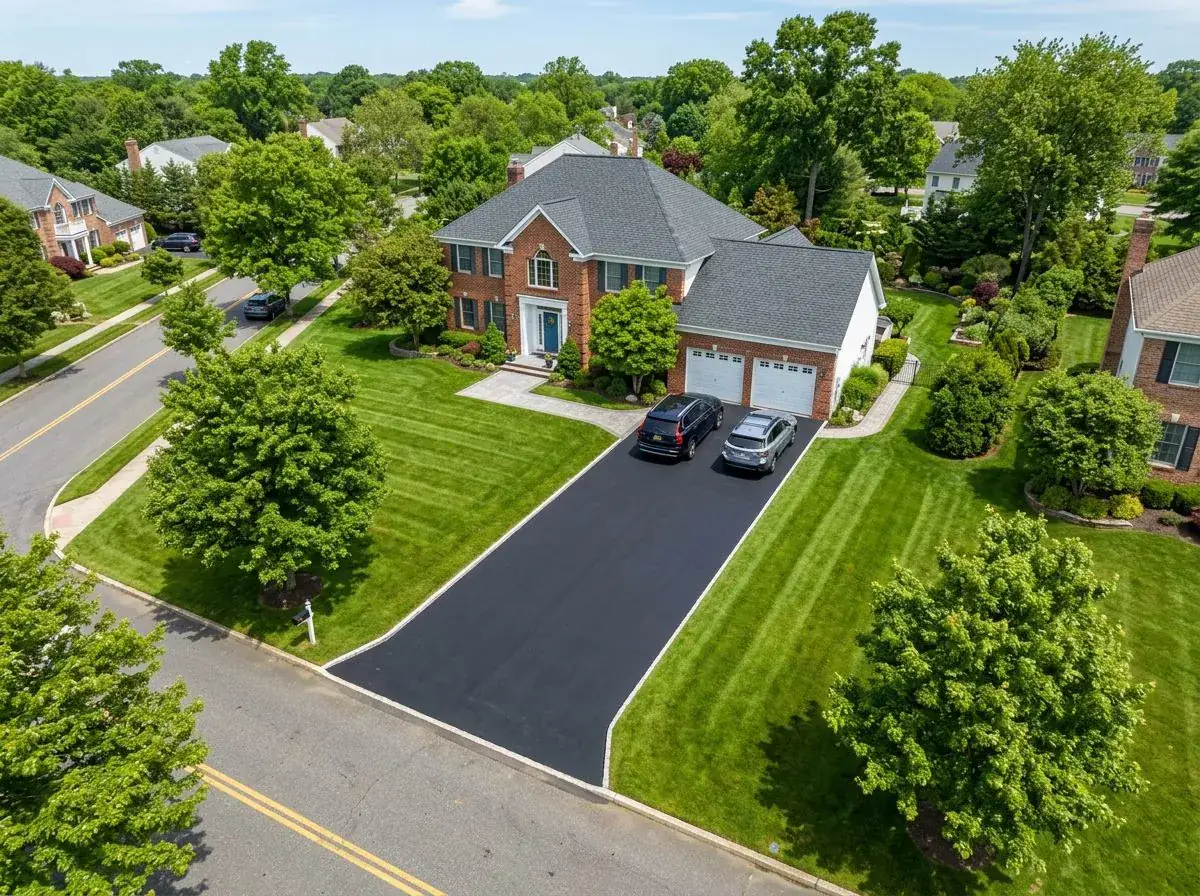
Massapequa's canal blocks put full-size pools on compact lots, and that produces the local hardscape condition: the pool and its deck ARE the back yard. There is no lawn to retreat to and no second patio zone — every design decision happens inside one rectangle, which makes the choices sharper than they are on a half-acre inland.
Small-yard pool deck rules
- Circulation first: code-minimum deck width on all four sides is walkable, but furniture lives on one long side — pick which side gets the depth and give it real depth instead of spreading inches everywhere
- The equipment pad, filter and heater need masonry screening on a lot this tight — a seat wall with a screen return does the job and adds sitting space
- Fence lines sit close, so gate swing, ladder clearances and the barrier code measurements get drawn before a paver is ordered
- Drainage cannot go to the neighbor six feet away or to the canal — deck pitch, a slot drain on the house side, and a drywell sized for the deck area
Salt pools changed the coping conversation
Most pool conversions here are salt systems now, and salt water splashing on the wrong coping eats it. Natural limestone and some cast products scale and pit under salt exposure; dense granite, porcelain and quality wet-cast concrete coping shrug it off. The deck field matters less — splash-zone coping and the first course take the brunt — which is why we spec the coping for the water chemistry, not just the color board.
The canal-lot extras
Efflorescence runs stronger near the water, and the answer is patience and a breathable cleaner — never a film-forming sealer over migrating salts. Hardware — rail anchors, ladder cups, drain grates — goes stainless. And anything built near the bulkhead respects it: setback, light sections, drainage away from the backfill.
Overlay or rebuild on the old deck
Plenty of these pools still wear their original poured deck. Where the slab is sound and drains right, a bonded overlay or a paver lift over it is a legitimate saving; where it is cracked, settled toward the pool or spalling from decades of salt, the honest answer is out — and we will tell you which one you have from the first walk-through.
Frequently Asked Questions
What coping works with a saltwater pool?
Dense materials: granite, porcelain and quality wet-cast concrete coping handle salt splash indefinitely. Natural limestone and some soft cast products scale and pit in the splash zone. The coping and first course take almost all the exposure, so we spec those for the water chemistry and let the color board drive the rest of the field.
Where does pool deck water go on a small canal lot?
Somewhere deliberate — it cannot sheet to a neighbor six feet away or run to the canal. The design is deck pitch away from the house, a slot drain where deck meets structure, and a drywell sized for the actual deck area. On a compact lot that drainage plan is drawn before the layout is final, not after the first storm.
When can masonry work be done on Long Island?
Roughly April through November. Frozen ground cannot be properly excavated or compacted, and jointing sand needs dry conditions above about 50 degrees to cure. Winter is the right time to design and permit — spring dates fill during March.
Related Reading
- Pool Deck Pavers — coping, slip resistance and salt systems
- Paver Patio Cost on Long Island — the full price breakdown
- Why Paver Patios Settle — and how they get lifted and reset
- Permeable Paving — when coverage rules decide the design
- Hiring a Masonry Contractor — the questions that separate bids
- Cambridge pavers installer — ArmorTec, costs and the warranty condition
- Brick Driveways — brick driveways in Massapequa and the surrounding villages
Also Serving Massapequa
- Basement Finishing in Massapequa — egress, ceiling height and moisture
- Chimney Repair in Massapequa — repointing, crowns, caps and flashing
- Driveway Paving in Massapequa — blacktop, resurfacing and repairs
- Emergency Roof Repair in Massapequa — tarping, leaks and storm response
- Gutter Installation in Massapequa — seamless gutters, fascia and drainage
- House Painters in Massapequa — exteriors while the fall window holds
- Storm Damage & Insurance Restoration in Massapequa — emergency tarping and the claim
- Interior Painting in Massapequa — the right work for the cold months
- Roofing in Massapequa — tear-offs, repairs and storm damage
- Siding in Massapequa — James Hardie, vinyl and cedar
Work With Alec's Construction
This guide is written by the crew that does the work. See Alec's Masonry & Pavers service — patios, walkways, steps, stoops and retaining walls. Licensed and insured on Long Island, one crew start to finish, free walkthrough and a written estimate inside 48 hours.
Booking the cold months now: we also handle Chimney Repair and Driveways & Blacktop.
Not sure whether the town or village files your permit? That question trips up more Long Island projects than any other — the directory sorts it out.
Ready to Get Started?
Free design consultation and a written proposal that states excavation depth, base depth and number of compaction lifts — not just the paver line.