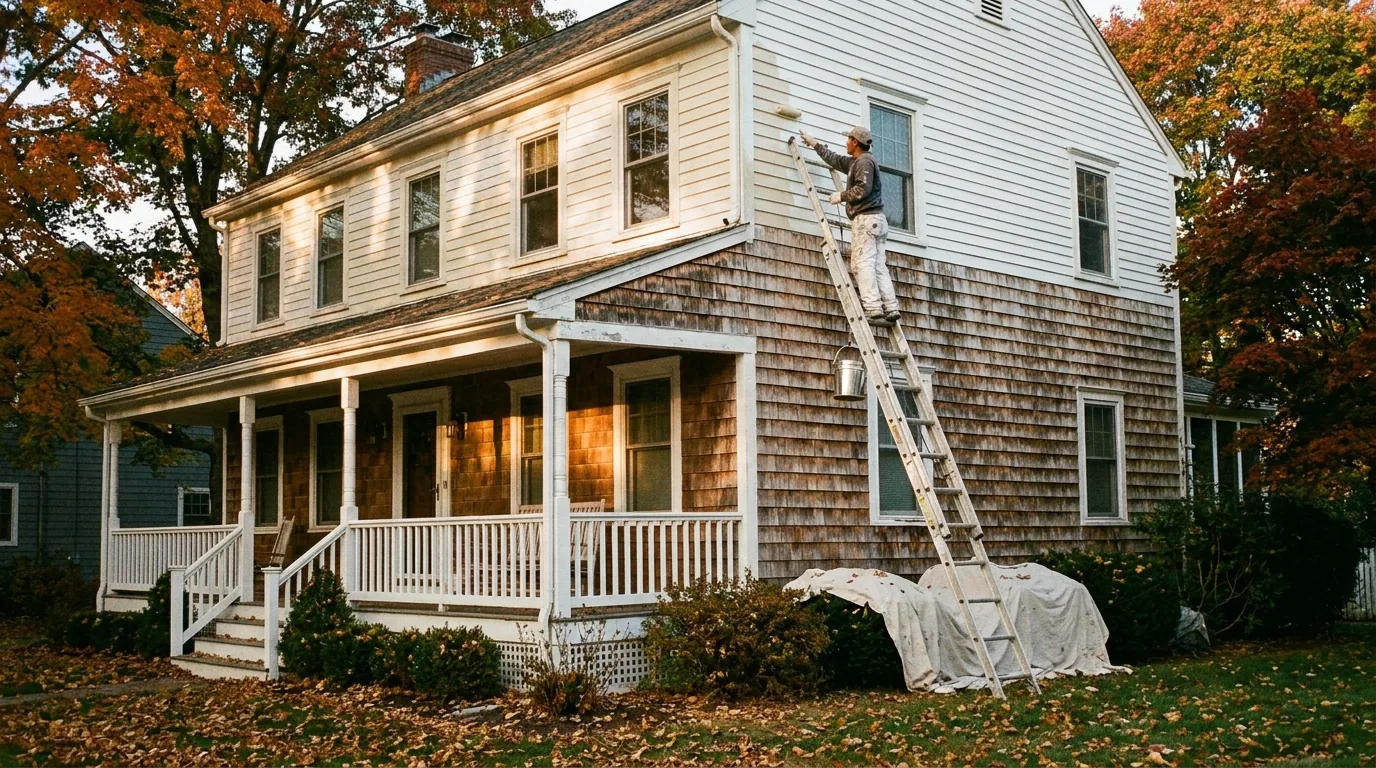
There is a right answer to this and it is not "summer." On Long Island the best exterior painting weather of the year is September and October, and the reason has to do with two numbers most homeowners never think about: surface temperature and dew point.
The Two Numbers That Decide Everything
Surface temperature. Exterior acrylic paints are rated to apply at a minimum temperature — usually somewhere between 35 and 50 degrees Fahrenheit depending on the product line. What matters is the temperature of the siding, not the air, and it has to stay above that minimum for several hours after application, including overnight while the film is still forming. A 58 degree afternoon that drops to 34 overnight will ruin a coat that looked perfect at 4pm.
Dew point. If a surface cools below the dew point while paint is still curing, moisture condenses on the film. On acrylic paint that produces surfactant leaching — the brown or tan streaks you sometimes see running down freshly painted siding after a heavy dew. It usually washes off eventually, but it can also cause real adhesion problems.
Everything else about timing follows from those two.
Long Island Month by Month
March. Too early. Surfaces are still cold, overnight lows are unreliable, and spring rain is constant. Good month for interior work and for exterior carpentry repair.
April. The season opens, cautiously, usually in the second half. Pollen becomes a real issue — Long Island oak and pine pollen will land in a wet finish and stay there. South-facing walls first.
May and June. Genuinely good painting weather and, correspondingly, the most booked-out months on the Island. Expect lead times. Humidity starts climbing in late June.
July and August. Workable but not ideal. High humidity slows drying, afternoon thunderstorms are a constant scheduling risk, and direct sun on a south wall in August can heat the surface past the maximum application temperature — paint that dries too fast does not level, and you get lap marks and poor adhesion. Good crews work the shade side and move around the house with the sun.
September. The best month of the year. Surfaces are still warm from summer, humidity has broken, days are long enough, and the rain pattern is settled. If you can only pick one month, pick this one.
October. Nearly as good, with a shrinking daily window. We stop applying by early afternoon so the film has hours of warmth before the evening cool-down. Excellent for trim, doors and shutters.
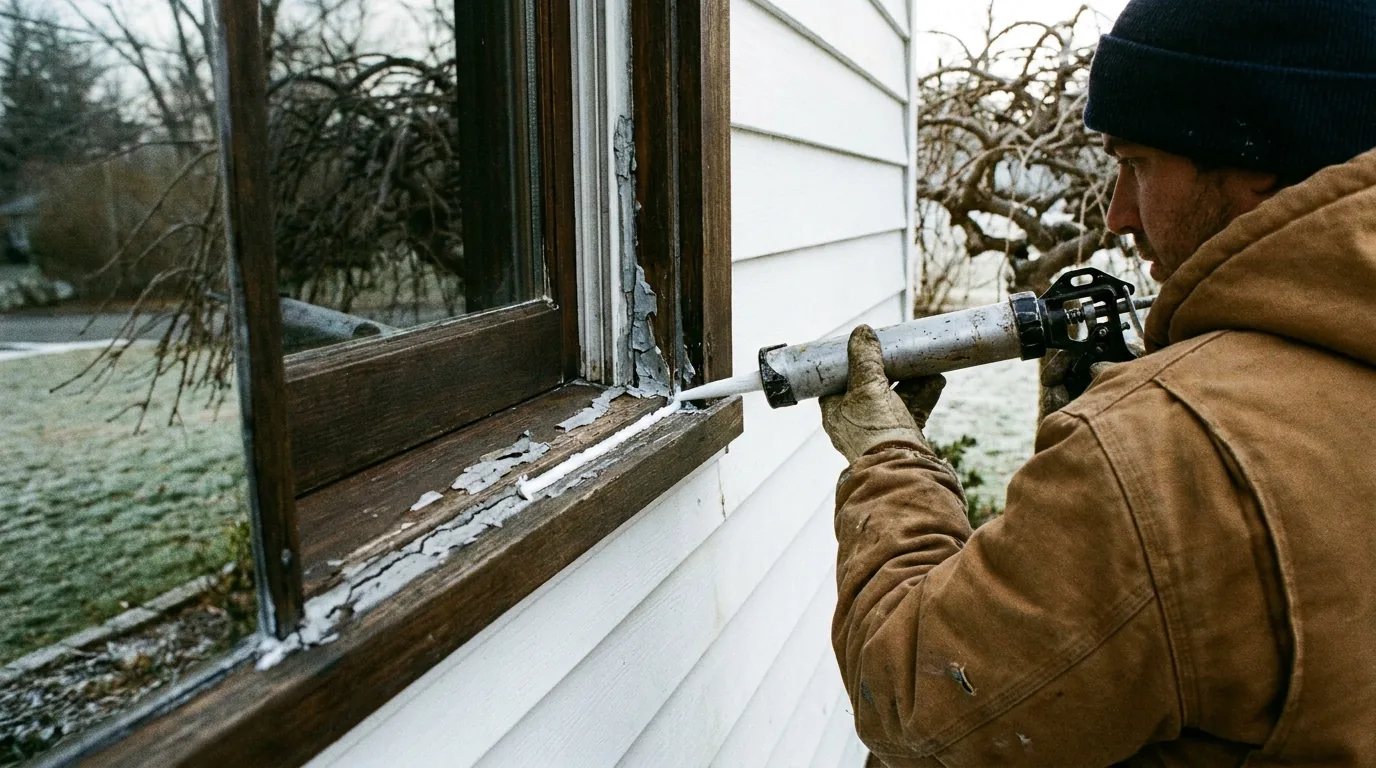
November. The tail end. Body coats become difficult in most years after the first week. Small surfaces on south-facing walls can sometimes go into mid-month in a mild year. Prep, carpentry and caulking still make sense — sealing joints before freeze-thaw season is worth doing regardless of whether the paint goes on now or in April.
December through February. Exterior painting is done for the year on Long Island. This is interior season, and it is also the best time to get on next spring's exterior calendar.
Why Fall Beats Spring on Long Island
Three reasons, and they are all specific to this Island.
No pollen. Long Island spring pollen is heavy and it lands in wet paint. There is no equivalent problem in September.
Better booking position. Every homeowner on the Island calls a painter in April. Almost nobody calls in September. You get better crews, better attention, and often better pricing.
You go into winter sealed. A house painted and caulked in September enters freeze-thaw season with every joint closed. A house that waits until April spends the entire winter letting water into the cracks it already had — which means more rot to repair and a bigger bill in the spring.
What Fall Weather Days Actually Look Like
The ideal exterior painting day on Long Island in autumn: overnight low above 45, daytime high between 60 and 75, relative humidity under 60 percent, light wind, and no rain forecast for 24 hours after application. Those days are common here from the first week of September through the third week of October.
We track the forecast, not the calendar. If a warm dry stretch runs into the first week of November we use it; if a cold snap arrives October 20th we stop and reschedule. Any contractor who is willing to spray your house on a 40 degree afternoon in November because it is on the schedule is doing you damage.
If You Missed the Window
You have three good options and one bad one.
Do the trim, door and shutters. Small surfaces, quick to apply, workable later into the season on a south wall.
Do the repair now, paint in spring. Rot replacement, corner board rebuilds, caulking and glazing can all be done in cold weather. Get it sealed before winter, book the paint for April.
Move inside. Interior painting has no seasonal limit and winter is genuinely the best time for it on Long Island.
Do not let someone paint your house in unsuitable conditions to close out their year. You will be paying again in two seasons.
What We Do
Alec's Construction paints exteriors across Nassau and Suffolk County and stops when the weather says stop. We book fall exteriors from August, and we book spring exteriors all winter. Call (631) 312-7441.
Frequently Asked Questions
What is the best month to paint a house exterior on Long Island?
September, with early October a close second. Surfaces are still warm from summer, humidity has dropped, days are long enough to get a full coat down with hours of warmth after, and there is no spring pollen to land in the wet finish.
How cold is too cold to paint outside?
Below the product's minimum application temperature at the surface — usually 35 to 50 degrees Fahrenheit depending on the paint — and it must stay above that for several hours after application, including overnight. On Long Island that generally means body coats stop in the first half of November.
Can you paint a house in the summer on Long Island?
Yes, but it is not ideal. High humidity slows drying, afternoon storms disrupt schedules, and direct August sun can push a south-facing surface above the maximum application temperature, which causes lap marks and adhesion problems. Good crews follow the shade around the house.
Is fall or spring better for exterior painting?
Fall, on Long Island. No pollen, a settled rain pattern, much better contractor availability, and your house goes into freeze-thaw season with every joint freshly sealed instead of spending the winter taking on water.
What happens if paint gets rained on before it dries?
Early rain can wash the film off entirely or leave permanent runs and dull patches. Most acrylics need several hours before they can take moisture. We do not apply with rain in the 24 hour forecast.
What are the brown streaks on my freshly painted siding?
Surfactant leaching. It happens when a surface cools below the dew point while the paint is still curing and moisture pulls water-soluble ingredients to the surface. It is why we stop applying by early afternoon in late season and do not paint into a cold evening.
Related Guides
- Interior Painting on Long Island
- Exterior House Painting on Long Island
- What House Painting Costs on Long Island
- Kitchen Cabinet Painting on Long Island
- How to Choose a Painting Contractor on Long Island
Get a Free Estimate from Alec's Construction
Licensed and insured, working across Nassau and Suffolk County since 2018. We come out, look at the actual job, and put a written number in your hand — no pressure, no obligation.
Book a Free WalkthroughOr call (631) 312-7441