If you are listing a Long Island house this spring, the painting should happen in January or February. Not because the paint cares what month it is, but because listing photos are taken a week or two before the house goes live, and the photos are what sell the showing. Paint after the photos and you paid for a fresh house that nobody saw online.
This guide is for sellers and for the agents who are telling them the same thing. It covers why the calendar works backward from the photo date, which rooms matter most in listing photos, how to pick a neutral that reads warm on camera instead of blank, the fix-before-paint items a buyer's inspector will write up if you skip them, and how we handle an occupied house versus a vacant one. It is about interior painting on Long Island as a selling tool, and it follows on from the pre-listing section of our winter interior painting guide.
Have a listing date? Tell us and we will work backward from it.
Walkthrough, written estimate, and a finish date that lands before the photographer does. We call back the same business day.
Why January and February, Not April
The spring market on Long Island starts moving in March. Agents want listings live by early to mid March so they catch buyers who have been waiting out the winter, and the photographer comes in the week or two before the listing date. Work backward from that and the painting has to be finished, cured and the furniture back by late February at the latest. Allow for a walkthrough, a color decision, the work itself and a few days for the smell to clear, and the realistic booking window is January.
For a March listing: walkthrough and colors in January, painting done by mid-to-late February, photos in the last week of February or the first week of March.
For an April listing: you have more room, but February is still the month to paint. March is when every seller on the block calls at once.
Already have a photo date? Give it to us and we schedule to finish at least five days ahead of it. That cushion is for touch-ups and for the house to stop smelling like paint.
Winter has a practical advantage here too. With the heat running, indoor air is dry and paint cures faster and more evenly than in humid weather, so a room finished in February is fully settled by the time buyers walk through in March. And January is the quietest month of the year for interior painters, which means the schedule bends to your date instead of the other way around.
The Rooms That Show Up in Listing Photos First
Open any Long Island listing and look at the order of the photos. It is nearly always the same, and that order is your painting priority list.
- Living room or great room. The hero shot. Usually the second or third photo after the exterior. Scuffs, a dated accent wall or a dingy ceiling show here more than anywhere else, because the photo is wide and the walls are most of it.
- Kitchen. If the cabinets are sound but tired, cabinet painting changes the photo more than any other single move short of a remodel. Walls alone help if they are a strong color.
- Primary bedroom. Buyers linger on this photo. A soft neutral on the walls and a clean white ceiling is the whole job.
- Primary and main bathrooms. Small rooms, fast to paint, and a bathroom ceiling with mildew spotting photographs terribly.
- Entry and hallway. Rarely a featured photo, but it is the first thing a buyer sees at the showing, and the most scuffed wall in any house with kids.
- Secondary bedrooms. Where the bold colors tend to live. A child's purple bedroom is the room most often repainted before a listing, and for good reason: buyers struggle to see past it.
Basements, laundry rooms and closets are last. Paint them if the budget and calendar allow, but not instead of the rooms above.
Neutral Without Being Blank: Colors That Photograph Well
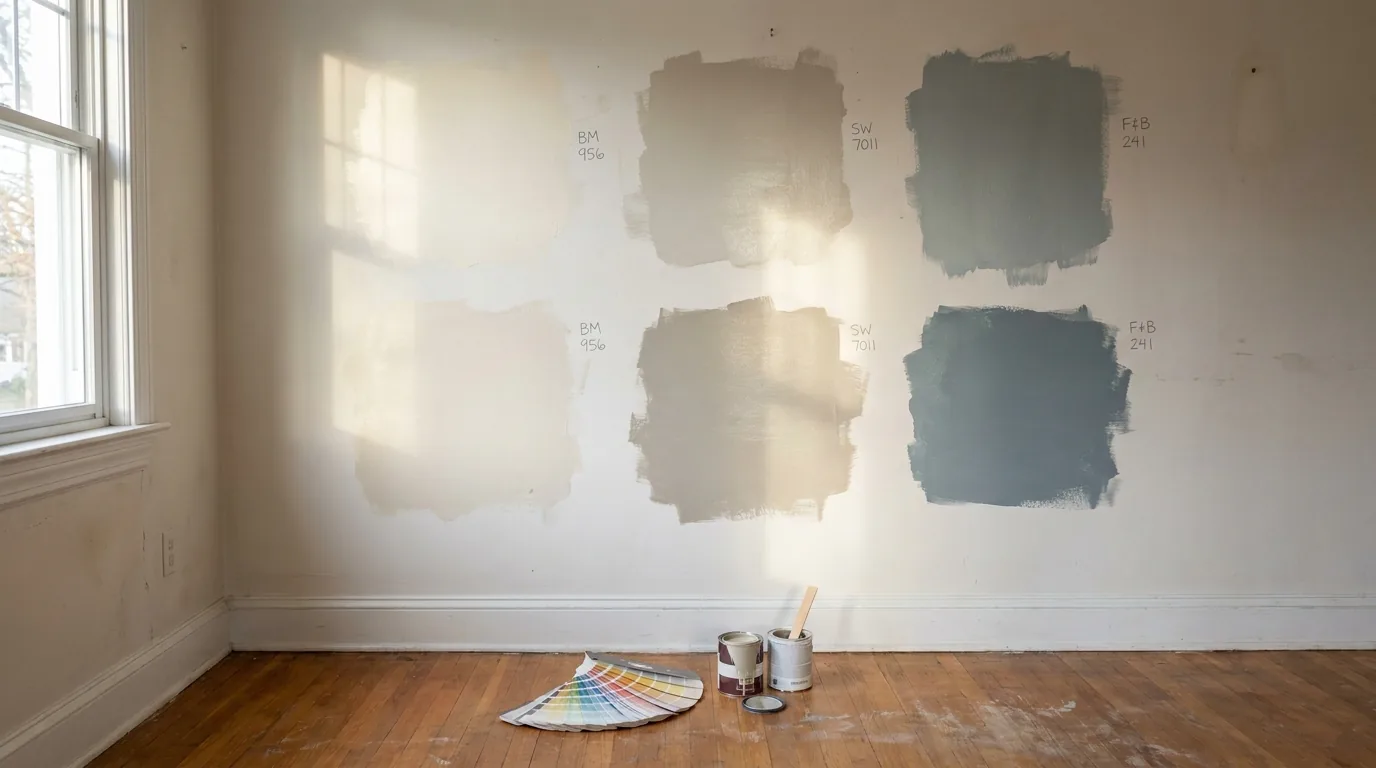
Sellers hear "paint it neutral" and reach for a flat builder white, and the photos come out looking like a rental between tenants. What actually photographs well is a warm, light neutral with a bit of depth: a soft greige, a warm off-white, a very pale warm gray. These read as clean and current in a photo, they make rooms look bigger, and they do not fight with whatever furniture the stager brings in.
A few rules we follow on pre-listing jobs. One wall color through the main living areas and hallway so the house reads as continuous in photos. Bedrooms can shift a half step warmer or cooler but stay in the same family. Ceilings in a true flat white, every room, because a white ceiling makes a room taller in a photo. Trim and doors in a clean white semi-gloss if they are painted; if they are stained wood in good condition, leave them. Accent walls come out. Our guide to paint colors for Long Island homes gets into specific families and how north-facing and south-facing rooms change the way they look.
If you have an agent, ask them before you pick. Most have a color they have seen sell in your town and they would rather tell you now than after the walls are done.
Fix-Before-Paint Items a Buyer's Inspector Will Flag
Fresh paint over a problem is a problem a buyer's inspector will find anyway, and then it looks like you were hiding it. These get fixed first, and the fix is part of the written estimate.
- Ceiling water stains. An inspector sees a stain and writes "evidence of past water intrusion, source unknown," and the buyer's attorney gets involved. Confirm the leak is fixed, then prime the stain with a stain-blocking primer before the ceiling is painted. Painting over it with ordinary paint fails; the ring bleeds back through. We wrote a full guide to fixing water-stained ceilings.
- Cracks at corners, over doors, and along the ceiling line. Normal settling in 1950s to 1970s South Shore houses, but a buyer does not know that. Taped, skimmed and sanded before paint. Diagonal cracks that keep returning are a different conversation. See our guide to drywall and plaster repair before painting.
- Peeling paint in bathrooms. Usually a ventilation problem. Scrape, prime with a mildew-resistant primer, paint with a bathroom-rated finish, and if the fan is not venting outside, say so.
- Nail pops and old anchor holes. Dozens of them in any house that has had pictures on the walls. Each one filled and sanded, or every one shows in a listing photo under window light.
- Trim gaps and caulk failure. Gaps where baseboard meets wall and where window casing meets drywall. Re-caulked before the trim coat.
Working to a Realtor's Photo Date
On a pre-listing job the date is not a preference, it is the whole point, so we run the job differently from a regular repaint.
- We ask for the photo date at the first call, and the schedule is built backward from it with at least five days of cushion.
- Rooms are sequenced by photo priority, living areas and kitchen first, so if anything slips it slips in a closet, not the hero shot.
- The written estimate goes to the seller and, if you want, to the agent, so everyone is looking at the same scope and the same finish date.
- Final walkthrough before the photographer, with a touch-up kit of each color left behind for the move-out scuffs that always happen.
- Furniture back the next day, kept an inch off the walls for the first week, which is usually exactly when the stager is working anyway.
For Agents: Vacant and Occupied Listings
A vacant house is the easiest painting job there is. Empty rooms, no furniture to move, no family to work around, and the whole house can be done in one continuous run. If the seller has already moved, tell them to paint before the stager arrives and not after.
An occupied house is most of what we do in January and February. We work one room at a time with the doorway sealed and the floors covered, the rest of the house stays livable, and we use low-VOC paint so the smell is gone within hours of finishing a room. For a family selling while they live there, we usually do the public rooms in one stretch and the bedrooms in a second, so nobody sleeps in a room that was painted that afternoon.
If you list on the South Shore and want a painter you can hand a seller and a date to, see our partners page for how we work with agents and property managers. We send one written estimate, we hit the date, and we do not call your client with surprises.
Where We Work
We are based in East Patchogue and cover Suffolk County. The towns where we do the most pre-listing interior work are along the South Shore and the middle of the Island: Sayville, Patchogue, Blue Point, Holbrook, Medford and Smithtown. We take pre-listing work anywhere in the county through the winter.
Frequently Asked Questions
Is it worth painting a house before selling it on Long Island?
For most houses, yes, because listing photos are what get buyers through the door and fresh neutral walls are the single biggest change you can make to those photos short of a renovation. The exception is a house being sold as a teardown or a full gut, where buyers are not looking at the walls. Ask your agent which kind of sale you have.
When should I paint if I am listing in the spring?
January or February. Agents want listings live by early-to-mid March, photos are taken a week or two before that, and painting has to be finished and cured before the photographer arrives. Working backward from the photo date puts the walkthrough and color decision in January.
What color should I paint my house to sell it?
A warm, light neutral: soft greige, warm off-white or a pale warm gray on the walls, flat white on every ceiling, and a clean white on painted trim. One wall color through the main living areas so the house reads as continuous. Avoid stark builder white, which photographs flat, and remove accent walls. Ask your agent what has been selling in your town.
Should I paint over the water stain on the ceiling before listing?
Only after the leak is fixed and only with a stain-blocking primer under the ceiling paint. Painted over with regular paint, the stain bleeds back through within weeks, and an inspector will flag it as evidence of water intrusion. Done properly, with the whole ceiling repainted, it disappears.
Can you paint while we are still living in the house?
Yes. We work one room at a time with the doorway sealed and floors covered, use low-VOC paint so the smell clears within hours, and sequence the rooms so nobody sleeps in one painted that day. Most of our January and February pre-listing work is in occupied homes.
Do you work with real estate agents directly?
Yes. Agents can send us a seller and a listing date. We do the walkthrough, send one written estimate to the seller and the agent, schedule to finish ahead of the photo date, and leave a touch-up kit. See our partners page for how referrals work.
Related Guides
- Winter Interior Painting on Long Island: The Season Nobody Books
- Paint Colors That Work on Long Island Homes
- Drywall and Plaster Repair Before You Paint
- Ceiling Water Stain After a Roof Leak or Storm
- Kitchen Cabinet Painting on Long Island
- Interior Painting on Long Island
Work With Alec's Construction
This guide is written by the crew that does the work. See Alec's Painting service for interior work all winter and exterior in the fall window. One crew start to finish, a free walkthrough, and a written estimate inside 48 hours. Working across Suffolk County since 2018.
Booking the cold months now: we also handle Basement Finishing and Bathroom Remodeling through the winter.
Get the House Photo-Ready Before It Lists
Working across Suffolk County since 2018. Tell us the listing or photo date, we come out, look at the rooms, and put a written number and a finish date in your hand. No pressure, no obligation.
Call (631) 312-7441 or use the quick form above.