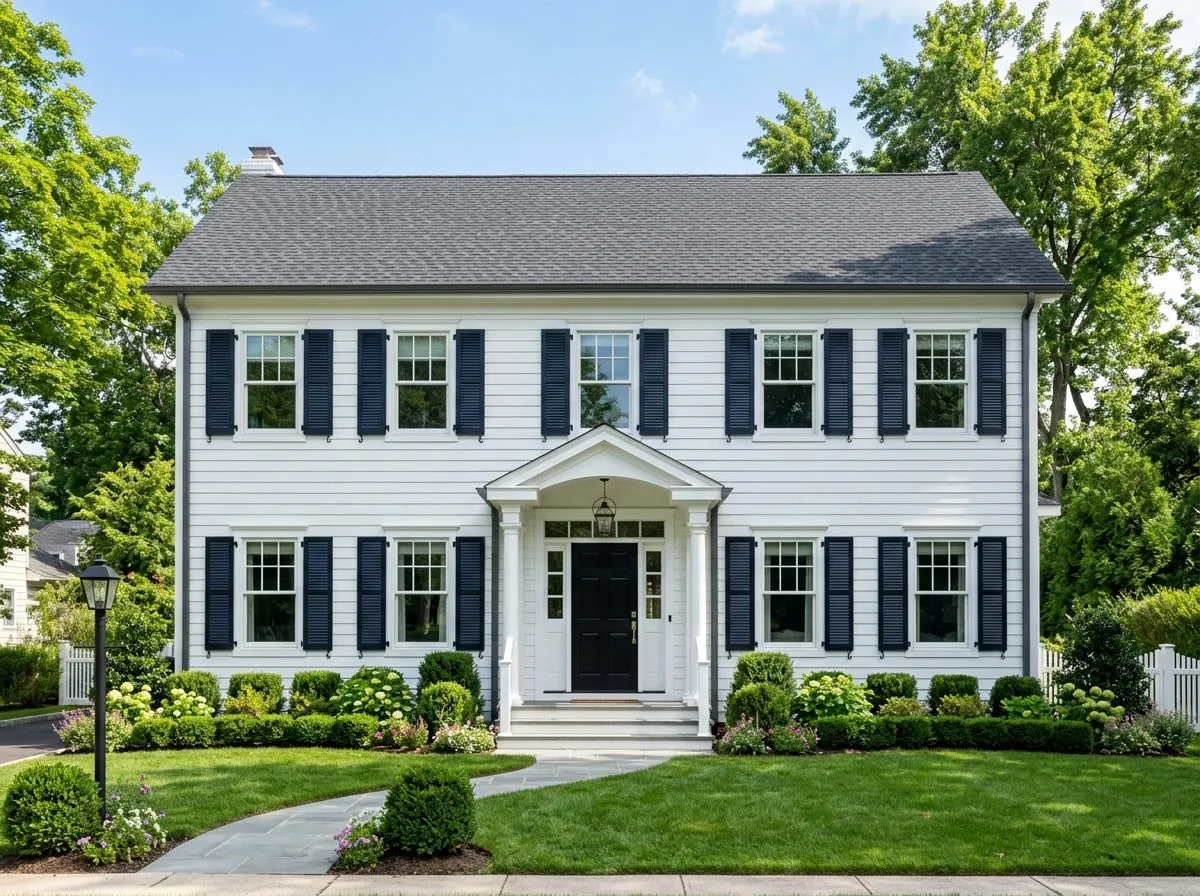
Sayville is an unincorporated hamlet in the Town of Islip, and the housing near Main Street runs from the 1900s through the 1930s. This is cedar shake country — a lot of these houses were originally shingled, many still are, and the character of the streets depends on it.
Cedar, and the honest math on it
Real cedar shake is beautiful, it weathers to a color nothing else matches, and it is expensive both to install and to maintain. On a Sayville house where it is original, replacing it with vinyl is a decision that is very hard to reverse and tends to cost more at resale than it saves.
The middle path most homeowners land on is fiber cement in a shingle profile. It takes paint, holds a shake exposure, does not feed insects, and does not need the maintenance cycle cedar does. It is not cedar and anyone who tells you it is at ten feet is overselling. But on a house that needs siding now and cannot carry a cedar budget, it reads far better than lap vinyl.
The tree canopy causes the mildew
The mature oak and maple canopy that makes these streets what they are also means north and east elevations that never fully dry after rain. That produces the green and black growth homeowners find on the siding, and it is not the siding failing.
- Persistent shade plus moisture grows algae and mildew on any siding product
- Cedar in that condition also stays wet enough to rot at the butt ends
- Gutters overflowing from leaf load soak the fascia and the top course all winter
- Shrubs planted tight to the wall hold moisture against it year-round
Pruning the canopy back off the roof and wall, keeping the gutters clear, and holding plantings eighteen inches off the siding does more for the exterior of a Sayville house than any product choice.
What we find behind it
Early-1900s walls here are plank sheathing with no housewrap and often no insulation. Stripping to sheathing is the only opportunity you will get to see what has been wet, replace what has rotted, install a real weather-resistive barrier, and — if you want — blow insulation into empty cavities while the wall is open.
That last point is worth raising. A century-old Sayville house with empty stud bays is expensive to heat, and the siding job is the cheapest moment in the house's life to fix that.
South Sayville toward the bay
Below Montauk Highway, toward the ferry terminals, you get the same salt exposure as the rest of the bayfront. The siding is unaffected; the fasteners are not. Stainless is the correct spec down there and we quote it that way.
Frequently Asked Questions
Should I replace cedar shake with vinyl?
We would push back on that. On a Sayville house where cedar is original it is a large part of why the house looks right, and the change is effectively permanent and tends to cost more at resale than it saves. Fiber cement in a shingle profile is the usual middle path — it holds the exposure and takes paint, without the cedar maintenance cycle.
Why does mildew keep coming back on one side of my house?
That elevation stays shaded and damp. The mature canopy over Sayville streets means north and east walls that never fully dry after rain, and any siding product will grow algae in that condition. Pruning the canopy back, keeping gutters clear and holding plantings eighteen inches off the wall does more than changing product.
How long does a siding job take?
Three to six days on a typical Long Island house, depending on size, how many stories, and how much trim and flashing work comes with it. Fiber cement runs longer than vinyl because the material is heavier and slower to cut and hang.
Do you have to remove the old siding?
We recommend it and we quote it that way. Siding over siding hides whatever is wrong with the sheathing underneath, adds thickness that throws off every window and door detail, and makes proper housewrap and flashing impossible. It is cheaper today and it is how water damage stays hidden for a decade.
Related Reading
- James Hardie Fiber Cement on Long Island — HZ5 spec, real costs, and where vinyl still wins
- Siding Replacement Cost — what actually drives the number
- Brick and Stone Veneer — where masonry beats siding on a facade
- Hiring a Roofing Contractor — roof and siding sell together for a reason
- Storm Damage on Long Island — wind, siding and the insurance path
Also Serving Sayville
- ADUs in Sayville — accessory apartments and grants
- Attic Insulation in Sayville — air sealing, baffles and R-49 depth
- Basement Finishing in Sayville — egress, ceiling height and moisture
- Bathroom Remodeling in Sayville — full gut renovations
- Chimney Repair in Sayville — repointing, crowns, caps and flashing
- Deck Builders in Sayville — new builds, repairs and railings
- Driveway Paving in Sayville — blacktop, resurfacing and repairs
- Emergency Roof Repair in Sayville — tarping, leaks and storm response
- Fallen Tree Removal & Roof Repair in Sayville — tree off the house, roof supported and repaired
- Flood & Water Damage Cleanup in Sayville — wet material out, drying metered
- Front Steps & Stoops in Sayville — rebuilds, treads and railings
- Garage Conversion in Sayville — turning the garage into living space
- Gutter Installation in Sayville — seamless gutters, fascia and drainage
- House Painters in Sayville — exteriors while the fall window holds
- Hurricane & Storm Damage Repair in Sayville — trees, flooding, cleanup and repairs
- Storm Damage & Insurance Restoration in Sayville — emergency tarping and the claim
- Interior Painting in Sayville — the right work for the cold months
- Kitchen Remodeling in Sayville — cabinets, counters and layout
- Masonry & Pavers in Sayville — patios, walkways and retaining walls
- Roofing in Sayville — tear-offs, repairs and storm damage
- Storm Debris Removal & Cleanup in Sayville — trees, building debris and hauling
- Storm Roof & Siding Repair in Sayville — wind damage, tarped and rebuilt
- Windows & Doors in Sayville — insert and full-frame replacement
Work With Alec's Construction
This guide is written by the crew that does the work. See Alec's Siding service — James Hardie, vinyl and cedar with the rot behind it repaired first. Licensed and insured on Long Island, one crew start to finish, free walkthrough and a written estimate inside 48 hours.
Booking the cold months now: we also handle Roofing and Painting.
We keep a permit office directory for Nassau and Suffolk, checked against each jurisdiction's own site, because we file in these counters constantly.
Ready to Get Started?
Free exterior walkthrough and a written proposal listing product spec, fastener type, housewrap and every flashing detail. James Hardie and vinyl installed across Long Island.