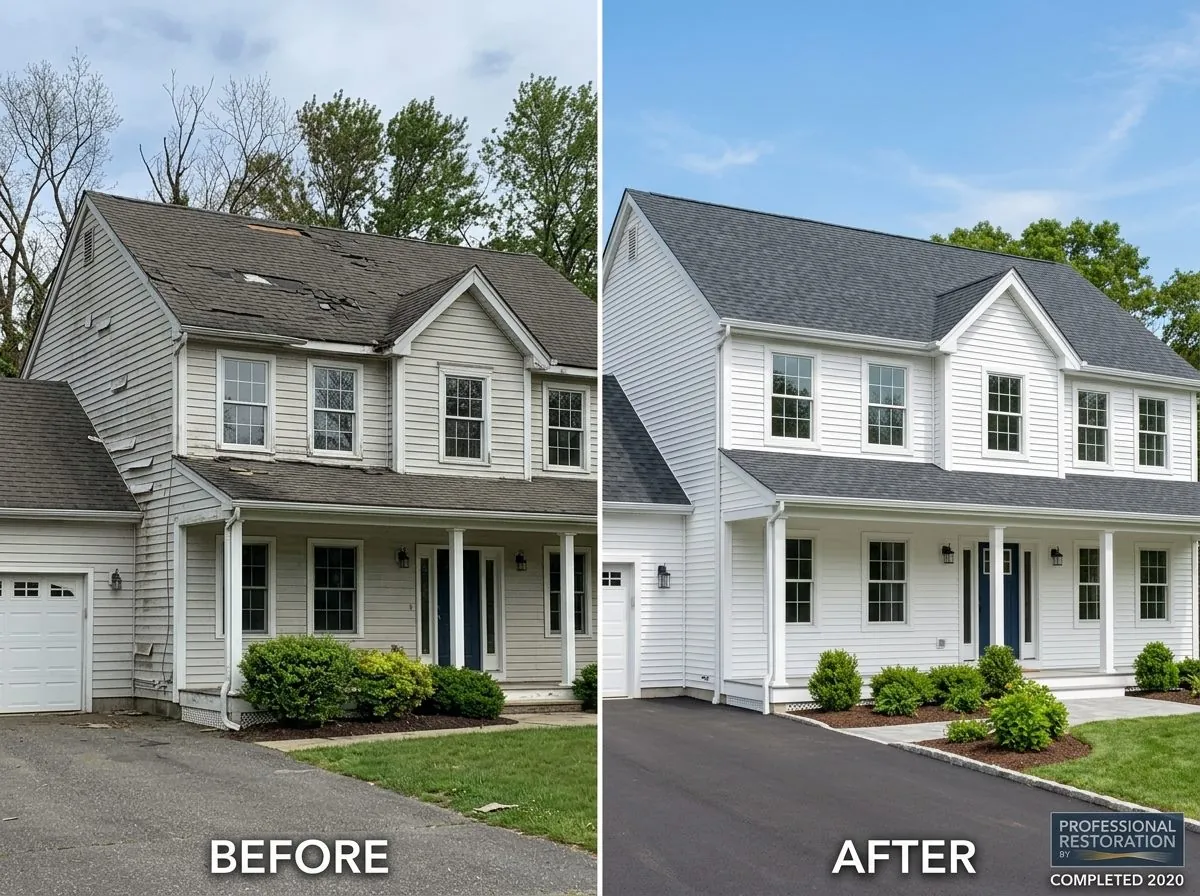
Sayville has two distinct storm exposures and they produce completely different claims. South of Montauk Highway toward the bay and the ferry terminals, it is wind and water. North through the village and the residential streets, it is trees.
Tree strikes are the Sayville claim
The mature oak and maple canopy over these streets is a century old. In a sustained wind event, limbs come down, and the ones that reach a roof do a very specific kind of damage: concentrated impact in a small area, frequently through the decking, with the surrounding roof completely intact.
That pattern is where claims get argued. A carrier looking at an otherwise sound 18-year-old roof will want to pay for a repair to the struck section. You will end up with a patch in a color that no longer matches, on a roof that was near end of life anyway.
What to document when a limb hits
- The limb itself, in place, before anyone moves it — this is the evidence and it gets cut up fast
- The impact point from outside and from inside the attic
- Decking damage, which is what separates a repair from a replacement
- Every interior water stain, including ones you think are old
- Roof age and prior condition, so the depreciation argument is grounded
The single most common mistake is having a tree service clear the limb before anyone photographs it in place. That is understandable — you want it off your house — but the limb on the roof is the proof the impact occurred. Get photos first, then clear it.
Matching, and why it matters more than it sounds
New York regulation and most policies address matching, but how far a carrier goes varies. If a discontinued shingle cannot be matched, replacing one slope and leaving three visibly different is not a reasonable outcome, and that argument is worth making with photographs of the color difference rather than describing it.
Whose insurance if the tree was the neighbor's
Generally, if a healthy tree falls in a storm, your own homeowners policy covers the damage to your property regardless of which side of the line it grew on. Where it changes is if the tree was visibly dead or diseased and the owner was notified — then negligence enters the picture.
Practically: file with your own carrier first. Do not let the claim sit while the two households debate liability. Your carrier can pursue subrogation afterward.
South Sayville toward the bay
Below Montauk Highway the exposure looks like Bellport and Blue Point — sustained onshore wind, lifted shingles along the windward edge, flashing pulled at the chimney, and the same wind-versus-flood distinction that decides which policy responds.
Frequently Asked Questions
A tree limb hit my roof. What should I photograph first?
The limb in place, before anyone moves it. That is the evidence the impact occurred, and tree services cut it up quickly. Then the impact point from outside and from inside the attic, any decking damage, and every interior stain. Decking damage is what separates a repair from a full replacement in the adjustment.
My neighbor's tree fell on my house. Whose insurance pays?
Generally your own, if the tree was healthy and came down in a storm — that is true regardless of which property it grew on. It changes if the tree was visibly dead or diseased and the owner had been notified. Either way, file with your own carrier immediately rather than waiting; they can pursue subrogation later.
Should I file a claim before or after getting an inspection?
Get the inspection first. You want to know whether the damage exceeds your deductible before a claim goes on your record, because a filed claim that pays nothing still counts as a claim at renewal. We inspect and document at no charge and tell you honestly whether it is worth filing.
How long do I have to file after a storm?
New York policies generally require prompt notice, and most carriers expect it within days to weeks — but the specific requirement is in your policy. Practically, file early. Damage that sits gets attributed to wear and neglect rather than to the storm, and that is the most common reason a legitimate claim gets reduced.
Do you tarp before the adjuster comes?
Yes, and you should want us to. Policies obligate you to prevent further damage once you know about it. We photograph everything before tarping, so the adjuster sees the original condition and you have met your duty to mitigate. Save every receipt — emergency mitigation is typically reimbursable.
Related Reading
- Storm Damage Roofs on Long Island — what wind actually does to a roof
- Documenting Roof Damage for a Claim — what the adjuster needs to see
- Roof Insurance Claims — how the process really runs
- Emergency Roof Repair — what to do in the first 24 hours
- Driveway Paving in Sayville — the same trees, a different problem
Also Serving Sayville
- ADUs in Sayville — accessory apartments and grants
- Attic Insulation in Sayville — air sealing, baffles and R-49 depth
- Basement Finishing in Sayville — egress, ceiling height and moisture
- Bathroom Remodeling in Sayville — full gut renovations
- Chimney Repair in Sayville — repointing, crowns, caps and flashing
- Deck Builders in Sayville — new builds, repairs and railings
- Driveway Paving in Sayville — blacktop, resurfacing and repairs
- Emergency Roof Repair in Sayville — tarping, leaks and storm response
- Fallen Tree Removal & Roof Repair in Sayville — tree off the house, roof supported and repaired
- Flood & Water Damage Cleanup in Sayville — wet material out, drying metered
- Front Steps & Stoops in Sayville — rebuilds, treads and railings
- Garage Conversion in Sayville — turning the garage into living space
- Gutter Installation in Sayville — seamless gutters, fascia and drainage
- House Painters in Sayville — exteriors while the fall window holds
- Hurricane & Storm Damage Repair in Sayville — trees, flooding, cleanup and repairs
- Interior Painting in Sayville — the right work for the cold months
- Kitchen Remodeling in Sayville — cabinets, counters and layout
- Masonry & Pavers in Sayville — patios, walkways and retaining walls
- Roofing in Sayville — tear-offs, repairs and storm damage
- Siding in Sayville — James Hardie, vinyl and cedar
- Storm Debris Removal & Cleanup in Sayville — trees, building debris and hauling
- Storm Roof & Siding Repair in Sayville — wind damage, tarped and rebuilt
- Windows & Doors in Sayville — insert and full-frame replacement
Work With Alec's Construction
This guide is written by the crew that does the work. See Alec's Storm Damage & Insurance Restoration service — emergency tarping, documentation and the claim itself. Licensed and insured on Long Island, one crew start to finish, free walkthrough and a written estimate inside 48 hours.
Booking the cold months now: we also handle Roofing and Siding.
We pull the permits on our own jobs — if you need the building department for your town, we keep a current directory of all 23 Long Island permit offices.
Ready to Get Started?
Storm damage moves fast and so do we. Free damage inspection, documentation for your carrier, and emergency tarping across Suffolk County.