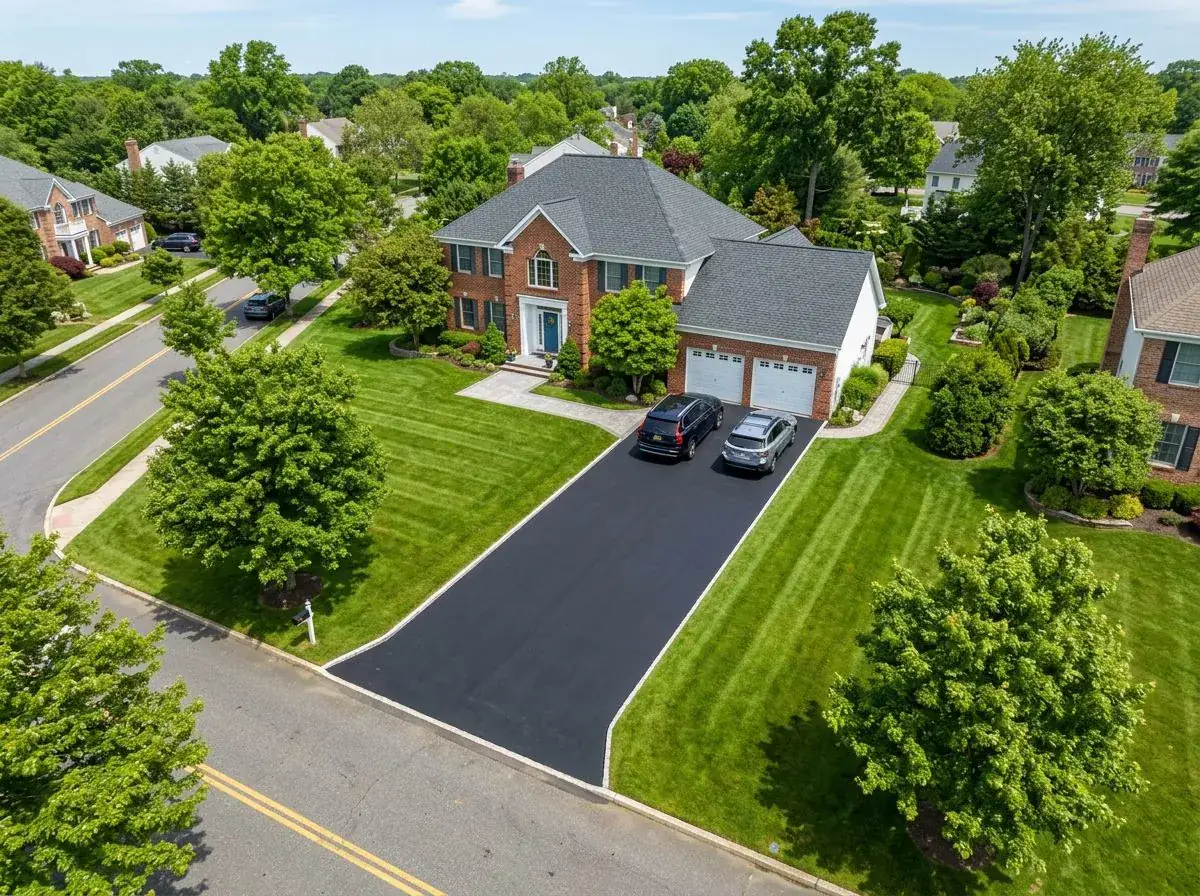
Sayville is a Town of Islip hamlet with a mature street canopy and housing that runs from the 1900s through the 1930s. On front entrances those two facts collide in a specific way.
The walk fails before the stoop does
The oaks and maples along these streets grow roots laterally in the top twelve to eighteen inches of soil, and the front walk sits directly in that zone. Over years a thickening root lifts a slab or a section of pavers, and you get a trip edge halfway between the sidewalk and the front door.
The stoop itself is frequently still sound. So the honest scope on a lot of Sayville entrances is: reset or rebuild the walk, repoint the stoop, and leave the structure alone. That is a much smaller number than a full rebuild and it is what the property actually needs.
How to deal with the roots
- Pavers rather than a poured slab, so a heaved section can be lifted and reset later
- A root barrier along the walk edge to redirect future growth downward
- Re-routing the walk slightly to get out of the critical root zone
- A flexible base section through the root run
- Cutting only minor roots, with an arborist consulted before anything structural
We are careful about cutting roots. A ninety-year-old oak coming down in a storm costs far more than any front walk, and root damage can kill a tree slowly enough that nobody connects it to the masonry job three years earlier.
Soft brick, soft mortar
Early-1900s Sayville stoops were built with soft brick and lime mortar. Repointing them with modern hard Portland mix makes the joints stronger than the brick, and on a stoop taking direct weather and winter salt the brick faces spall quickly and permanently.
We match mortar to the existing masonry. On a stoop that is still structurally sound, correct repointing is a genuinely durable repair and a fraction of a rebuild.
When the rebuild is unavoidable
If the stoop has separated from the house, cracked through, or pitched back toward the door, the footing is above frost depth and heaving. That is not repairable from the top. The rebuild starts with a footing below frost, and current code then applies to the new steps: uniform risers, adequate treads, and a graspable handrail above a certain number of risers.
Frequently Asked Questions
My front walk is lifted but the stoop looks fine. What do I actually need?
Often just the walk, plus repointing on the stoop. Sayville's street trees run roots through the top twelve to eighteen inches of soil right where the walk sits, so the walk heaves years before the stoop fails. That is a much smaller job than a full entrance rebuild, and it is what the property needs.
Can you cut the roots that lifted my walk?
Minor ones, with care. We do not cut major structural roots on a mature oak or maple without an arborist — a large tree failing in a storm costs far more than the walk, and root damage can kill a tree slowly enough that nobody connects it to the job three years later. Root barriers, a flexible base section, or re-routing the walk usually solve it.
How long does a front stoop take?
Two to four days for most residential stoops. Demolition and footing on day one, masonry the following days, and railing after the masonry has set. It is one of the fastest high-impact projects you can do to the front of a house.
What does a new front stoop cost on Long Island?
Roughly $6,000 to $15,000 for a typical residential stoop and steps, depending on the number of risers, the material, whether the existing structure has to come out, and whether a code-compliant railing is included. A simple three-riser rebuild sits at the low end; a wide landing with wing walls and bluestone treads sits at the high end.
Related Reading
- Stoops and Front Steps on Long Island — the full homeowner guide
- Paver Walkways — the path that leads to the steps
- Repointing and Masonry Repair — when a rebuild is not necessary
- Freeze-Thaw and Masonry — why footing depth is the whole game
- Hiring a Masonry Contractor — the questions that separate the bids
Also Serving Sayville
- ADUs in Sayville — accessory apartments and grants
- Attic Insulation in Sayville — air sealing, baffles and R-49 depth
- Basement Finishing in Sayville — egress, ceiling height and moisture
- Bathroom Remodeling in Sayville — full gut renovations
- Chimney Repair in Sayville — repointing, crowns, caps and flashing
- Deck Builders in Sayville — new builds, repairs and railings
- Driveway Paving in Sayville — blacktop, resurfacing and repairs
- Emergency Roof Repair in Sayville — tarping, leaks and storm response
- Fallen Tree Removal & Roof Repair in Sayville — tree off the house, roof supported and repaired
- Flood & Water Damage Cleanup in Sayville — wet material out, drying metered
- Garage Conversion in Sayville — turning the garage into living space
- Gutter Installation in Sayville — seamless gutters, fascia and drainage
- House Painters in Sayville — exteriors while the fall window holds
- Hurricane & Storm Damage Repair in Sayville — trees, flooding, cleanup and repairs
- Storm Damage & Insurance Restoration in Sayville — emergency tarping and the claim
- Interior Painting in Sayville — the right work for the cold months
- Kitchen Remodeling in Sayville — cabinets, counters and layout
- Masonry & Pavers in Sayville — patios, walkways and retaining walls
- Roofing in Sayville — tear-offs, repairs and storm damage
- Siding in Sayville — James Hardie, vinyl and cedar
- Storm Debris Removal & Cleanup in Sayville — trees, building debris and hauling
- Storm Roof & Siding Repair in Sayville — wind damage, tarped and rebuilt
- Windows & Doors in Sayville — insert and full-frame replacement
Work With Alec's Construction
This guide is written by the crew that does the work. See Alec's Masonry & Pavers service — patios, walkways, steps, stoops and retaining walls. Licensed and insured on Long Island, one crew start to finish, free walkthrough and a written estimate inside 48 hours.
Booking the cold months now: we also handle Chimney Repair and Driveways & Blacktop.
Not sure whether the town or village files your permit? That question trips up more Long Island projects than any other — the directory sorts it out.
Ready to Get Started?
Free on-site measure and a written scope covering footing depth, riser and tread dimensions, and code-compliant handrail. Most stoops are a two to four day job.