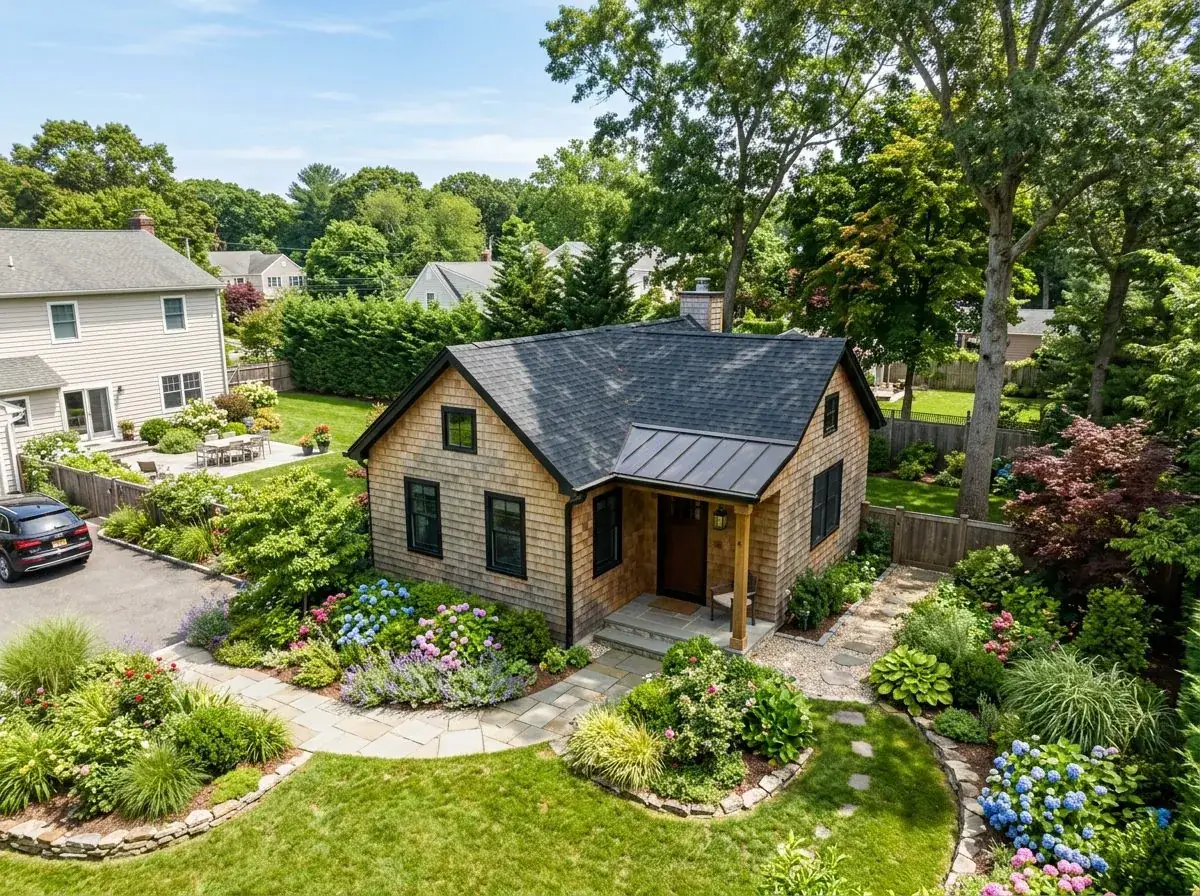
Accessory dwelling units — commonly called ADUs — have become one of the most talked-about home improvement investments on Long Island. Whether you're thinking about a garage conversion in Garden City, a basement apartment in Huntington, or a detached backyard cottage in Smithtown, an ADU gives Long Island homeowners a powerful tool: extra space that can house family, generate rental income, or simply add significant value to your property.
But Long Island's zoning landscape is fragmented. Nassau County and Suffolk County each have their own rules, and individual municipalities — from Hempstead to Brookhaven — often layer on additional requirements. This guide breaks down what you need to know before you build.
What Is an ADU and What Types Exist on Long Island?
An ADU is a secondary residential unit on the same lot as a primary home. On Long Island, the most common types are:
Attached ADUs — built onto the side or rear of your existing home. These share a wall with the main structure and typically require the least amount of new foundation work. Many Long Island homeowners convert an attached garage or add a ground-floor suite this way.
Detached ADUs — freestanding structures in the backyard, sometimes called backyard cottages or carriage houses. These offer the most privacy for tenants or in-laws. They require their own utility connections and full permits.
Basement conversions — among the most popular options in Nassau County, where older ranch and cape-style homes often have full unfinished basements. Converting a basement into a legal apartment requires egress windows, ceiling height minimums, and separate entrance access under most local codes.
Garage conversions — turning a detached or attached garage into a livable unit. This is often the most cost-effective ADU type because the structure already exists. Insulation, HVAC, plumbing, and electrical upgrades are the main costs.
ADU Rules in Nassau and Suffolk County: What's Allowed?
Long Island's ADU regulations are evolving. New York State passed legislation encouraging municipalities to allow ADUs, and many Long Island towns updated their codes in 2024 and 2025. However, rules vary sharply by township and village.
In general, most Nassau County municipalities allow attached ADUs and basement apartments for owner-occupied properties. Some — like the Town of Hempstead — have a formal accessory apartment permit program that requires the homeowner to live on-site and sets income limits for tenants in certain zones. Suffolk County townships like Babylon, Islip, and Smithtown have similar owner-occupancy requirements, though the specifics around detached ADUs differ significantly.
Setback requirements are a major factor. Most Long Island towns require detached ADUs to sit at least 5 to 10 feet from property lines, and many cap the square footage at 800 to 1,200 square feet or 35% of the main home's square footage, whichever is less. Height restrictions — typically 18 to 25 feet — also apply.
Before breaking ground, Alec's Construction recommends pulling your property's current zoning classification and confirming with your local building department exactly what's permitted. We handle this research as part of our pre-project planning process for Long Island clients.
ADU Guides by Town
Accessory dwelling rules change from town to town, and inside Nassau County they change again from village to village. These town-by-town guides cover the zoning, permit process and costs where you actually live.
Suffolk County: Amagansett · Babylon · Bay Shore · Bridgehampton · Brookhaven · Cold Spring Harbor · East Hampton · Huntington · Islip · Medford · Montauk · Northport · Patchogue · Port Jefferson · Quogue · Riverhead · Sag Harbor · Sayville · Shelter Island · Smithtown · Southampton · Southold · Water Mill · Westhampton Beach
Nassau County: Hempstead · North Hempstead · Oyster Bay
Frequently Asked Questions
What types of ADUs can I build on Long Island? Attached ADUs built onto the existing home, detached backyard cottages, basement conversions — especially popular in Nassau County's ranch and cape homes — and garage conversions, which are often the most cost-effective because the structure already exists.
Are ADUs legal in Nassau and Suffolk County? Rules vary by town and village. Most Nassau County municipalities allow attached ADUs and basement apartments on owner-occupied properties, and many Long Island towns updated their codes in 2024 and 2025. Always confirm your property's zoning with the local building department before breaking ground.
How big can an ADU be on Long Island? Most Long Island towns cap detached ADUs at 800 to 1,200 square feet, and require them to sit at least 5 to 10 feet from property lines. Exact limits depend on your town's code.
Work With Alec's Construction
This guide is written by the crew that does the work. See Alec's ADUs service — accessory apartments, garage conversions and grant paperwork. Licensed and insured on Long Island, one crew start to finish, free walkthrough and a written estimate inside 48 hours.
Booking the cold months now: we also handle Additions & New Construction and Bathroom Remodeling.
Not sure whether the town or village files your permit? That question trips up more Long Island projects than any other — the directory sorts it out.
Ready to Get Started?
Thinking about an ADU? Call Alec's Construction at (631) 312-7441 or visit our website for a free consultation. We handle permits, design, and construction across Nassau and Suffolk County.
Get a Free Consultation